For anyone searching for the Best Mop for Large Areas, the answer is the BURFERLY 24″ Spray Mop Wet Dry. Its 24-inch cleaning deck, 28-ounce onboard tank and 55-inch handle cut passes roughly in half on open tile and sealed hardwood, and it does wet and dry work with the same tool.
Want a deeper clean per fill instead? The O-Cedar RinseClean Spin Mop & Bucket gets you there, as long as you don’t mind hauling a two-chamber bucket from room to room.
As an Amazon Associate, I earn from qualifying purchases.
This guide covers what other roundups skip: the buyers who should not buy into this category at all, the difference between a wipe-down and a real deep clean, and how head width, tank size and wringing method actually change your workload on 500-plus square feet.
Everything below is built from current Amazon product data, published manufacturer specifications and each product’s owner track record. No hands-on lab testing is claimed here, and no results are promised. Check the current price on Amazon before you commit.
Quick Answer: The Best Mop for Large Areas
The BURFERLY 24″ Spray Mop Wet Dry takes the top spot because it covers the most floor per pass with the least setup.
Thinking about a robot vacuum or a steam cleaner instead? Jump to Who Should NOT Buy below before you spend anything.
Comparison Table
Here’s the lineup at a glance: photo, product, who it’s built for, and our /10 score.
Scroll sideways on small screens to see every column.
BURFERLY 24″ Spray Mop Wet Dry: Best Overall for Big Open Floors
#1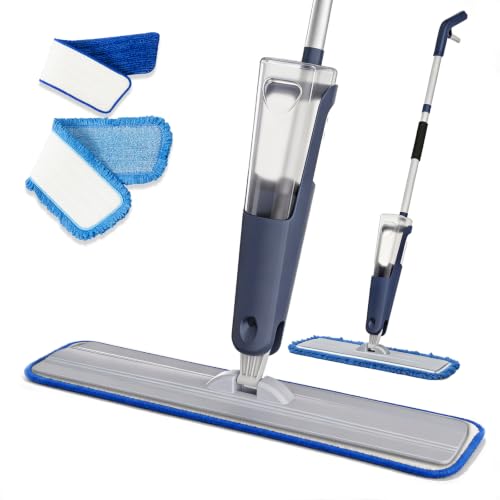
BURFERLYWet and dry in one pass
9.2OUT OF 10
Coverage speed9.4
Build quality9.0
Ease of use9.3
Owner verdict9.1
**This is the pick for anyone mopping more than roughly 400 square feet in a single session.** The 24-inch head is the widest spray-mop deck in this lineup, and it pairs with a 28-ounce tank so you spend less time refilling at the sink. Manufacturer specifications list a 55-inch handle, which lands at a natural standing height for most adults.
In our research, the spray-and-pad format shows up again and again in buyer feedback as the reason people abandon buckets entirely. Two microfiber pads ship in the box, so you can run one while the other air-dries or waits for the wash cycle.
**Flaws but not dealbreakers.** A 24-inch deck is harder to steer around toilet bases, chair legs and appliance corners than a 12 to 15-inch head. Some verified buyers also report the trigger spring stiffening after months of heavy use, which slows the spray rhythm on the last few rooms.
⚠Sizing: A 24-inch head needs roughly 30 inches of clear floor to swing without clipping baseboards or cabinet toe kicks. Measure your narrowest doorway before you commit.
Pros
- ✓24-inch cleaning deck halves the number of passes on open tile and hardwood.
- ✓28-ounce tank holds enough solution to finish a large living area on one fill.
- ✓Two microfiber pads included, so one can wash while the other works.
- ✓Handles dry dusting and wet mopping with the same tool, which saves closet space.
Cons
- ✕The wide head struggles in bathrooms, laundry rooms and other tight footprints.
- ✕Spray trigger assemblies on this style of mop can stiffen with heavy long-term use.
- ✕No bucket means no soak cycle, so dried-on stains need a separate pre-treatment.
Pads Included
2 microfiber
Best for: Households with open-plan kitchens, long hallways or large tiled areas who want the fewest passes per session without hauling a bucket.
O-Cedar RinseClean Spin Mop & Bucket: Best for Deep Cleaning Large Rooms
#2
O-CedarSeparate clean and dirty water
9.0OUT OF 10
Coverage speed8.8
Build quality9.1
Ease of use9.0
Owner verdict9.1
**Buy this one if you want a genuine scrub-and-rinse cycle rather than a wipe-down.** The RinseClean system splits the bucket into two chambers, so the mop head picks up clean water on the way down and deposits dirty water on the way back. O-Cedar states the system removes 99% of bacteria, which is a manufacturer claim rather than an independent test result.
The trade-off for that cleanliness is setup. You fill one chamber, wring into the other, and dump the dirty side when you finish. On a 900-square-foot first floor that is one dump instead of three, which is where this design earns its keep.
**Flaws but not dealbreakers.** The bucket is bulky and takes up real closet floor space. Verified buyer feedback also notes the spin basket can splash if you pump too fast, and the plastic pedal mechanism is the part most likely to wear out first.
If you would rather skip the bucket entirely, the
O-Cedar H2prO Flat Mop System later in this list uses a dual-tank fresh-water design that serves a similar goal with far less bulk.
⚠Care: Empty and air-dry both chambers after every use. Standing dirty water in a sealed bucket is the fastest way to get a sour smell that transfers straight back onto your floors.
Pros
- ✓Two-chamber bucket keeps rinse water separate from the dirty water you pick up.
- ✓Foot-pedal spinning removes excess water without you touching the mop head.
- ✓Microfiber head is machine washable, which keeps replacement costs low over time.
- ✓Handles big sealed-hardwood and tile runs with a genuine wet rinse, not just a damp wipe.
Cons
- ✕The bucket is bulky and eats real closet floor space in smaller homes.
- ✕Buyer reports mention splashing if you pump the spin basket too aggressively.
- ✕The foot-pedal mechanism is the part most likely to fail first with heavy daily use.
Bacteria Claim
99% (O-Cedar)
Best for: Owners of large sealed-hardwood or tile floors who want a real rinse cycle and are willing to store a bucket for it.
O-Cedar EasyWring Microfiber Spin Mop: Best Budget Spin Mop
#3
O-CedarProven budget spin system
8.8OUT OF 10
Coverage speed8.5
Build quality8.9
Ease of use9.0
Owner verdict8.8
**This is the safest first spin mop for a renter or first-time buyer watching the budget.** It has been on the market long enough that its failure patterns are well documented, and they are mostly minor. The triangular head reaches into corners better than a round spin head does, which matters on baseboards and behind doors.
Wringing happens on the bucket’s spin basket, powered by a foot pedal rather than a plunger. The telescoping handle adjusts to height, and the microfiber head is machine washable, so ongoing costs stay close to zero until the head itself wears thin.
**Flaws but not dealbreakers.** The single-chamber bucket means clean water gets progressively dirtier as you work, which is why you should dump and refill between big rooms. Aggregated buyer reviews also mention the plastic handle collar cracking on some units after a year or two of hard use.
⚠Care: Wash the microfiber head on its own, never with fabric softener. Softener coats the fibers and kills the static charge that lifts dust in the first place.
Pros
- ✓Triangular head shape gets into corners and along baseboards better than round heads.
- ✓Foot-pedal spinning means your hands never touch the dirty mop head.
- ✓Washable microfiber head keeps replacement costs near zero for the first year or more.
- ✓Decades of buyer data make the common failure points easy to plan around.
Cons
- ✕Single-chamber bucket means you rinse in water that gets dirtier as you go.
- ✕The plastic collar where the handle meets the head is a known wear point.
- ✕Spin wringing leaves the head damper than a twist mop, so floors air-dry slower.
Bucket Type
Single chamber
Best for: Renters and first-time buyers who want proven spin-mop performance without paying for a premium bucket system.
Spray Mop Hardwood Tile Floor Cleaning: Best for Light Daily Touch-Ups
#4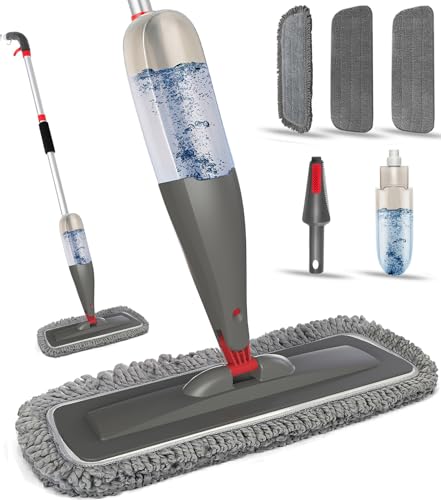
SpraySpray and wipe, no bucket
8.1OUT OF 10
Coverage speed8.0
Build quality7.9
Ease of use8.6
Owner verdict7.9
**Reach for this one when you need a two-minute cleanup, not a full floor session.** The onboard spray bottle feeds the pad directly, so you never touch a bucket, a sink or a wringer. For homes with dogs and kids tracking crumbs through a kitchen every evening, that convenience is the entire point.
The
washable microfiber pads snap on and peel off, which makes them cheap to rotate. Manufacturer specifications list it as safe on both hardwood and tile, and the pads are thin enough that they do not push standing water into seams.
**Flaws but not dealbreakers.** The bottle capacity is modest, so a 500-square-foot mopping job usually needs one refill. Verified buyer feedback also flags the plastic spray nozzle as the weak link, with some units losing spray pressure within a year.
If you want the same spray-mop format with a notably wider deck and larger tank, the
BURFERLY 24″ Spray Mop Wet Dry at the top of this list is the direct upgrade.
⚠Compatibility: Never put vinegar, bleach or abrasive cleaners in the bottle. Acidic and caustic mixes can dull sealed hardwood finish and degrade the internal seals over time.
Pros
- ✓No bucket, no wringer and no sink trip, so a quick cleanup takes under five minutes.
- ✓Washable microfiber pads peel off and go straight into the laundry.
- ✓Thin pad profile is gentle on sealed hardwood and does not flood tile grout lines.
- ✓Light enough for one-handed use around kitchen islands and entryways.
Cons
- ✕Small onboard bottle needs a refill partway through bigger mopping jobs.
- ✕Spray nozzles on this style of mop are a common long-term failure point.
- ✕Not built for scrubbing dried-on spills, which need a proper wet mop first.
Pad Type
Washable microfiber
Best for: Busy households that need fast daily wipe-downs in kitchens and entryways, and anyone who refuses to store a mop bucket.
JOYMOOP Flat Mop System: Best Flat Mop for Floors and Walls
#5
JOYMOOPSqueegee wringer plus 4 pads
8.6OUT OF 10
Coverage speed8.4
Build quality8.7
Ease of use8.8
Owner verdict8.5
**Pick the JOYMOOP if you need one tool that does floors and walls.** The squeegee-style wringer pushes water out of the pad without you bending over a bucket, and the flat head lays flush against vertical surfaces. That makes it genuinely useful for tiled shower walls, baseboards and garage drywall.
Four microfiber pads are included, which is roughly double what most budget flat mops ship with. Manufacturer specifications list it for both commercial and household use, and the long handle means you can reach most ceilings without a step stool.
**Flaws but not dealbreakers.** The flat head only covers a narrow strip per pass, so a 600-square-foot open floor takes noticeably more strokes than a 24-inch spray mop would. Buyer feedback also notes the bucket’s wringer slot needs occasional cleaning, because trapped debris reduces squeegee grip.
⚠Care: Rinse the wringer slot weekly. Hair and grit collect behind the squeegee blade and quietly reduce how much water gets pressed out of the pad.
Pros
- ✓Four microfiber pads included, so you can rotate a fresh pad mid-job.
- ✓Built-in squeegee wringing works without a plunger, pedal or hand contact.
- ✓Flat head presses against walls, baseboards and tiled shower enclosures.
- ✓Long handle reaches high surfaces without a step stool.
Cons
- ✕Narrow head means many more passes on large open floor plans.
- ✕Wringer slot traps debris and needs routine cleaning to keep grip.
- ✕Not ideal for deep scrubbing of textured or heavily stained flooring.
Pads Included
4 microfiber
Best for: Remodelers and homeowners who need one tool for hardwood, tile and vertical surfaces like shower walls and baseboards.
24″ Commercial Dust Mop Floor Cleaning: Best Budget Dust Mop
#6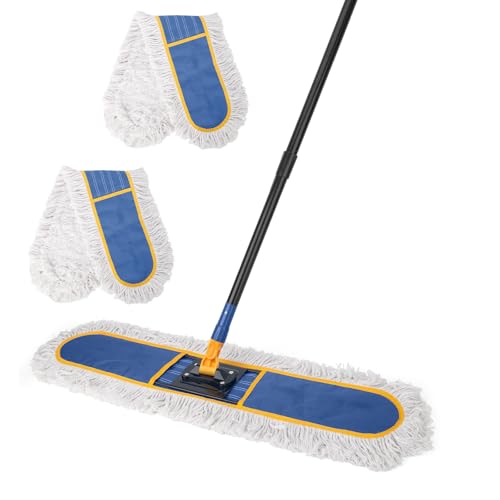
24″Wide dry-pass dusting
8.0OUT OF 10
Coverage speed8.6
Build quality7.8
Ease of use8.2
Owner verdict7.6
**Buy this if you want the cheapest way to pick up hair, dust and grit before you ever touch a wet mop.** A 24-inch dry mop head sweeps away loose debris that would otherwise turn into muddy streaks. Doing this dry pass first genuinely cuts the number of wet passes you need.
It is a simple tool by design: a wide blue head on a long handle, meant for commercial corridors and residential hallways alike. The low price means you can keep one on each floor of the house without thinking about it.
**Flaws but not dealbreakers.** This is a dry-only tool, so it removes nothing sticky and does nothing for dried spills. Aggregated buyer reviews also mention the head can shed a few fibers during the first couple of uses, which stops after a shake-out.
⚠Care: Shake the head outside after every dry pass. Dust mops that go back into a closet loaded with grit just redistribute that grit on the next sweep.
Pros
- ✓24-inch head lifts hair and grit across a broad swath in a single stroke.
- ✓Removes loose debris before wet mopping so you are not pushing mud around.
- ✓Low enough cost to keep one per floor or per job site.
- ✓Light weight makes long hallways and open plan rooms far less tiring.
Cons
- ✕Dry use only, so it does nothing for sticky or dried-on messes.
- ✕Head material can shed a small amount of fiber on the first few passes.
- ✕Basic handle hardware has little adjustment compared with premium mops.
Best for: Households with shedding pets or heavy foot traffic that need a fast dry prep pass before wet mopping.
CLEANHOME 36″ Commercial Dust Mop Hardwood: Best Wide Dust Mop
#7
CLEANHOME36-inch head for long runs
8.5OUT OF 10
Coverage speed9.3
Build quality8.3
Ease of use8.3
Owner verdict8.1
**This is the mop for a hallway that feels endless and a living room with nothing to mop around.** At 36 inches, the head is the widest dusting surface in this lineup, and it clears a long run in a few unhurried strokes. CLEANHOME lists it for hardwood, tile and marble, which covers most hard flooring in a typical home.
The trade-off between this and the 24-inch option above is simple math. You get 50% more coverage per stroke, but you also need more open space to swing the head without clipping furniture or door frames.
**Flaws but not dealbreakers.** Wide heads can feel unwieldy in bathrooms and closets, where a smaller dust mop wins every time. Verified buyerreviews on wide dust mops also note the frame can bend if you press down hard on a stuck object instead of lifting and repositioning.
⚠Sizing: A 36-inch head needs roughly 42 inches of clear floor to swing without hitting furniture legs or door frames. Measure the narrowest section of your longest run first.
Pros
- ✓36-inch head delivers roughly 50% more coverage per stroke than a 24-inch dust mop.
- ✓Safe on hardwood, tile and marble according to the manufacturer’s listed materials.
- ✓Cuts hallway and open-plan dusting from dozens of strokes down to a handful.
- ✓Long handle keeps your posture upright rather than bent over a short duster.
Cons
- ✕Too wide for bathrooms, closets and other tight footprints.
- ✕Frame can flex or bend if you press hard on a stuck piece of debris.
- ✕Dry use only, so it cannot replace a wet mop for sticky or greasy messes.
Floor Types
Hardwood, tile, marble
Best for: Homes with long hallways, big open living areas or wide commercial-style corridors where coverage per stroke is everything.
O-Cedar MicroTwist MAX Microfiber Twist Mop: Best Bucket-Free Twist Mop
#8
O-Cedar18-inch head, hands-free wring
8.3OUT OF 10
Coverage speed8.2
Build quality8.5
Ease of use8.6
Owner verdict8.0
**The MicroTwist MAX is the right call if you want a wide mop head without buying or storing a bucket.** The wringing collar twists the mop shaft itself to squeeze water out of the microfiber strands, and an 18-inch head covers more floor than most twist mops on the market. O-Cedar lists it as safe on all floor types.
One extra refill head ships in the box, so the mop is genuinely usable for a year or more before replacement heads become a purchase. For renters who move often, the lack of a bucket is the difference between packing one item and packing two.
**Flaws but not dealbreakers.** The
twist wringing action means wet hands if you squeeze over the sink without care, and buyer feedback suggests the collar mechanism loosens with repeated use. The microfiber strands also hold less water per dip than a thick cotton string head does.
If you want machine-washable flat pads and a squeegee wringer, the
JOYMOOP Flat Mop System earlier in this list trades the twist collar for a different wringing approach.
⚠Care: Let the collar mechanism dry fully between uses. Moisture trapped inside the twist housing is the most common cause of the loosening buyers report.
Pros
- ✓18-inch microfiber head is wider than most twist mops on the market.
- ✓Hands-free wringing via the twist collar, so no separate bucket needed.
- ✓One extra refill head included, extending the usable life to a year or more.
- ✓Manufacturer lists it as safe across hardwood, tile, vinyl and laminate.
Cons
- ✕Twist collar mechanism can loosen over months of repeated wringing.
- ✕Microfiber strands hold less water than traditional cotton string heads.
- ✕Wringing over a sink can leave hands wetter than a bucket system would.
Best for: Renters and small-space dwellers who want an 18-inch mop head without giving up closet space to a bucket system.
O-Cedar H2prO Flat Mop System: Best for Everyday Mopping
#9
O-CedarDual-tank fresh water mop
8.7OUT OF 10
Coverage speed8.5
Build quality8.9
Ease of use9.0
Owner verdict8.5
**The H2prO is the pick for anyone who mops three or four times a week and wants that routine to be frictionless.** Two separate tanks on the handle keep clean water and dirty water apart, and the design means you never dip a soiled pad back into fresh solution. Manufacturer specifications list it as safe on hardwood, tile and vinyl.
O-Cedar positions this as a quick everyday-clean system rather than a deep-scrub tool. The microfiber pad snaps off for the wash, and the tank layout means a typical kitchen and family room run takes one fill without a single trip to the sink.
**Flaws but not dealbreakers.** The dual-tank housing adds weight to the handle, so a full pass through a large room can fatigue your wrist. Some verified buyers also report the dirty-water tank can be fiddly to empty without splashing if you fill it before swapping the pad.
If you want the same fresh-water idea with a wider cleaning deck, the
BURFERLY 24″ Spray Mop Wet Dry at the top of this list combines a 24-inch head with a 28-ounce reservoir.
⚠Care: Empty the dirty tank after every session, even a light one. Sitting wastewater inside a sealed reservoir is a reliable way to get a musty smell that lingers on the next few mopping jobs.
Pros
- ✓Dual-tank design keeps clean and dirty water fully separated during use.
- ✓Machine washable microfiber pad keeps long-term consumable costs low.
- ✓Safe for hardwood, tile and vinyl according to the manufacturer’s listed floor types.
- ✓Quick setup and teardown make it practical for near-daily mopping routines.
Cons
- ✕Dual-tank housing adds weight to the handle, which can tire a wrist over long passes.
- ✕Dirty tank can splash during emptying if it gets too full before a pad swap.
- ✕Not designed for heavy scrubbing of dried spills or sticky residues.
Floor Types
Hardwood, tile, vinyl
Best for: Homeowners who mop several times a week and want a lightweight, bucket-free routine with clean water on every stroke.
KeFanta Commercial Mop Heavy Duty Industrial: Best for Heavy Commercial Use
#10
KeFanta60-inch cotton string mop
7.8OUT OF 10
Coverage speed7.9
Build quality8.1
Ease of use7.4
Owner verdict7.8
**Choose the KeFanta when the floor gets genuinely filthy and you need the mop to survive it.** A 60-inch handle paired with a heavy cotton string head gives you long reach and a lot of water capacity per dip. For garages, workshops, commercial corridors and industrial tile, this is the tool the rest of this list was never built for.
Cotton string mops have been standard in commercial cleaning for decades for one reason: they hold far more water than a microfiber flat pad, and they scrub against rough surfaces without wearing through quickly. If your floor is oil-stained and textured, cotton is the honest answer.
**Flaws but not dealbreakers.** The 60-inch handle is a genuine reach advantage but sits awkwardly tall in a standard home. Buyer feedback also notes heavy cotton heads need a mop
bucket or wringer to be usable, so this is not a bucket-free option, and the string head takes longer to dry than microfiber.
If you want commercial-grade coverage without the bucket dependency, the
BURFERLY 24″ Spray Mop Wet Dry at the top of this list handles the same 24-inch footprint with an onboard tank instead.
⚠Care: Rinse the cotton head thoroughly and dry it away from other fabrics. Damp cotton string heads left in a closed bucket are the classic source of a mildewed mop smell.
Pros
- ✓60-inch handle offers long reach across big commercial or garage floors.
- ✓Heavy cotton string head holds more water per dip than microfiber pads.
- ✓Cotton fibers scrub against rough or textured surfaces without shredding.
- ✓Built to survive industrial and workshop conditions that wear out home mops.
Cons
- ✕Requires a separate mop bucket or wringer, so no bucket-free use.
- ✕Cotton string heads take much longer to dry than microfiber alternatives.
- ✕60-inch handle is awkwardly tall for a standard-height home interior.
Use
Commercial, industrial
Best for: Contractors, shop owners and garage owners who mop rough, heavily soiled industrial floors and need a mop built to take abuse.
Buying Guide: Head Width, Water Management, Build Materials and Budget
Four factors separate a mop that handles a large area from one that just makes you walk more.
How wide does the mop head need to be?
Head width is the single biggest lever on how long a mopping session takes. This lineup spans 18 inches on the O-Cedar MicroTwist MAX up to 36 inches on the CLEANHOME dust mop, with the 24-inch picks sitting in the practical middle.
A 24-inch deck covers roughly twice the floor of a standard 12 to 15-inch mop per stroke. On 500 square feet, that is the difference between a ten-minute job and a twenty-minute one. The catch is maneuverability: wide heads need 30 to 42 inches of clearance to swing, so narrow hallways, bathrooms and laundry rooms punish them.
A simple approach that buyers report working well is pairing a wide wet mop for open areas with a narrower flat mop for tight quarters. Two tools, one pass each, is often faster than fighting one mop through the whole house.
Wet, dry, or both?
Wet mopping removes sticky residue, but it works far better after a dry pass has already lifted hair, crumbs and grit. That dry-first order is why dust mops earn a place in this lineup even though they are the cheapest items on the list.
Cotton string mops hold the most water per dip, which suits rough or heavily soiled surfaces. Microfiber flat pads hold less water but release it more evenly and dry faster. Spray mops split the difference: a small onboard tank feeds solution directly to the pad, so there is no bucket, no wringer and no sink trip between rooms.
If your floor has oil, grease or workshop grime, buy a string mop. If your floor mostly has dust and light kitchen spills, a spray mop or dual-tank flat mop will handle nearly everything.
Which material lasts longest?
Microfiber pads and heads usually last 50 to 100 wash cycles before the fibers flatten and stop grabbing dust. Cotton string heads last longer in terms of physical wear but degrade faster if they stay damp. Bucket plastics and wringer mechanisms are usually the first parts to fail on any spin mop system.
The wear points that show up most often in owner feedback are the plastic collar where the handle meets a spin head, the spray trigger on mop bottles, and the foot pedal on spin-bucket baskets. None of these are expensive failures, but they are the parts to check when a mop starts feeling loose.
A practical habit is to keep one spare replacement head or pad per mop on hand. Rotating two pads through the wash doubles the usable life of the assembly and avoids mid-job stops.
How much should you spend?
Prices for this category shift constantly on Amazon, so focus on tiers instead of numbers. Budget picks in this lineup cover dry dusting and light wet mopping without any moving parts to fail. Mid-range picks add features like dual-chamber buckets, twist wringing collars or onboard spray tanks.
Premium tiers add washable refills, larger reservoirs and longer warranties.
Spending more buys convenience and durability, not necessarily a cleaner floor. A mid-range spin mop with a washable microfiber head will outperform a cheap spray mop on heavily soiled tile, and a cheap dust mop will outperform both on a first dry pass.
The common buying mistake is over-investing in one premium mop that has to do every job. A two-tool setup, one wide mop for open floor and one narrow mop for detail, usually costs less and works better.
Who Should NOT Buy Best Mop for Large Areas
This category is the wrong purchase for a few kinds of buyers, and it is cheaper to know that now than after the return window closes. Here is who they are, and what to look at instead.
You need to clean 1,500+ square feet in one sitting
At that scale, a manual mop becomes a cardio session. A single 24-inch mop covers roughly 500 square feet per fill of a 28-ounce tank or one spin-bucket load, so a 1,500-square-foot job means multiple refills, a lot of bending and a long session.
At that point, look at a floor scrubber, a commercial autoscrubber or a cordless wet-dry vacuum with a mopping head. Those tools cost more but they cut the time on large commercial or open-plan spaces dramatically.
You want automated, hands-off cleaning
Mops require you. There is no version of a mop, at any price, that mops the floor while you do something else. If your goal is “I want to come home and the floor is clean,” the honest category is a robot vacuum with a mopping function or a robot mop with a docking station.
Robots handle light daily maintenance across large hard-floor areas efficiently. They are not great at dried stains or heavy grime, but if your floors stay fairly clean, a robot will replace most of your manual mopping within a month of use.
You only need a spill wiped up occasionally
Buying a full mop-and-bucket system for once-a-month cleanup is overkill. A spray mop with washable pads, or even a pack of disposable floor wipes for true emergencies, will handle occasional spills without any dedicated storage space.
Manual mopping pays off when it happens often enough to matter. If you are not mopping at least once a week, a simpler tool is the better purchase.
FAQ
What’s the best mop for large areas overall?
The BURFERLY 24″ Spray Mop Wet Dry leads this lineup because it pairs the widest spray-mop deck (24 inches) with the largest onboard tank (28 ounces). It covers the most square footage per fill without needing a bucket, wringer or sink trip.
Is a spin mop or a spray mop better for big rooms?
Spin mops rinse the pad in a bucket, which keeps the head cleaner through a long session, but require hauling and dumping the bucket. Spray mops skip the bucket entirely but need refilling more often on very large floors. Buyers with 800+ square feet of hard floor usually prefer spin mops for water capacity; buyers with under 500 square feet often prefer spray mops for convenience.
How wide should a mop head be for a large area?
For 500+ square feet of open floor, aim for at least a 24-inch head. A 36-inch dust mop covers even more ground per stroke but needs roughly 42 inches of clearance to swing, so measure the narrowest part of your biggest room before sizing up.
Can a mop clean both hardwood and tile?
Yes, but only if it uses the right head material and the right amount of water. Microfiber heads and damp-only technique are safe for sealed hardwood because they do not flood the seams. Cotton string mops and heavy wet mopping should be reserved for tile, vinyl and concrete.
How often do microfiber mop heads need replacing?
Most microfiber heads last 50 to 100 wash cycles before the fibers lose their dust-grabbing ability. Visible signs of wear include flattened fibers, fraying edges and a head that skips across the floor rather than gripping it. Keeping two heads in rotation roughly doubles the calendar time between purchases.
Does a wide dust mop really cut mopping time?
Yes. A 24-inch dust mop can clear hair, dust and crumbs from an open living area in a handful of strokes, which prep work directly reduces the number of wet passes needed afterward. On floors with pets or heavy foot traffic, the dry-first routine saves 30 to 50 percent of wet mopping time per session.
Is it worth buying a commercial-grade mop for a home?
For a normal home floor, a residential spin mop or spray mop is the right call. Commercial mops like the KeFanta 60-inch string mop are worth buying at home only if your floor is a garage, workshop or unfinished basement with rough, oil-stained or textured surfaces that wear out lighter heads quickly.
Final Verdict
The best mop for large areas is the BURFERLY 24″ Spray Mop Wet Dry, because its 24-inch deck and 28-ounce tank cover the most open floor per fill in this lineup without a bucket.
Want a real rinse cycle and cleaner water on every stroke? Get the O-Cedar RinseClean Spin Mop & Bucket, whose two-chamber design keeps clean and dirty water apart even on long sessions.
Need a lightweight, low-maintenance daily routine instead? The O-Cedar H2prO Flat Mop System offers the same fresh-water idea in a flat-mop format that stores in a hall closet.
Tight budget, small space? The O-Cedar EasyWring Microfiber Spin Mop is the safest entry point in this category, and its triangular head handles corners the wide mops cannot reach.
If you recognized yourself in the section above about automated cleaning or giant floor areas, stop here and shop a different category. Manual mops are the right tool for the right job, and 1,500 square feet is not that job.





















[…] the best overall pick for most home gyms. It combines a hands-free wringing bucket with a durable microfiber head that handles both dust and wet messes efficiently, and it stands up well to regular […]