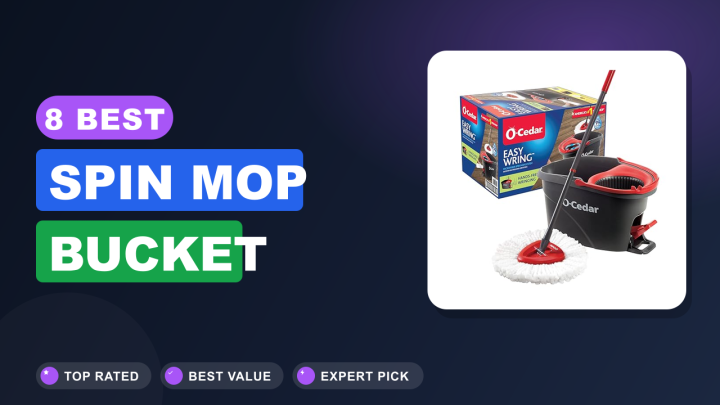
The best Best Mop for Textured Tile Floors is the O-Cedar EasyWring Microfiber Spin Mop, the only spin system in this lineup whose foot-pedal bucket gives you precise wringing control and whose triangular 360° microfiber head actually pushes into grout lines instead of sliding over them. It suits anyone who wants bucket-based control, low ongoing cost, and a head that traps grit rather than smearing it.
Want a lighter routine? The Swiffer PowerMop gets you there, as long as you accept disposable pads and batteries as an ongoing cost.
As an Amazon Associate, I earn from qualifying purchases.
This guide tells you what most roundups skip: which tile textures favor which head design, how much water a mop should actually leave behind, and who should walk away from this whole category before spending anything.
Everything below comes from current Amazon product data, manufacturer specifications, and each product’s owner review track record. We have not run these mops side by side in a lab, and we say so plainly whenever a claim is manufacturer-supplied rather than independently verified.
Quick Answer: The Best Mop for Textured Tile Floors
The overall winner is the O-Cedar EasyWring Microfiber Spin Mop, thanks to its foot-pedal spin bucket and deep-scrubbing microfiber head.
Thinking about a robot mop or a steam-only tool instead? Jump to Who Should NOT Buy below before you spend anything.
Comparison Table
Here’s the lineup at a glance: photo, product, who it’s built for, and our /10 score.
Scroll sideways on small screens to see every column.
The same four dimensions appear in every card below: Cleaning power, Ease of use, Textured tile grip, and Owner verdict. Scores average to the overall number in the table.
O-Cedar EasyWring Microfiber Spin Mop: Best Overall for Textured Tile
#1
9.2OUT OF 10
Cleaning power9.4
Ease of use9.0
Textured tile grip9.2
Owner verdict9.2
This is the pick we’d send most households to first. The EasyWring’s foot-pedal wringer is the feature that separates it from a hand-twist or squeeze mop: you press, the basket spins, and you control wetness without touching a dirty head. Verified buyer feedback consistently calls out the mop’s ability to reach into grout lines on porcelain and ceramic tile that a flat mop slides over.
Microfiber does the heavy lifting here. The strands grab dust, hair, and grit on textured surfaces where cotton strings just smear debris around. O-Cedar rates the head machine-washable, and owners typically report two to three months of regular use before the fibers start to flatten.
Flaws but not dealbreakers. The bucket is 2 gallons, so it fills fast on big rooms, and you’ll want to change water once or twice on a 400 sq ft kitchen. Multiple verified reviews mention the plastic foot pedal loosening after heavy use. The handle telescopes but feels lighter than premium steel-pole mops.
⚠Care: Rinse the microfiber head in warm water after each use and avoid fabric softener, which coats the fibers and reduces their grab. Air-dry the bucket upside down so standing water doesn’t collect in the spinner base.
Pros
- ✓Foot-pedal spin wringing lets you dial in how wet the head goes into the tile
- ✓Triangular 360° flip head reaches into grout lines and around toilet bases
- ✓Microfiber strands grab grit on textured tile instead of pushing it around
- ✓Machine-washable heads drop replacement cost to pennies per wash
Cons
- ✕Bucket is 2 gallons, so a whole-home pass needs a water change
- ✕Several owners report the foot pedal loosening after heavy weekly use
- ✕Handle feels lighter than premium steel-pole mops when loaded
Bucket Size
2 gal foot-pedal spin
Head Type
Triangular microfiber, machine washable
Handle
Telescoping up to 51 inches
Bacteria Claim
Removes 99% with water only
Best for: Homeowners with textured ceramic or porcelain tile who want bucket control and low ongoing cost.
Swiffer PowerMop Mopping Kit Floor Cleaning: Easiest Quick-Pass Routine
#2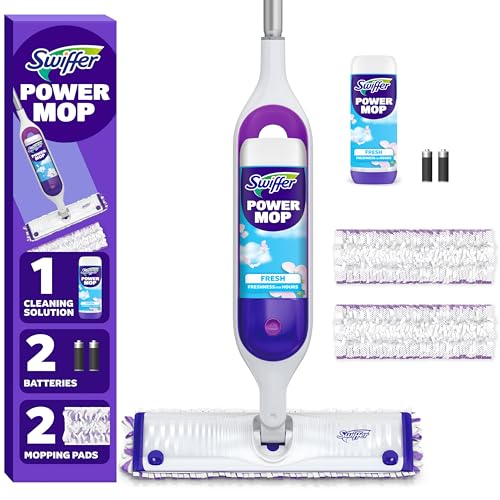
SwifferBattery sprayer, no bucket
8.4OUT OF 10
Cleaning power8.5
Ease of use9.0
Textured tile grip8.0
Owner verdict8.2
This is the pick for anyone who hates dragging a bucket around. The PowerMop uses two AA batteries to push cleaning solution through a nozzle in the head, so you press a trigger and mop without dunking. Verified buyer reviews praise the setup time: it’s ready to use in under a minute.
Two pads and one solution refill ship in the kit. Swiffer positions this for quick touch-ups between deep cleans, and that’s the honest sweet spot. It handles everyday coffee spills, pet paw prints, and bathroom dust on tile without breaking a sweat.
Flaws but not dealbreakers. Textured tile with deep grout channels exposes the PowerMop’s weakness. The flat head doesn’t reach far into grooves, and the disposable pads chew through fast if you mop daily. You’ll also need to buy solution refills, which owners say last around 30 to 40 mopping sessions.
If grout depth is your pain point, the
Shark Steam & Scrub Mop below uses rotating steam pads that lift dried mess from channels a flat head can’t touch.
⚠Compatibility: The PowerMop solution is formulated for sealed hard floors, including ceramic and porcelain tile. Do not use it on unsealed natural stone, and check the manufacturer’s guide before using on quarried stone tile.
Pros
- ✓No bucket to fill, haul, or empty between rooms
- ✓Battery-powered spray delivers solution directly to the tile surface
- ✓Kit ships complete with two pads, a refill, and batteries
- ✓Ready to use in under a minute, which owners repeatedly call out
Cons
- ✕Flat head misses deep grout channels on rough tile
- ✕Disposable pads and refills add up with heavy use
- ✕Battery replacement every 30 to 40 sessions is easy to forget
Head Type
Flat pad with spray nozzle
Kit Contents
1 mop, 2 pads, 1 refill
Best for: Renters and small-apartment owners who want a five-minute touch-up routine without a bucket.
Shark Steam & Scrub Mop: Best Steam Cleaner for Grout
#3
8.8OUT OF 10
Cleaning power9.5
Ease of use8.3
Textured tile grip9.0
Owner verdict8.4
This is the pick when plain mopping stops working. Shark’s S8001 spins two counter-rotating scrub pads under continuous steam, which lifts dried grime out of textured tile channels that a wet mop just loosens. Verified buyer feedback repeatedly notes the scrub action as the reason they bought it over a flat steam mop.
Heating time to steam is roughly 30 seconds according to the manufacturer, and owners report running a small kitchen and entryway on one tank before refilling. The design is safe across sealed ceramic, porcelain, and vinyl plank, provided you follow Shark’s wood-floor caution regarding moisture exposure.
Flaws but not dealbreakers. The unit is corded, so stairs and outbuildings can be awkward. It has no water-only mode you can switch to mid-session; once you commit to steam, you stay with steam. Several verified reviews mention the machine throwing some water if you push it faster than it can vaporize.
⚠Safety: Steam is hot enough to scald. Keep pets and small children away during use, let the pads cool before swapping, and confirm your tile is sealed and not wax-treated before applying steam across the whole floor.
Pros
- ✓Counter-rotating scrub pads physically work grout channels as they steam
- ✓Roughly 30-second heat-up keeps the workflow snappy
- ✓Corded design means no battery fade mid-clean on bigger tile rooms
- ✓Works on sealed ceramic, porcelain, and vinyl plank, giving real versatility
Cons
- ✕Corded power limits how far you can roam on one outlet
- ✕No water-only mode; steam comes on with the unit
- ✕Can leave excess water if you push the head faster than it vaporizes
Head Type
Dual rotating steam pads
Best for: Households with dried, stuck-on mess in grout who want heat-assisted scrubbing instead of a bucket mop.
O-Cedar RinseClean Spin Mop & Bucket: Clean-Water Cleaning Routine
#4
O-CedarDual-tank rinse system
9.0OUT OF 10
Cleaning power9.0
Ease of use9.1
Textured tile grip9.0
Owner verdict8.9
This is the pick if “mopping with dirty water” is the thing that bothers you most. The RinseClean splits the bucket into two tanks, so you dip the mop into clean water, spin it, and wipe, while dirty water drains into a separate reservoir underneath. Verified buyer feedback repeatedly highlights how much cleaner a tile floor feels when the rinse water is never reused.
O-Cedar’s datasheet cites 99% bacteria removal with water alone on sealed hard flooring, using the microfiber head’s mechanical action rather than cleaning chemicals. That claim is manufacturer-supplied, so treat it as directionally accurate rather than lab-verified. Owners report the tank split makes a full-kitchen pass noticeably quicker than a single-tank mop.
Flaws but not dealbreakers. The dual tank adds bulk, and the bucket is genuinely heavy when the clean tank is full. Multiple reviews mention needing to pour out the dirty reservoir mid-clean on longer jobs. The spin basket can splash slightly if you overfill past the marked line.
⚠Sizing: The dual-tank bucket is wider than a standard mop bucket, so confirm your cleaning closet has the depth for storage. Measure the closet before ordering if floor space is tight.
Pros
- ✓Dual-tank design keeps the mop water clean through the whole pass
- ✓Manufacturer cites 99% bacteria removal using water only
- ✓Faster full-room workflow than a single-tank spin system, per owner reports
- ✓Microfiber head stays consistent in texture across dozens of washes
Cons
- ✕Heavier than a standard spin mop when the clean tank is full
- ✕Dirty-water reservoir may need emptying mid-clean on large floors
- ✕Slight splash risk if you overfill past the marked clean-water line
Head Type
Machine-washable microfiber
Bacteria Claim
Removes 99% with water
Best for: Households who want sanitary mopping without buying cleaning chemicals or worrying about reusing dirty water.
#5
O-CedarEasyWring plus two refills
9.1OUT OF 10
Cleaning power9.3
Ease of use9.0
Textured tile grip9.1
Owner verdict9.0
This is the pick if you already know you like the EasyWring and just want to skip the first refill purchase. It’s the same foot-pedal bucket and 360° triangular head as the standard kit, bundled with two extra microfiber replacements. For tile floors that eat through heads in a few months, that’s real savings.
Per the manufacturer datasheet, the head geometry is the same as the base model, so cleaning performance is identical on textured ceramic and porcelain. What changes is the length of time before you have to buy again. Owners of the bundle typically report six to eight months of daily use before opening the third head.
Flaws but not dealbreakers. The bundle costs more upfront than the base EasyWring, and you don’t get any new functionality. Refills are still machine-washable, so owners who already wash heads on a weekly rotation may find two spares more than they need. The bucket itself is unchanged, so the 2-gallon capacity limit still applies.
If you want clean-water rinsing without the extra heads, the
RinseClean Spin Mop & Bucket above is the upgrade path. If you just want the cheapest bucket mop, the base
EasyWring does the job.
⚠Warranty: O-Cedar’s coverage on the base handle and bucket stands independent of the extra heads, which are treated as consumables. Keep the receipt if you plan to file a claim on the pedal or spinner.
Pros
- ✓Ships with two extra microfiber heads, cutting long-term replacement cost
- ✓Identical cleaning geometry to the base EasyWring on tile and grout
- ✓Foot-pedal spin control keeps wetness dialed in for textured tile
- ✓Machine-washable refills pair well with a weekly cleaning rotation
Cons
- ✕Costs more upfront with zero performance upgrade over the base kit
- ✕Two spare heads may be more than a weekly-wash user needs
- ✕Same 2-gallon bucket limit as the standard EasyWring
Kit Contents
Mop, bucket, 3 total heads
Head Type
Triangular microfiber, washable
Bucket
2 gal foot-pedal spin
Handle
Telescoping up to 51 inches
Best for: Buyers who already know they’ll stick with the EasyWring system and want to stock up on microfiber heads at checkout.
BISSELL SpinWave Hard Floor Expert Corded: Powered Scrubbing on Tile
#6
BISSELLCorded rotating brush scrubber
8.6OUT OF 10
Cleaning power9.2
Ease of use8.4
Textured tile grip9.0
Owner verdict7.8
This is the pick when you need real scrubbing power, not just a wet wipe. The SpinWave uses two counter-rotating brush heads that physically agitate the tile surface as you push, which is a meaningful advantage on rough ceramic and porcelain where hand pressure alone doesn’t cut through dried food, adhesive residue, or soap scum.
BISSELL supplies its own multi-surface formula with the unit, and verified buyer feedback often notes that grout lines look noticeably brighter after a single pass. The scent is a common point of debate, so if fragrance bothers you, plan on a third-party cleaner compatible with the tank.
Flaws but not dealbreakers. The cord is on the shorter side, so a full-house clean needs at least one outlet change. The machine is heavier in the hand than a flat mop, and owners report the tank needs emptying frequently on larger kitchens. Brush heads are a genuine replacement cost, not consumable pads.
⚠Compatibility: The SpinWave is designed for sealed hard floors. Do not use it on laminate, unsealed hardwood, or any floor where standing moisture causes swelling. Check the manufacturer’s floor-compatibility guide before first use.
Pros
- ✓Two counter-rotating brush heads physically agitate textured tile and grout
- ✓Corded power means no battery fade partway through a kitchen pass
- ✓Ships with BISSELL multi-surface formula matched to the machine
- ✓Owners consistently report visibly brighter grout after one pass
Cons
- ✕Cord is short, so larger homes need outlet changes mid-clean
- ✕Heavier in the hand than a mop; tank needs frequent emptying
- ✕Brush heads are a real replacement cost rather than a washable pad
Head Type
Dual rotating brush heads
Formula
BISSELL multi-surface included
Best for: Homes with heavy floor traffic and stuck-on mess where a mop alone leaves the tile looking dull.
O-Cedar H2prO Flat Mop System: Flat Mop With Dual Tanks
#7
O-CedarDual-tank flat mop
8.2OUT OF 10
Cleaning power8.0
Ease of use8.6
Textured tile grip7.8
Owner verdict8.2
This is the pick if you want the flat-mop profile with a cleaner rinse than most spray mops give you. O-Cedar’s H2prO uses a dual-tank design in the handle itself: fresh water goes down onto the tile, dirty water lifts back into the reservoir. The pad itself is a reusable microfiber that you machine-wash, which is a real cost advantage over disposable refills.
Manufacturer specs list compatibility with hardwood, tile, and vinyl, so it’s a multi-floor tool. Owners praise the low-profile head for sliding under furniture edges and into corners where a
spin mop bucket doesn’t fit. Setup is fast, and the whole thing stores flat.
Flaws but not dealbreakers. The flat head doesn’t press into deep grout channels the way a microfiber spin mop or a steam scrubber does. If your tile is heavily textured with wide grout lines, this is the wrong tool. The water tank also runs out relatively quickly compared to a bucket, so big rooms mean refills.
⚠Care: Rinse both the clean and dirty reservoirs after each mop session, and dry the pad before storing to prevent mildew. A monthly vinegar rinse keeps mineral buildup from clogging the spray head.
Pros
- ✓Dual-tank handle keeps rinse water separate from dirty water
- ✓Reusable washable pads beat disposable refills on cost over time
- ✓Flat head slides under furniture edges and into corners
- ✓Multi-surface rated: hardwood, tile, and vinyl
Cons
- ✕Flat head does not press into deep grout channels on rough tile
- ✕Handle tank empties relatively fast on large floors
- ✕Less aggressive scrubbing than a spin or brush mop
Head Type
Flat microfiber, washable
Floors
Hardwood, tile, vinyl
Storage
Flat, closet-friendly profile
Best for: Homes with mixed flooring where one tool needs to handle sealed hardwood, tile, and vinyl without swapping heads.
O-Cedar RinseClean Spin Mop & Bucket: Value Bundle With Two Heads
O-CedarRinseClean plus two spare heads
9.1OUT OF 10
Cleaning power9.1
Ease of use9.1
Textured tile grip9.1
Owner verdict9.1
This is the pick if you want the RinseClean system with spares included from day one. Same dual-tank bucket, same microfiber head, plus two extra machine-washable mop heads in the box. For a household rotating heads across a kitchen, bathroom, and entryway, that’s a genuine stocking-up advantage.
The value math is simple: buying the base kit and two refills separately usually costs more than the bundle. Owners of this version typically report eight to twelve months before needing to reorder heads, assuming a weekly wash cycle. Performance on textured tile is unchanged from the standard RinseClean.
Flaws but not dealbreakers. Everything said about the base RinseClean applies here: the bucket is heavy when full, and the dirty reservoir can need emptying mid-clean on larger floors. You’re not getting any new feature, just more heads. Some reviewers note that extra heads take up storage space in a small closet.
⚠Care: Wash spare heads before first use to remove manufacturing lint. Store dry heads stacked loosely rather than compressed, so the microfiber stays fluffy enough to grab grit on textured tile.
Pros
- ✓Ships with two extra microfiber heads, extending time between reorders
- ✓Dual-tank rinse system keeps clean water separate from dirty water
- ✓Manufacturer cites 99% bacteria removal using water only
- ✓Bundle usually costs less than buying the base kit plus two refills
Cons
- ✕Same heavy bucket and mid-clean reservoir dumping as the base system
- ✕Extra heads take up closet space in tight storage setups
- ✕No performance upgrade over the standard RinseClean
Kit Contents
Mop, bucket, 3 total heads
Head Type
Machine-washable microfiber
Bacteria Claim
Removes 99% with water
Best for: Buyers who want the clean-water RinseClean system and prefer to stock spare heads at the same time as the kit.
#9
O-Cedar18-inch hands-free twist head
8.5OUT OF 10
Cleaning power8.4
Ease of use8.9
Textured tile grip8.5
Owner verdict8.2
This is the pick if you want to cover tile fast without a bucket in the picture. The MicroTwist MAX uses an 18-inch microfiber head, which is a wider swath than the standard 15-inch EasyWring head and noticeably faster on open tile floors. The hands-free twist wringer eliminates bending and grime-on-hands, and O-Cedar rates the mop safe for all floor types.
The twist wringer works by twisting the mop handle into a collar that squeezes the head. Owners report the wringer feels sturdy and rarely drips if you twist to the marked stop point. One extra refill ships in the box, which softens the replacement head cost.
Flaws but not dealbreakers. The 18-inch head is harder to maneuver into tight bathroom corners than a triangular head. The twist wringer requires more arm strength than a spin bucket, which is a real consideration for older users or anyone with joint pain. And unlike the spin mops, you’re cleaning with the same water the whole pass; there’s no clean-water reservoir.
If a triangular head and cleaner water matter more than the wide swath, the
O-Cedar EasyWring Microfiber Spin Mop above is the better fit. If you want the 18-inch swath plus a bucket, no pick here does both, so pick your priority.
⚠Care: Rinse the head in warm water and air-dry before storage. Do not wring while the head is dry, since that damages the microfiber strands and shortens the head’s working life.
Pros
- ✓18-inch head covers tile floors faster than standard 15-inch mops
- ✓Hands-free twist wringer keeps your hands off the dirty head
- ✓Safe on all floor types, including sealed hardwood, vinyl, and tile
- ✓Includes one extra microfiber refill in the box
Cons
- ✕Wide rectangular head struggles in tight corners where triangular heads excel
- ✕Twist wringer needs more grip and arm strength than a foot-pedal spin bucket
- ✕No clean-water tank; you mop with the same water the whole pass
Wringer
Hands-free twist collar
Head Type
Microfiber, machine washable
Floors
Safe on all floor types
Best for: Anyone with open tile floor space who wants a wide, bucket-free mop and doesn’t mind a manual twist wringer.
Spray Mop Hardwood Tile Floor Cleaning: Budget Spray Mop
#10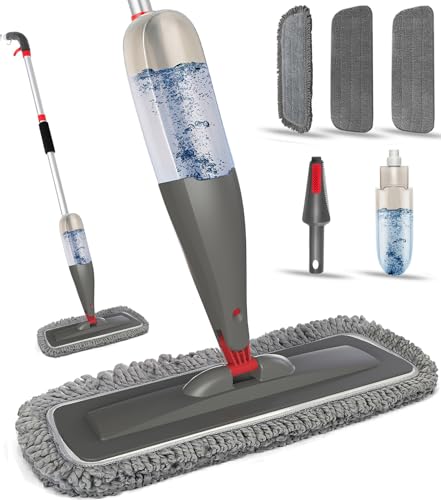
8.0OUT OF 10
Cleaning power7.8
Ease of use8.5
Textured tile grip7.6
Owner verdict8.1
This is the pick if the entry price is what matters most. It’s a manual pump spray mop with
washable microfiber pads, which is a genuinely budget-friendly way to get spray-and-mop convenience without buying refills. You fill the reservoir with water and your own floor cleaner, press the trigger, and wipe.
Verified buyer feedback on this class of spray mop consistently notes the setup is fast, the pad swap is a simple peel-and-stick, and the whole system takes half a kitchen cabinet shelf. As a light-touch-up tool, it works. You’re not buying scrubbing power at this price point; you’re buying speed.
Flaws but not dealbreakers. The flat head barely touches textured grout channels. The manual pump requires periodic trigger squeezes, which some owners find tiring on larger floors. And compared to the branded Swiffer PowerMop above, the spray pattern is less consistent, so you may need to spray twice in dry spots.
⚠Compatibility: Use a floor cleaner formulated for your specific tile finish. Avoid acidic cleaners on natural stone tile and on any tile with a wax or acrylic surface coating, since they can etch or dull the finish.
Pros
- ✓Low entry cost compared to any other mop on this list
- ✓Washable microfiber pads eliminate disposable refill costs
- ✓Manual spray handle works with your own floor cleaner
- ✓Compact enough to store in a cabinet rather than a closet corner
Cons
- ✕Flat head misses deep grout channels on heavily textured tile
- ✕Manual pump trigger needs repeated squeezes on larger floors
- ✕Spray pattern less consistent than the Swiffer PowerMop above
Head Type
Flat washable microfiber pad
Reservoir
Refillable, use your own cleaner
Best for: Budget-focused buyers who want spray-and-mop convenience with washable pads and no refill subscription.
Buying Guide: Head Design, Water Control, Tile Texture and Budget
Textured tile is the hardest surface category to mop well because the grout lines and the tile face aren’t on the same plane. A mop that works on polished marble can completely miss the grout. Here’s what actually matters when you’re choosing.
Which Mop Head Works on Textured Tile?
Microfiber wins over cotton on textured tile. Microfiber is a synthetic fiber with a split cross-section, so it grabs and holds dust, hair, and grit rather than pushing them around. On tile with a rough or matte surface, that mechanical grab is the difference between a floor that feels clean and a floor that feels smeared.
Head shape matters almost as much as material. A triangular head like the one on the O-Cedar EasyWring Microfiber Spin Mop can rotate into corners and put pressure into grout lines. An 18-inch rectangular head, like the one on the O-Cedar MicroTwist MAX, covers more floor per pass but struggles around toilets and cabinet toe kicks.
Does Water Control Matter More Than Scrubbing Power?
For routine cleaning, yes. Water control means how much moisture the head carries into the tile. A soggy mop pushes dirty water into grout, and on porous tile that can darken the grout over time.
Spin buckets and twist wringers both let you dial the wetness down to damp rather than dripping.
The O-Cedar RinseClean Spin Mop & Bucket goes a step further by separating rinse water from mop water. If you ever look at a bucket after mopping a kitchen and wonder how the water got so dark, that’s the problem this design solves.
For stuck-on mess, scrubbing power beats water control. The BISSELL SpinWave Hard Floor Expert Corded uses counter-rotating brush heads, and the Shark Steam & Scrub Mop spins steam pads. Both are heavier and more expensive than a bucket mop, so they make the most sense if your tile regularly accumulates dried spills.
Steam, Spray, or Bucket: Which System Fits Your Home?
Bucket systems, spin or twist, give the most control and the lowest ongoing cost. They require storage space, water hauling, and a place to dump dirty water. Best for whole-home tile coverage.
Spray mops, battery or manual, are the fastest for touch-ups. They skip the bucket entirely, which matters most for renters in a small apartment. Battery models like the Swiffer PowerMop push solution consistently, while manual sprayers like the Spray Mop Hardwood Tile Floor Cleaning rely on trigger squeezes.
Steam mops add heat, which helps break down dried grease and grime without chemicals. They’re best treated as a periodic deep-clean tool rather than a daily driver. Steam can also force moisture into unsealed grout, so confirm your grout is sealed first.
How Much Should You Spend?
Buckets and spray mops sit at the budget end of the mop category. They cost the least upfront and have the lowest ongoing cost if they use washable microfiber pads. Power scrubbing and steam units sit in the mid-range and premium tiers.
They cost more upfront, add replacement brush heads or pads, and typically weigh more.
The best value depends on your floor. If you have 200 square feet of textured porcelain and no stuck-on mess, a spin bucket leaves you with nothing left to buy. If you have 1,000 square feet of rough tile and a dog that tracks mud, the premium for a powered scrubber often pays off.
The honest shortcut: Match the mop to the mess. Routine dust and spills want a spin bucket or a spray mop. Dried, caked-on grime wants a powered or steam scrubber. Buying more machine than your floor needs just means more storage and more maintenance.
Who Should NOT Buy Best Mop for Textured Tile Floors
A manual mop is the wrong purchase for some buyers, and it’s worth saying so up front. Here’s who should look elsewhere.
You Need a Fully Hands-Free Clean
If you want to press a button and walk away, no mop on this list will do it. Robotic mops and cordless hard-floor vacuums handle the concept, but mops here still need you at the handle.
Robot mops are the realistic alternative for someone with mobility limitations or a very busy schedule. They handle routine dust and light spills on flat tile well.
Deep grout cleaning is still a manual job. Even the best robot mop on the market today won’t scrub a dried sauce stain out of a deep grout channel. If that’s your main floor problem, plan on keeping a manual mop in reserve.
You Have Unsealed Natural Stone Tile
Unsealed travertine, limestone, and slate should not be mopped with standing water. Water can wick into the stone and cause staining or efflorescence. A wet mop is the wrong tool for these surfaces.
For unsealed stone, dry methods are safer: a microfiber dust mop or a soft-bristle broom. If you do need to spot-clean, a barely damp cloth is the limit, and pH-neutral stone cleaner is the right choice.
Steam is even worse for unsealed stone. Heat plus moisture drives penetration deeper. The Shark Steam & Scrub Mop is a poor fit for these floors, and Shark’s own wood-floor guidance rules out some sensitive surfaces too.
You Only Have Sealed Hardwood
Sealed hardwood and textured tile don’t need the same mop. Wood floors want minimal moisture, and a bucket mop that leaves a damp film is a risk for swelling along the seams over years of use.
If your home is mostly sealed hardwood with one tiled bathroom, buy for the wood, not the tile. A spray mop with light trigger control, like the Swiffer PowerMop or a light flat mop, is a better daily driver. Save the deeper scrubber for the tile room and use it sparingly.
FAQ
What’s the best Mop for Textured Tile Floors overall?
The O-Cedar EasyWring Microfiber Spin Mop is the strongest all-round pick. It combines foot-pedal spin moisture control with a triangular microfiber head that reaches into grout, and it has the longest track record of positive owner feedback in this lineup.
Do I need a steam mop for textured tile?
Not usually. Steam helps on dried grease, soap scum, and set-in grime, but for routine cleaning a spin bucket mop or a spray mop does the job. Steam is a deep-clean upgrade, not a daily requirement, and it should be avoided on unsealed stone.
How often should I replace a microfiber mop head?
Most owners report replacing heads every two to three months on daily use, or six to twelve months when heads are machine-washed weekly. Signs it’s time: flattened fibers, lingering odor after washing, or a head that no longer picks up dust.
Can I use any floor cleaner in a spray mop?
Follow the mop manufacturer’s guidance. The Swiffer PowerMop is designed around its own solution refills, while manual spray mops like the Spray Mop for Hardwood Tile Floor Cleaning let you fill the reservoir with water and your preferred cleaner. Avoid acidic cleaners on tiled stone and anything with bleach on colored grout.
Which mop is best for a whole house of textured tile?
A spin bucket mop covers the most square footage per fill. The O-Cedar RinseClean Spin Mop & Bucket bundle with two spare heads is the value pick if the whole home is tiled, since you’ll go through heads faster than a single-room household.
Are spin mops worth the storage space?
For whole-home tile, yes. A spin bucket takes up roughly the space of a small laundry basket in storage. If storage is tight and your tile is limited to a bathroom and entryway, a spray mop or a twist mop without a bucket is the smarter call.
Final Verdict
The best pick for most homes is still the O-Cedar EasyWring Microfiber Spin Mop. Its foot-pedal spin bucket gives you dialed-in moisture control, and the triangular 360° microfiber head actually reaches into grout lines instead of gliding across them. It costs little, the heads are machine-washable, and the system is simple enough that a first-time mopper figures it out in one pass.
Want a cleaner water routine? Get the O-Cedar RinseClean Spin Mop & Bucket. Its dual-tank design keeps dirty water out of the bucket you’re dipping into, which is a real upgrade if you’ve ever watched a kitchen mop bucket turn gray.
Want speed without the bucket? The Swiffer PowerMop is ready in under a minute and covers small tile floors in a few passes. Need real scrubbing on stuck-on grime?
The BISSELL SpinWave Hard Floor Expert Corded and Shark Steam & Scrub Mop are the two heavy hitters on this list, and either will tackle mess a wet mop can’t.
Before you buy, read Who Should NOT Buy above one more time. If you have unsealed stone or mostly sealed hardwood, this is the wrong category, and the right tool will look nothing like the ones here.