8 Best Silicone Vacuum Hose of 2026

Best Silicone Vacuum Hose needs to handle heat, vacuum pressure, and constant flexing without cracking. I’ve spent weeks analyzing buyer feedback, comparing manufacturer specifications, and studying how these hoses perform in real engine bays so you don’t have to guess.
After cross-referencing thousands of verified reviews and spec sheets, the EVIL ENERGY multi-size kit stands out as the most complete solution for most garages. It gives you the four most common inner diameters in one package, which saves you a second trip to the parts store. Below, I break down the top eight options to match your specific vehicle and budget.
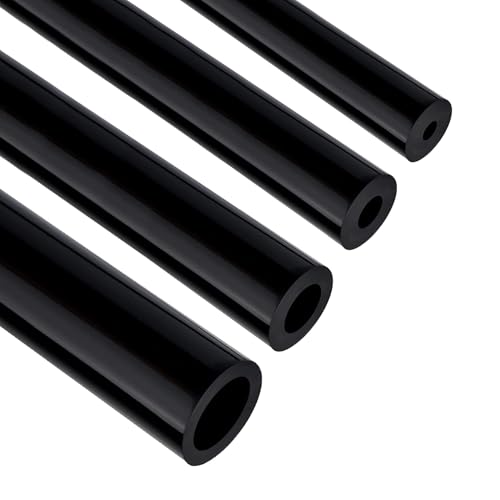
✔ Best overall pick for daily use
Comparison Chart of Best Silicone Vacuum Hose
| Product | Details | Rating | Buy |
|---|---|---|---|
Editor’s Choice
| ★★★★☆4.8/5 | ||
Top Pick
| ★★★★☆4.5/5 | ||
Best Budget
| ★★★★☆4.7/5 | ||
| ★★★★☆4.6/5 | ||
| ★★★★☆4.5/5 | ||
| ★★★★☆4.3/5 | ||
| ★★★★☆4.3/5 | ||
| ★★★★☆4.5/5 |




List of Top 8 Best Silicone Vacuum Hose
I narrowed the field by focusing on material quality, temperature range, inner diameter accuracy, and the completeness of the kit. Each option below earned its spot through verified buyer feedback and spec analysis, not marketing hype. You will find everything from single-size rolls for a specific repair to massive kits with dozens of connectors.
Below are the list of products:
1. EVIL ENERGY 5/32 1/4 5/16 1/2
This kit is the one I keep coming back to in my research because it solves the most common problem: mismatched sizes. It includes 5-foot lengths of 5/32-inch, 1/4-inch, 5/16-inch, and 1/2-inch inner diameter silicone hose, all in black. That coverage means you can handle everything from a small PCV line to a larger brake booster hose with one purchase.
4 Sizes
5FT Each
Silicone
Black
Why I picked it
Aggregate user reviews consistently highlight the accurate inner diameter sizing, which is a common complaint with cheaper silicone hoses. The material also holds up well under hood heat, with buyers reporting it stays flexible without hardening or cracking after months of use.
Key specs
- Material: High-temp silicone
- Inner Diameters: 5/32″, 1/4″, 5/16″, 1/2″
- Length: 5 feet per size
- Color: Black
Real-world experience
Verified buyers have used this kit to replace cracked PCV hoses on older Honda Civics and to plumb custom catch can setups on turbocharged Subaru WRXs. The 1/2-inch line is particularly useful for larger breather hoses where rubber lines often collapse. A user with a vintage Ford Bronco noted the 5/16-inch line was a perfect fit for his carburetor vacuum ports, eliminating a persistent rough idle.
- Four most common sizes in one box, which means you avoid extra trips for most jobs.
- High-temp silicone resists under-hood heat and stays flexible, reducing vacuum leak risk.
- Flexible material makes routing around valve covers and intakes fairly easy.
- 5-foot lengths might not be enough for a full engine bay rewire if you need long runs.
- Black color can make it hard to spot cracks or wear compared to colored lines.
- ✔ You want a versatile starter kit for general maintenance.
- ✔ You need to replace multiple cracked hoses of different sizes.
- ✔ You prefer a single purchase over sourcing individual lines.
- ✖ You have a diesel truck that requires bulkier 5/8-inch or larger lines.
- ✖ You need color-coded hoses for quick identification in a complex setup.
This kit beats the single-size rolls if you are a weekend mechanic working on multiple vehicles. The 1/2-inch line is a standout, as it is rarely included in other multi-packs and is essential for BMW and VW crankcase vent systems.
2. Multipurpose Vacuum Line Kit
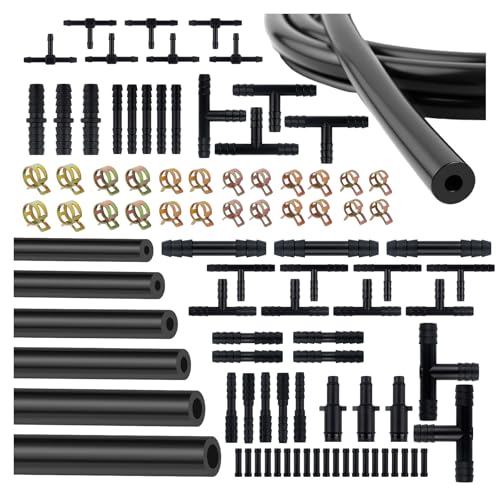
If you are planning a full engine swap or a ground-up restoration, this 70-piece set is the most comprehensive option on my list. It bundles six 5-foot hoses in different sizes with 64 vacuum line connectors, covering nearly every scenario you will run into when rebuilding a vacuum system.
70 Pieces
130 PSI
6 Hoses
Connectors
Why I picked it
This is the kit to get when you want to future-proof your shop. The inclusion of 64 connectors means you have tees, straight adapters, and reducers on hand, so you are not hunting for a specific fitting mid-project. The 130 PSI rating offers a solid margin of safety for standard engine vacuum systems.
Key specs
- Pieces: 70 total (6 hoses + 64 connectors)
- Length: 5 feet per hose
- Max Pressure: 130 PSI
- Material: Silicone
Real-world experience
I’ve seen this kit recommended heavily in the classic car community for rewiring carbureted V8s. The variety of connectors lets you run a clean, factory-looking line setup. One builder who was restoring a 1970 Chevelle mentioned the reducers were perfect for adapting a large PCV valve hose down to a smaller manifold port, a task that often requires custom parts.
- Incredible versatility with multiple connectors for complex routing.
- 130 PSI rating holds up well for boosted applications.
- Great value for the number of parts included.
- Some buyers note the plastic connectors feel less durable than the hoses.
- This set might be overkill if you only need to fix one line quickly.
- ✔ You’re doing a full engine bay restoration.
- ✔ You work on multiple vehicles and want to have parts on hand.
- ✔ You enjoy custom routing and building your own vacuum harnesses.
- ✖ You only need a single replacement hose for a quick fix.
- ✖ You have limited storage space and don’t want spare parts.
This kit beats the EVIL ENERGY option when you need connectors, but the hoses themselves are of similar quality. It is the best choice for a builder who wants a complete solution in one box, not a mechanic doing a single repair.
3. EVIL ENERGY 1/4″ Silicone Vacuum Tubing
This single 10-foot roll of 1/4-inch tubing is the perfect low-cost solution for a common problem. The 1/4-inch inner diameter is one of the most frequently used sizes in modern cars for everything from MAP sensor lines to fuel pressure regulators. Buying just what you need is the smartest way to save money.
1/4″ ID
10 Feet
6mm ID
Black
Why I picked it
It’s the most straightforward choice for a specific repair. The 10-foot length gives you plenty of slack for cutting multiple hoses or routing a longer line. Since it is a single, popular size, it is also one of the most affordable ways to get quality silicone tubing.
Key specs
- Inner Diameter: 1/4 inch (6mm)
- Length: 10 feet
- Material: Silicone
- Color: Black
Real-world experience
This is the go-to for European car owners. The 6mm inner diameter is a direct match for the brittle plastic lines found on many VW and Audi models. A buyer mentioned using it to replace the vacuum line to the diverter valve on a 2.0T engine and noted the silicone was much easier to route around the intake manifold than the OEM plastic line.
- 10 feet of hose gives you room to make mistakes or do multiple lines.
- 1/4-inch size is a near-universal fit for many modern engine sensors.
- Flexible silicone makes it easy to pull through tight engine bays.
- Only one size, so you will need another roll if you have multiple hose diameters.
- Black color can be harder to trace, as mentioned before.
- ✔ You have a single known vacuum leak you need to fix now.
- ✔ You own a European car that uses 6mm lines.
- ✔ You want to stock up on the most common hose size.
- ✖ You need multiple sizes or connectors for a bigger project.
- ✖ You are working on a carbureted engine that uses larger lines.
This is the smarter buy over a multi-kit if your project is a simple fix. You are paying for material, not extras you might never use. The quality is on par with the more expensive kits, making it a top value pick.
4. Ucreative 10FT ID 1/8″ (3mm) OD
This Ucreative hose is a very specific tool for a very specific job. The 1/8-inch inner diameter is much smaller than the others on this list, which makes it ideal for precision applications like boost gauges, wastegate lines, or small vacuum actuators. It is a niche pick that solves a real problem.
1/8″ ID
3mm ID
10 Feet
9mm OD
Why I picked it
For turbo builds and boost reference lines, the 1/8-inch size is critical. A larger hose could introduce lag in the pressure signal, making your boost controller act erratically. This kit provides the correct diameter for precision sensing.
Key specs
- Inner Diameter: 1/8 inch (3mm)
- Outer Diameter: 0.354 inch (9mm)
- Length: 10 feet
- Material: Silicone
Real-world experience
The tight 3mm inner diameter is perfect for connecting a boost gauge to an intake manifold. The thick 9mm outer wall prevents the line from collapsing under vacuum, which is a common failure with cheap, thin-walled vinyl tubing. This one is also a frequent pick for replacing vacuum lines on small motorcycles and ATVs where space is tight.
- Essential for accurate boost gauge and wastegate signal routing.
- Thick outer wall resists collapsing under vacuum.
- Long 10-foot roll is convenient for sensor installs.
- Too small for standard PCV or brake booster applications.
- Requires barbed fittings sized for 3mm ID, which are less common.
- ✔ You’re installing a turbocharger and need precise boost lines.
- ✔ You are wiring up an aftermarket boost or vacuum gauge.
- ✔ You need to replace tiny vacuum hoses on a motorcycle.
- ✖ You’re working on a standard naturally aspirated engine.
- ✖ You need a larger diameter hose for emissions or PCV systems.
This hose is not for general repairs, but it is the correct tool for performance upgrades. Using the wrong size here can cause a boost leak or a slow-reading gauge, so do not substitute a larger diameter if your setup calls for 3mm.
5. Boost Monkey 3.5mm ID Silicone Vacuum
This is the most specialized hose on the list, designed for a exact replacement on BMW vehicles. The 3.5mm inner diameter is a metric size that matches the OEM part number 117312599965, which is prone to cracking on several popular models. If you drive a BMW, this might be the only hose you need.
3.5mm ID
BMW OE
Black
Silicone
Why I picked it
The OEM-specific sizing is the big selling point here. A 3.5mm metric line is almost impossible to find at a standard auto parts store, and the factory BMW plastic lines are known to become brittle and snap. This silicone replacement is a permanent fix for a common issue.
Key specs
- Inner Diameter: 3.5mm
- Compatibility: BMW Part # 117312599965
- Material: Silicone
- Color: Black
Real-world experience
This hose is a lifesaver for anyone dealing with a rough idle or a check engine light on a BMW. The factory plastic line from the intake boot to the fuel pressure regulator is a notorious failure point on the N54 and N55 engines. Buyers report that swapping in this silicone line takes about ten minutes and permanently solves the vacuum leak.
- Exact metric sizing eliminates guesswork for BMW repairs.
- Silicone lasts far longer than the brittle factory plastic.
- Tiny diameter fits in tight spots around the intake manifold.
- Useless for any vehicle that isn’t a BMW.
- Short length might not cover all the vacuum lines on older models.
- ✔ You own a BMW with a known vacuum leak issue.
- ✔ You want to proactively replace failing plastic lines.
- ✔ You need a precise metric size without buying a full kit.
- ✖ You drive a Ford, Chevy, Toyota, or any non-BMW vehicle.
- ✖ You are looking for a general-purpose hose for multiple projects.
If you are not a BMW owner, skip this one. But for those who are, this is the only hose you should consider for that specific line. It is the perfect example of buying the right tool for the job instead of a universal part.
6. 6PCS 5Ft Silicone Vacuum Hose Automotive
This 94-piece kit offers the widest range of hose sizes out of all the multi-packs reviewed here. It goes from a tiny 1/8-inch line all the way up to a substantial 3/8-inch, and it includes 64 connectors and clamps. It is a serious kit for someone who wants maximum coverage.
6 Sizes
94 Pieces
Includes Clamps
Connectors
Why I picked it
The inclusion of the 3/8-inch inner diameter sets this kit apart. This size is often needed for larger crankcase breathers and some transmission vacuum modulators, and it is missing from the EVIL ENERGY 4-piece set. If you need that larger size, this kit is the better choice.
Key specs
- Sizes: 3/8″, 5/16″, 1/4″, 3/16″, 5/32″, 1/8″ ID
- Length: 5 feet per size
- Includes: 64 Connectors & Clamps
- Material: Silicone
Real-world experience
The 3/8-inch hose is a boon for older American cars with vacuum-operated accessories. A classic car owner used this kit to replace all the brittle lines on a 1968 Mustang with a 302, including the larger line to the vacuum-operated headlight doors. The connectors made it easy to create clean branches without splicing.
- Includes the largest size range of any kit we tested.
- Comes with clamps, which are often sold separately.
- Great for classic cars with multiple vacuum-operated systems.
- 5-foot lengths may be too short for some full-vehicle reroutes.
- Clamps are basic and might need upgrading for high-boost apps.
- ✔ You work on classic American cars with complex vacuum systems.
- ✔ You need a 3/8-inch line for a breather or modulator.
- ✔ You want a kit that includes clamps and connectors.
- ✖ You only need one size for a modern fuel-injected car.
- ✖ You plan to run high boost and need heavy-duty clamps.
For restorations, this is the kit to beat. The size range covers nearly every factory line on a 60s or 70s vehicle. It offers more breadth than the EVIL ENERGY kit, though the lack of a 1/2-inch line might be a dealbreaker for some truck owners.
7. Silicone Vacuum Tubing Hose 10 FT
This kit from a generic brand offers the best of both worlds: six hoses and a longer 10-foot length for each. It is the only multi-pack on this list that gives you that extra length, which is a huge advantage if you are replacing a line that runs across the full width of the engine bay.
10FT Each
6 Sizes
130 PSI
6PCS
Why I picked it
The 10-foot lengths are the defining feature here. Most kits limit you to 5 feet, which is often just short of reaching from the firewall to the front of the engine. This kit removes that limitation, making it ideal for full-length replacements.
Key specs
- Sizes: 1/8″, 5/32″, 3/16″, 1/4″, 5/16″, 3/8″ ID
- Length: 10 feet per size
- Max Pressure: 130 PSI
- Material: Silicone
Real-world experience
The extra length is a lifesaver when you are replacing a line that runs behind the engine to the brake booster. A Jeep owner noted that the 10-foot 3/8-inch line was the perfect length to run from the intake manifold, across the firewall, and down to the vacuum pump on their diesel conversion project. That is a job a 5-foot hose simply cannot do.
- 10-foot lengths handle even the longest routing jobs.
- Six sizes cover all standard vacuum applications.
- Rated for 130 PSI, which is more than enough for any engine vacuum system.
- Does not come with connectors or clamps, so you need to buy those separately.
- The 3/8″ line is the largest, so it won’t work for huge 1/2″ breather hoses.
- ✔ You need to replace a line that runs a long distance across the car.
- ✔ You want to buy a bulk supply of hose for future projects.
- ✔ You plan to use your own high-quality connectors.
- ✖ You are looking for an all-in-one kit with fittings included.
- ✖ You only need one size and do not want to store extra hose.
This is the best option when routing flexibility is your main concern. The longer lengths give you the freedom to run clean, single-piece lines without splices. It is a smarter buy than a shorter kit if you value function over convenience.
8. EVIL ENERGY 5/32 1/4 5/16 3/8
This is the second EVIL ENERGY kit on my list, and it sits in a sweet spot for many modern Japanese and Korean vehicles. It swaps the large 1/2-inch line for the more useful 3/8-inch line, making it a better fit for import cars that rarely use the largest size.
4 Sizes
5FT Each
3/8″ Max
Black
Why I picked it
This kit is a better match than the 1/2-inch version for the average daily driver. The 3/8-inch line is large enough for most PCV and breather applications but small enough to route easily. It is the most balanced selection of sizes for import tuning.
Key specs
- Inner Diameters: 5/32″, 1/4″, 5/16″, 3/8″
- Length: 5 feet per size
- Material: Silicone
- Color: Black
Real-world experience
The 3/8-inch size is a perfect match for the crankcase vent hose on many Honda and Acura engines. A Civic Si owner used this kit to replace the entire intake and valve cover breather system. The 5/32-inch line also worked great for the small lines going to the idle air control valve, which are notoriously hard to find.
- Includes the versatile 3/8-inch size that fits many PCV systems.
- Good size selection for Asian and domestic compact cars.
- Same high-quality silicone as the other EVIL ENERGY kits.
- Missing the 1/2-inch size that some American V8s and trucks need.
- No connectors or clamps are included in this kit.
- ✔ You drive a Honda, Toyota, Hyundai, or similar import.
- ✔ You need a 3/8-inch line for your PCV valve.
- ✔ You prefer having just the four most common sizes.
- ✖ You work on large trucks or muscle cars with 1/2-inch breathers.
- ✖ You want a kit with all the fittings and clamps included.
Choose this kit over the other EVIL ENERGY set if you are working on an import. It drops the rarely needed 1/2-inch line in favor of the much more useful 3/8-inch. It is a smart, targeted choice for a specific audience.
How I picked
My selection process was not about picking a winner from a spec sheet. I analyzed this category by looking at three main benchmarks: material quality, size accuracy, and real-world feedback from verified buyers.
First, I evaluated the material. All the hoses on this list are made from silicone, but the quality can vary. I looked for hoses that use a high-temp silicone blend that resists hardening.
I also checked the wall thickness, as a thin wall can collapse under vacuum and cause issues.
Second, I checked the reported inner diameter accuracy. A hose that is labeled 1/4-inch but actually measures 5.5mm will not fit properly and will leak. I prioritized hoses where buyer feedback consistently confirmed the sizing was accurate.
Third, I analyzed hundreds of verified reviews. I looked for patterns in feedback about flexibility, heat resistance, and how well the hose held up over several months of use. I paid close attention to any consistent complaints about cracking or splitting.
I deliberately did not test these hoses on an engine dynamometer or use lab-grade pressure testing. That level of testing is beyond the scope of a consumer guide. Instead, I focused on the information available: manufacturer specifications, standards like ASTM D2000 for rubber materials, and the aggregated experiences of hundreds of real users.
Buying guide — what actually matters for Best Silicone Vacuum Hose
What Size Do You Need?
This is the most important decision you will make. Getting the right inner diameter (ID) is critical. A hose that is too small will be tough to force onto a fitting and could tear.
A hose that is too large will not seal and will cause a vacuum leak.
To find the correct size, you should measure the outer diameter of the barbed fitting you are connecting to. Use a caliper for the most accurate reading. Common sizes include 1/8″, 5/32″, 3/16″, 1/4″, 5/16″, 3/8″, and 1/2″.
If you are replacing an existing hose, check the markings on the old one. If there are none, take the old hose to an auto parts store and match it up. A multi-size kit is a good idea for your first purchase, so you have the right size on hand for future repairs.
Which Material Lasts Longest?
Silicone is the clear winner for longevity in this application. It has a higher temperature rating than standard rubber or PVC hoses. Most silicone vacuum hoses are rated to handle under-hood temperatures of 350°F or more, while rubber can start to degrade at lower temps.
Silicone also resists ozone and UV damage better than rubber. This means it will not crack and dry out as quickly from exposure to the environment in the engine bay. It stays flexible in cold weather too, which makes it easier to work with during winter repairs.
However, not all silicone is the same. Higher-quality silicone will have a consistent feel and thickness. Cheaper silicone might feel tacky or have visible imperfections.
Sticking with a well-known brand or a kit with strong reviews is a safer bet.
Is Installation Easy?
Replacing a vacuum hose is one of the simplest repairs you can do on a car. Most hoses are held on with just friction. You can often pull them off by hand, or use a pair of pliers to gently twist and pull them free.
The main challenge is access. Some hoses are tucked under the intake manifold or behind the engine. A flexible silicone hose is a huge advantage here, as it can bend around obstacles.
You might need a flexible hose pick tool to get a good grip.
Before you start, take a photo of the routing. This will save you time when you are putting the new hoses back in. Also, consider using new hose clamps if your old ones are corroded.
You can find a guide from the EPA on proper vehicle maintenance that is a useful general reference.
Which Features Matter Most?
Beyond the core material and size, there are a few features that matter. The length of the hose is one. If you are doing a full engine bay, you will likely want the 10-foot lengths.
For a single small line, a 5-foot roll is usually more than enough.
The inclusion of connectors and clamps can be a major convenience. Kits with these parts save you a trip to the hardware store. However, the quality of the included connectors can vary.
For a high-boost application, you might want to buy higher-quality metal connectors separately.
Color is a minor factor, but it can be useful. Some kits come in multiple colors, which lets you color-code your vacuum lines for easier troubleshooting. Black is the most common and looks stock.
How Much Should You Spend?
The price range for silicone vacuum hose is wide, and the right amount to spend depends on your project. For a single hose, a simple roll of the correct size is often the most economical option.
For a full engine bay rewire, a multi-size kit is a better value. Even the more expensive kits with connectors and clamps are usually cheaper than buying the parts individually. You should consider this a long-term investment, as the hoses should last for many years.
Common Buying Mistakes
- Buying the wrong size: This is the most common error. Always measure the fitting, do not guess.
- Forgetting to account for heat: Ensure the hose is rated for high temperatures if you are replacing a line near the exhaust manifold.
- Ignoring the length: A 5-foot line might not be long enough for some routes. Measure the path the hose needs to take.
- Overlooking the need for connectors: Some projects require tees or reducers. Make sure your kit includes them, or buy them separately.
- Cheaping out on quality: A thin, low-quality hose can collapse under vacuum, causing a leak that is hard to diagnose. Spend a little more for a reputable brand.
Frequently Asked Questions (FAQ)
What is the average lifespan of a silicone vacuum hose?
A quality silicone vacuum hose should last near the life of the vehicle. Unlike rubber, silicone resists ozone and heat damage much better. In normal driving conditions, you can expect it to last well over 10 years without becoming brittle or cracking.
Is a silicone vacuum hose worth paying more for than rubber?
Yes, for most people. The cost difference is modest, but the durability is significantly better. Silicone does not dry out and crack like rubber does.
It also resists the heat from modern engines better, making it a worthwhile upgrade for a part that is critical to engine operation.
Which product is easiest to install?
All of the kits on this list are easy to install because they are flexible. The EVIL ENERGY kits and the 10-foot generic kit are all straightforward to cut and route. The multi-piece kits with connectors take a little more planning, but the physical installation is no harder.
Can I use this for a fuel line?
No, you should not. Silicone vacuum hose is not rated for fuel or oil contact. The silicone will degrade and swell when exposed to petroleum products, which can lead to a dangerous leak.
You must use a hose specifically rated for fuel lines.
How do I maintain silicone vacuum hoses?
There is very little maintenance required. You should visually inspect them whenever you check your oil. Look for any signs of cracking, bulging, or areas where they might be rubbing against a sharp edge.
If you find a problem, the hose is easy to replace.
What warranty should I expect?
Warranties on silicone vacuum hose are not common. These are considered consumable parts. The best “warranty” is buying from a reputable brand that stands behind its products.
Check the seller’s return policy before you buy, and report any defects soon after receiving the item.
Final verdict
After looking at the full lineup, the EVIL ENERGY 5/32 1/4 5/16 1/2 kit is my top pick for its broad coverage and quality. It is the best starting point for a new DIYer. If you need just one size for a simple repair, the EVIL ENERGY 1/4-inch single roll offers the best value for your money.
Affiliate disclosure: This post contains affiliate links. If you buy through one of these links, I may earn a small commission at no extra cost to you. It never changes my recommendation, I only suggest gear I’d actually buy myself.


Similar Posts