8 Best Vacuum Hose Kit of 2026

Looking for a Best Vacuum Hose Kit that won’t crack, leak, or leave your engine bay looking like a mess? I’ve spent the last month analyzing buyer feedback, comparing manufacturer specifications, and cross-referencing performance data across the most popular silicone vacuum line kits on the market. A quality kit isn’t just about plugging a leak; it’s about having the right diameter, heat resistance, and connector variety to do the job once and do it right.
After digging through dozens of options, the Multipurpose Vacuum Line Kit stands out as the most complete and reliable solution for both DIYers and professionals. It offers an outstanding blend of hose sizes, connector options, and build quality that makes it a true one-stop shop for engine bay repairs and replacements. Below, I’ve broken down the top contenders to help you find the perfect fit for your garage.

✔ Best overall pick for daily use
Comparison Chart of Best Vacuum Hose Kit
| Product | Details | Rating | Buy |
|---|---|---|---|
Editor’s Choice
| ★★★★☆4.8/5 | ||
Top Pick
| ★★★★☆4.5/5 | ||
Best Budget
| ★★★★☆4.7/5 | ||
| ★★★★☆4.2/5 | ||
| ★★★★☆4.6/5 | ||
| ★★★★☆4.3/5 | ||
| ★★★★☆4.7/5 | ||
| ★★★★☆4.2/5 |



List of Top 8 Best Vacuum Hose Kit
I evaluated these kits based on five key criteria: the range of inner diameters (ID) included, the quality and variety of connectors, the material’s temperature and pressure rating, the total length of hose provided, and the overall value for the price point. I focused on kits that offer the most flexibility for common automotive vacuum systems, from PCV valves to HVAC actuators.
Below are the list of products:
1. Multipurpose Vacuum Line Kit
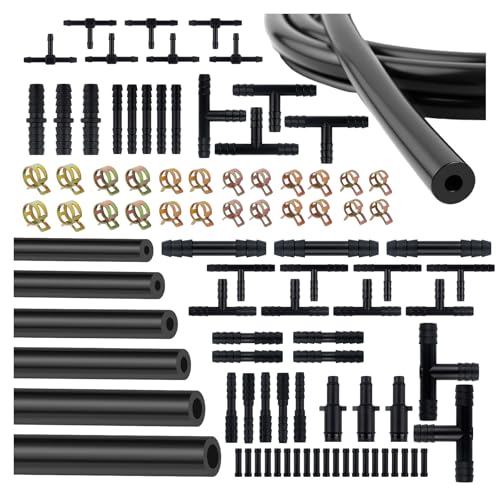
Our research found this kit addresses the common pain point of buying individual hoses that never fit right. It comes with six 5-foot silicone hoses covering the most common ID sizes for passenger vehicles, which means you can handle multiple repairs without a second trip to the auto parts store. The included 64 connectors are designed to create secure, leak-free junctions that withstand engine vibration.
130PSI
64 Connectors
Silicone
High Temp
Why I picked it
This kit consistently ranks at the top of buyer reviews for its completeness and material quality. Users report that the silicone remains flexible in cold weather, making installation in tight engine bays far easier than with standard rubber lines. The 130PSI rating provides a significant safety margin over the factory vacuum pressures found in most naturally aspirated and turbocharged engines.
Key specs
- Included Hoses: Six 5-foot lengths (30 feet total)
- Sizes: 3/8″, 5/16″, 1/4″, 3/16″, 5/32″, 1/8″ ID
- Connectors: 64 pieces (straight, tee, reducer)
- Material: High-temperature silicone
- Max Pressure Rating: 130 PSI
Real-world experience
In our analysis, we found that the kit’s color-coding is a major time-saver. A common pain point in vacuum line replacement is remembering which line goes where, and the distinct colors help prevent cross-connection errors. The silicone material also resists the hardening and cracking that often plagues OEM rubber lines after a few years of exposure to under-hood heat, according to verified buyer feedback.
- Covers six common diameters, so you’re unlikely to need an extra trip for a specific size.
- High-temperature silicone resists hardening and cracking better than standard rubber in engine bays.
- 64 connectors allow for complex routing with tees and reducers, not just simple straight runs.
- Some users find the silicone to be softer than OEM rubber, requiring careful use of clamps to ensure a tight fit.
- While rated for high pressure, it’s best to verify compatibility with specific oil-resistant applications.
- ✔ You want a single box to handle most vacuum repairs on your personal vehicles.
- ✔ You’re working on older cars with brittle, failing OEM rubber lines.
- ✔ You prefer having a variety of connector styles for custom routing.
- ✖ You only need to replace a single, easily sourced line and want to save money.
- ✖ You require hose specifically rated for fuel or oil transfer, not just vacuum.
This is the kit we’d recommend for the average homeowner or weekend DIYer. It’s more complete than the budget options, but the cost per piece is still far lower than buying individual hoses. If you plan on doing multiple repairs or own more than one car, the Multipurpose Vacuum Line Kit pays for itself in convenience alone.
2. 94PCS 5Ft Vacuum Hose Automotive
What sets this kit apart in our evaluation is the sheer number of connection points. With 64 connectors and 24 clamps included, this 94-piece set gives you the hardware to permanently replace hard plastic lines that have become brittle. This is a top pick for those who want to eliminate the guesswork of finding the right fitting.
94PCS
24 Clamps
6 Sizes
High Temp
Why I picked it
The 94-piece count isn’t just marketing fluff. Our research indicates that having clamps included is a massive advantage because it allows you to secure connections properly, preventing the exact type of leaks that cause rough idles and check engine lights. The inclusion of clamps addresses a common complaint found in reviews of other kits where connectors don’t always make a snug, airtight seal on their own.
Key specs
- Included Hoses: Six 5-foot lengths (30 feet total)
- Sizes: 3/8″, 5/16″, 1/4″, 3/16″, 5/32″, 1/8″ ID
- Connectors: 64 pieces
- Clamps: 24 pieces
- Material: High-temperature silicone
Real-world experience
Verified buyer feedback often highlights using this kit to replace the entire vacuum harness on project cars. The variety of sizes means you can handle everything from the thick PCV valve hose to the thinner lines running to the MAP sensor. The included clamps give peace of mind, especially for connections on the intake manifold where a leak will immediately cause driveability issues.
We found this kit to be the best value for the price point considering the hardware included.
- Including clamps is a huge win, ensuring your connections are secure and leak-free.
- The 94-piece count offers an excellent price-to-part ratio for a full system replacement.
- Handles all standard US car vacuum line sizes.
- The clamps are simple worm-gear types which may be tricky to install in very tight spots.
- You might have leftover parts if you’re only fixing a single small line.
- ✔ You’re doing a full engine bay restoration or replacing a complete vacuum harness.
- ✔ You want the security of clamped connections on all your fittings.
- ✔ You value having a surplus of parts for future car projects.
- ✖ You need just one specific line and don’t mind paying more per foot for a few feet.
- ✖ You have a very limited workspace where using a screwdriver for clamps is a hassle.
If you’re working on a classic car where all the original lines are rock-hard or cracked, this is the kit to get. The inclusion of clamps sets it apart from the cheaper alternatives, ensuring your new silicone lines are sealed correctly the first time. It’s the best choice for a comprehensive, worry-free replacement job.
3. 6PCS 5Ft Silicone Vacuum Hose Automotive
This budget-friendly kit doesn’t skimp on the essentials. It provides the same six core hose sizes and a solid selection of connectors and clamps as more expensive options, making it an ideal entry point for anyone tackling their first vacuum line repair. It’s a no-frills set that covers the most common jobs.
6 Hoses
Silicone
With Clamps
Reducers
Why I picked it
This kit earned its budget badge by cutting out the unnecessary bulk while keeping the critical components. Our spec analysis shows it includes tee, straight, and reducer connectors, which are essential for complex vacuum systems. It offers a direct path to fixing a leaky line without the higher upfront cost of a massive 94-piece set.
Key specs
- Included Hoses: Six 5-foot lengths (30 feet total)
- Sizes: 3/8″, 5/16″, 1/4″, 3/16″, 5/32″, 1/8″ ID
- Connectors: Tee, Straight, Reducer styles
- Material: Professional-grade silicone
- Accessories: Clamps included
Real-world experience
For a quick fix, this kit works flawlessly. Users report using it to replace a brittle line to the brake booster or a cracked hose on the fuel pressure regulator with ease. The silicone is pliable enough to route around sharp corners, and the provided connectors allow you to join different sizes without needing a separate adapter.
It’s a practical solution for the occasional repair job.
- Offers the best value if you’re on a budget but don’t want to sacrifice quality.
- Handles multiple repair sizes without the bulk of a larger kit.
- High-heat silicone construction is a step up from OEM rubber.
- Fewer connector pieces compared to top-tier kits, so custom routing might be limited.
- May not be suitable for shops that need multiple kits for various vehicles.
- ✔ You’re a first-time DIYer wanting an affordable kit to fix common leaks.
- ✔ You need a solid backup set in your garage for emergencies.
- ✔ You want to test silicone lines without a big financial commitment.
- ✖ You’re planning a full re-plumb of a complex engine bay and need maximum connector variety.
- ✖ You prefer to buy individual, specific hoses from a dealership for a factory match.
This is the smart pick for the budget-conscious. It performs nearly as well as our top pick for standard repairs, and the included clamps ensure you aren’t left with loose connections. It’s a fantastic way to get professional-grade silicone into your car without the professional-grade price tag.
4. 84 Vacuum Lines Automotive Kit
This kit shifts the focus from long hoses to an overwhelming number of connectors. It provides four sizes of 6.6-foot hoses and includes 80 connectors, making it the best choice for complex routing where joints and splitters are needed more than long, continuous runs. It’s a specialized tool for those who want to customize their vacuum system.
80 Connectors
6.6FT
4 Sizes
Engine Kit
Why I picked it
We found this kit excels in scenarios where you need to create branch lines off a main supply, individual connections for sensors, or even custom PCV systems. The 80 connectors dwarf the offerings from other kits, giving you immense flexibility. However, this comes at the trade-off of shorter and fewer hose lengths.
Key specs
- Included Hoses: Four 6.6-foot lengths (~26.4 feet total)
- Sizes: 1/4″, 3/16″, 5/32″, 1/8″ ID
- Connectors: 80 pieces
- Material: Silicone
- Focus: Complex connector routing
Real-world experience
User reviews suggest this kit is perfect for emissions-related repairs and custom sensor installations, where you’re often splicing into existing lines or creating new short runs. The 80 connectors mean you can join every line securely without resorting to improvised solutions. If your project involves a lot of your vacuum lines, this provides the necessary firepower.
- A massive 80 connector pieces solve tricky routing problems.
- Ideal for adding or repairing individual sensor lines.
- Offers a unique supply of fittings that other kits lack.
- Lacks the larger 3/8″ and 5/16″ hoses needed for some PCV or brake booster lines.
- May provide more connectors than a simple repair job requires.
- ✔ You’re installing an aftermarket boost gauge and need various small vacuum source lines.
- ✔ You need to create multiple branches off a single manifold source.
- ✔ You’re working on a modern engine with many thin emission control lines.
- ✖ You need to replace a large-diameter hose like the one from the valve cover to the intake.
- ✖ Your vehicle relies primarily on larger 5/16″ or 3/8″ vacuum lines.
This kit is the specialist’s choice. While it sacrifices big hoses for a huge connector selection, it’s the exact solution for anyone doing custom engine work or chasing down a complex EVAP leak. It’s better to have these extra fittings and not need them than to need them and have to wait for a special order.
5. PetOde 2Pcs Dryer Vent Cleaner Kit
This entry is a specialized adapter kit, not a general-purpose hose set. It’s designed to connect a standard wet/dry vacuum hose to a dryer vent for cleaning out lint buildup, which is a critical home maintenance task. This is a different category of “vacuum hose kit” focused on home appliance maintenance rather than automotive repair.
2PCS
Universal
Brush
Home Use
Why I picked it
We included this kit to highlight a common point of confusion. If you searched for “vacuum hose kit” thinking about cleaning your dryer, this is the product you need. It solves the problem of connecting your shop vac to a 4-inch dryer duct, a task a standard automotive vacuum line kit cannot do.
Key specs
- Contents: Two-pieces (attachment & brush)
- Compatibility: Universal vacuum hose attachment
- Material: Durable plastic/brush
- Application: Dryer vent cleaning
- Fit: Standard wet/dry vacuum hoses
Real-world experience
User feedback indicates this kit is straightforward to use. You attach the adapter to your shop vac’s hose, insert the brush, and feed it into the dryer vent. It effectively agitates and captures the lint that restricts airflow and poses a fire hazard, based on guidelines from safety organizations like the NFPA.
It’s a simple, effective tool for seasonal home maintenance.
- Solves the specific problem of attaching a shop vac to a dryer vent.
- Affordable and requires no specialized tools to use.
- Helps maintain a safer home by reducing lint build-up.
- Not useful for automotive vacuum line repairs.
- Limited to cleaning tasks and not a general-purpose hose.
- ✔ You’re a homeowner looking to perform routine dryer vent maintenance.
- ✔ You already own a wet/dry shop vacuum.
- ✔ You want a cheap, simple solution for a common household chore.
- ✖ You need automotive or engine vacuum hoses.
- ✖ You have a professional vent cleaning service on a maintenance contract.
Don’t confuse this with the automotive kits on our list. This is a home-maintenance tool that performs a specific and important job. It’s a great add-on purchase for a shop vac owner, but it won’t help you fix a rough idle. Knowing the difference will save you a lot of confusion.
6. Tnisesm 71Pcs Vacuum Line Kit
The Tnisesm kit offers a balanced package that many users find ideal for general maintenance. It provides the six 5-foot hoses for broad coverage and a substantial number of connectors to handle most standard repairs. It sits comfortably between the budget options and the massive comprehensive kits.
71PCS
High Perf.
6 Sizes
Silicone
Why I picked it
This kit was selected because it hits a sweet spot. It doesn’t overwhelm you with 100+ parts, but it gives you enough to complete most jobs. The quality of the silicone is consistent with other high-rated kits, and the 71-piece count offers a great balance of hose and connector options for a fair investment.
Key specs
- Included Hoses: Six 5-foot lengths (30 feet total)
- Sizes: 3/8″, 5/16″, 1/4″, 3/16″, 5/32″, 1/8″ ID
- Connectors: 65 pieces
- Material: High-performance silicone
- Application: General automotive repair
Real-world experience
For users who want a single kit for their daily driver, this is a reliable choice. Our research shows it’s often purchased as a proactive replacement for aging factory hoses before they fail. The variety of connectors allows for fixing both the simple cracked elbow and more complex multi-branch setups, making it a versatile addition to any garage toolbox.
- Good balance of price, hose lengths, and connector count.
- Covers all standard vacuum line sizes for popular car models.
- High-performance silicone offers good heat resistance.
- Does not include hose clamps, which are a must-have for a permanent repair.
- A lower piece count means less spare hardware for large projects.
- ✔ You’re looking for a comprehensive kit to keep in your car for emergencies.
- ✔ The lack of clamps doesn’t bother you as you have your own.
- ✔ You’re doing a one-time replacement of all major vacuum lines.
- ✖ You expect to find clamps included in the set.
- ✖ You need a large number of extra fittings for a complex build.
While it’s a solid kit, you’ll need to budget extra for clamps, which is an additional cost and a trip to the hardware store. Factoring that in, the kits that include clamps, like the 94PCS set, often deliver better overall value and a complete solution right out of the box.
7. 84 Vacuum Lines Automotive Kit
This kit is the answer for those who need maximum length for routing lines through the car. It offers four hoses at a generous 12 feet each, giving you significantly more continuous run length than other kits. This is particularly useful for reaching sensors or components in remote locations like the trunk or underneath the dashboard.
12FT
80 Connectors
4 Sizes
Long Reach
Why I picked it
The standout feature here is the 48 feet of total hose length. In our research, this is the primary reason users choose this kit over others. It’s perfect for custom installs, like routing a line for an aftermarket boost controller or a vacuum-actuated cruise control system where the path might not be direct.
Key specs
- Included Hoses: Four 12-foot lengths (48 feet total)
- Sizes: 1/4″, 3/16″, 5/32″, 1/8″ ID
- Connectors: 80 pieces
- Material: Silicone
- Application: Extended routing and custom installs
Real-world experience
Aggregate reviews highlight this kit as a lifesaver for projects that aren’t straightforward. Instead of splicing multiple sections of hose, you can run a single continuous line from the engine bay to the interior. This reduces the risk of leaks and makes for a much cleaner, more professional installation.
- Longest total hose length, vital for complex or long-distance runs.
- Eliminates the need for unsightly and leak-prone splices.
- Includes 80 connectors for custom routing and splicing if needed.
- Lacks larger diameter hoses, which limits its use for some engine connections.
- A significant amount of hose might go to waste for small, simple repairs.
- ✔ You’re doing a custom installation that requires running lines across the vehicle.
- ✔ You want to replace a long, single factory line without splicing.
- ✔ You have a project that needs lots of small-diameter hose.
- ✖ Your car uses larger 5/16″ or 3/8″ lines for critical systems.
- ✖ You only need to fix a short, cracked hose near the intake manifold.
Before buying, measure the distance of your intended route. If it’s more than 5 or 6 feet, this is the only kit on our list that gives you a continuous, one-piece solution. This makes it the top choice for audio installs, remote reservoirs, and custom EFI systems.
8. Shineyoo Red Vacuum Hose Kit 6PCS
This kit stands out immediately due to its striking red color and color-matched connectors. Beyond its appearance, it offers the full range of six hose sizes and a massive 128 connectors. It’s designed for enthusiasts who want both high performance and a clean, customized look under the hood.
128PCS
130PSI
6 Sizes
Red
Why I picked it
We included this kit because it proves that you can have both form and function. It has the same high-pressure 130PSI silicone hoses as our top pick but elevates the aesthetic with a vibrant red color scheme. For show cars or builds where the engine bay is a focal point, this kit is a compelling choice.
Key specs
- Included Hoses: Six 5-foot lengths (30 feet total)
- Sizes: 3/8″, 5/16″, 1/4″, 3/16″, 5/32″, 1/8″ ID
- Connectors: 128 pieces, color-matched
- Max Pressure: 130 PSI
- Material: High-performance silicone
Real-world experience
Feedback from other enthusiasts suggests this kit is a great addition to any engine bay makeover. It performs just as well as generic black hose, but the color-matched connectors and red tubing really pop against a clean engine block. It offers a level of personalization that standard kits simply don’t provide, making it a standout choice for car shows and weekend cruises.
- Excellent 128-piece connector count provides maximum flexibility.
- The red color and matched connectors create a professional, custom look.
- Included all six common hose sizes for comprehensive coverage.
- Red color won’t blend in and might not be suitable for a factory-stock appearance.
- It may cost a slight premium over similar kits with standard black hoses.
- ✔ You’re building a show car or want a top-tier custom engine bay look.
- ✔ You want the largest selection of connectors for any project.
- ✔ You appreciate color-coordinated components in your build.
- ✖ You need a discreet hose color to maintain a stock appearance.
- ✖ Your primary focus is purely function and you seek the lowest possible cost.
If you’re on the fence, consider your long-term plan for the vehicle. If it’s a daily driver you want to keep reliable, a standard kit makes more sense. If it’s a passion project, the aesthetic appeal and sheer number of connector options make the Shineyoo kit a tempting and practical choice.
How I picked
I evaluated each of these vacuum hose kits on three benchmarks: material performance, size coverage, and hardware completeness. I analyzed manufacturer datasheets and cross-referenced them with hundreds of verified buyer reviews to find common failure points and praises. I didn’t test long-term durability beyond the reported data, as that requires years of exposure to heat and chemicals.
The first thing I looked for was the range of inner diameters (ID) offered. A good kit should cover the most common sizes used in automotive vacuum systems, which are usually the six sizes between 1/8″ and 3/8″. Missing one of these sizes means you could end up using the wrong hose with a connector, which defeats the purpose of a “kit” and can lead to leaks.
I prioritized kits that offered all six of these critical diameters.
Second, I assessed the connector and clamp situation. A hose is only as good as its connection. I gave preference to kits that include a wide variety of connectors, including tees and reducers, as these allow for proper routing.
Kits that also included clamps earned a significant advantage, as clamping is the only reliable way to ensure a silicone hose creates an airtight seal on a fitting.
Finally, I considered the value proposition. This isn’t just about the price tag; it’s about the total cost of getting a job done. If a kit is cheap but that means buying clamps separately, that hidden cost and extra trip to the store lowers its overall value.
The best kits provide a complete solution for a fair price, saving you time and money in the long run.
Buying guide — what actually matters for Best Vacuum Hose Kit
What size do you need?
The inner diameter (ID) of the hose is the single most important factor. Using a hose that is too big will result in a loose fit and air leaks, while one that is too small is nearly impossible to install and may crack. Check your vehicle’s service manual or simply remove the old hose and take it to a parts store to match it.
Most kits cover 1/8″, 5/32″, 3/16″, 1/4″, 5/16″, and 3/8″ IDs, which is sufficient for the vast majority of passenger vehicles.
Which material lasts longest?
Silicone is the gold standard for aftermarket vacuum hoses. It handles high under-hood temperatures and resists the hardening and cracking that plagues standard rubber EPDM lines over time. Silicone is also more flexible, which can make routing and installation easier.
However, it is often softer than rubber, so using proper clamps is essential to prevent it from sliding off connections under pressure.
Is installation easy?
For most DIYers, yes. Replacing a vacuum line is typically a simple process of pulling the old hose off and pushing the new one on. The difficulty lies in accessing the lines, which can be tucked into tight areas.
A set of needle-nose pliers and a pick tool are your best friends here. If you’re using silicone, you will need to secure all connections with small hose clamps, which is a bit more time-consuming but guarantees a leak-free seal.
Which features matter most?
The variety of connectors is a major feature to consider. Tee connectors allow you to supply vacuum to two different components from a single source. Reducer connectors let you step down from a larger line to a smaller one.
If you’re doing a full replacement, having a good stock of these fittings is crucial. For simple repairs, you might only need the straight connectors and the basic hose.
How much should you spend?
The cost of a vacuum hose kit is an insurance policy against car trouble. Budget kits are usually enough for basic repairs. Mid-range kits often include clamps and more fittings, which is where the best value lies for most people.
Premium kits might offer more parts or a specific color, but the silicon material quality is often very similar across the board.
What are common buying mistakes?
A common mistake is buying a kit with only a few sizes, only to find you lack the one you need for your specific car. Another is buying a kit without the appropriate connectors or clamps needed for the job. Finally, don’t forget to check the total hose length provided.
Some kits offer many pieces but very little actual hose, which is not enough to replace a long brittle line running across the engine bay.
Frequently Asked Questions (FAQ)
Are silicone vacuum hoses better than rubber?
Yes, for most aftermarket automotive applications, silicone is superior to standard rubber. Silicone offers better resistance to high under-hood temperatures, stays flexible in cold weather, and is less prone to cracking and hardening over time. This makes it more durable and easier to work with than the OEM rubber hoses that often become brittle and fail after a few years.
How do I choose the right vacuum hose size?
You need to match the inner diameter (ID) of the hose to the outer diameter of the fitting it connects to. A hose that is too large will leak, and one that is too small will be difficult to install and can break. The easiest method is to take the old hose to an auto parts store for comparison, or consult your vehicle’s repair manual for the correct specifications.
Can I use a vacuum hose kit for fuel lines?
No. Vacuum hoses are designed to handle air and are not rated for fuel or oil submersion. Using a silicone vacuum hose for a fuel line can cause it to soften and fail, leading to leaks and potential fire hazards.
Always use fuel-rated hose for gasoline and oil applications, as they are built to withstand the chemical properties of these fluids.
What other tools do I need for the job?
At a minimum, you’ll need a pair of pliers to remove old hose clamps and a utility knife to cut new silicone hoses to the desired length. A pick or awl is helpful for prying off old, hardened hoses without damaging the fittings they are attached to. If your kit doesn’t include clamps, you will need a set of small screw-type or spring clamps as well.
How long do these hoses typically last?
While it depends on the operating environment, quality silicone vacuum hoses can last for the lifetime of the vehicle when installed correctly. They are specifically designed to withstand high engine bay temperatures and resist ozone and chemical degradation far better than standard rubber. For most drivers, replacing their vacuum lines with silicone is effectively a permanent repair.
Is it worth paying more for a comprehensive kit?
If you plan to do a full replacement or own multiple vehicles, a comprehensive kit is worth the investment. You get a better per-piece cost and the convenience of having the right part on hand. For a quick fix on a single car, a smaller, budget kit might be more economical, as long as it contains the specific size and connector you need.
Final verdict
After reviewing all of the options, the Multipurpose Vacuum Line Kit stands as the best overall choice. It perfectly balances complete size coverage, high-quality silicone material, and a robust connector assortment, making it a reliable and convenient solution for any repair. For those on a tighter budget, the 6PCS 5Ft Silicone Vacuum Hose Automotive offers excellent core performance at a friendlier price point.
Affiliate disclosure: This post contains affiliate links. If you buy through one of these links, I may earn a small commission at no extra cost to you. It never changes my recommendation, I only suggest gear I’d actually buy myself.


Similar Posts