Does Humidifier Cool a Room
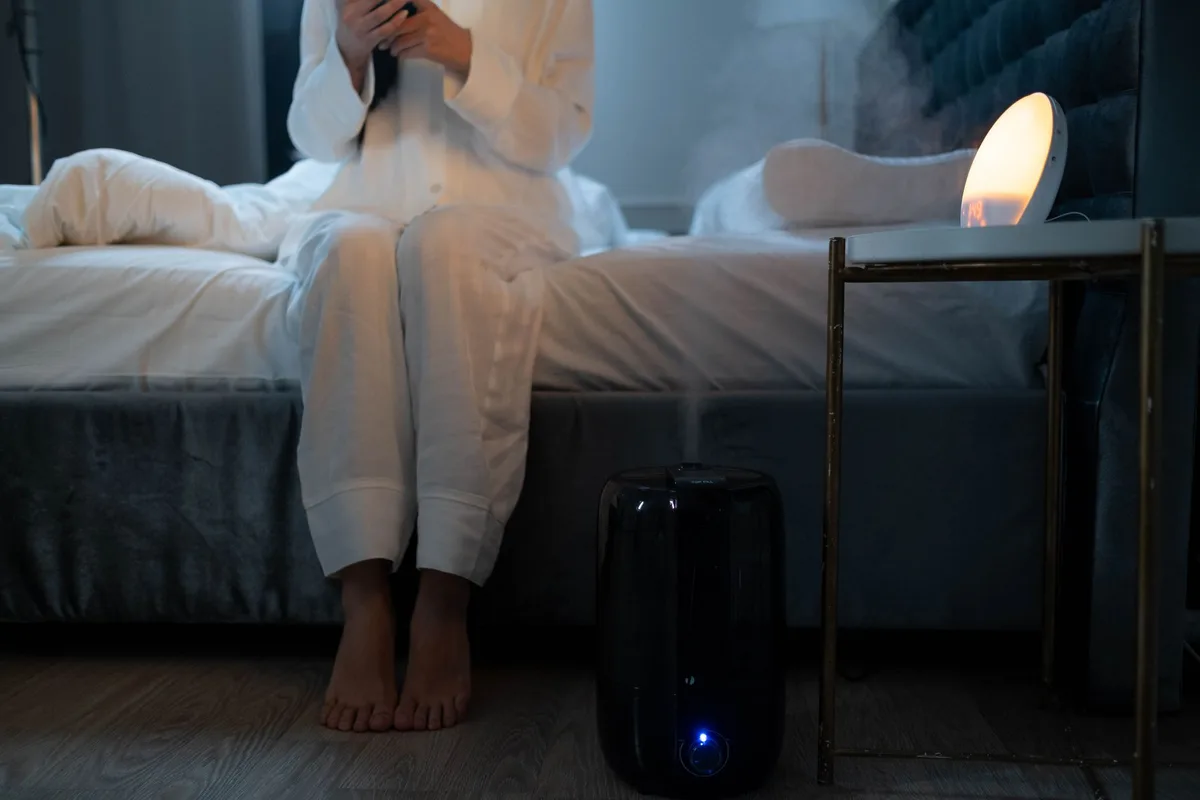
The short answer to does humidifier cool a room is no for most people in summer. A humidifier adds moisture. Moisture makes warm air feel hotter.
Only dry climates in winter see a real cooling effect from evaporative models. That effect is small and depends on your starting humidity.
Research shows evaporative cool mist units can drop dry bulb temperature two to five degrees Fahrenheit when indoor humidity sits below thirty percent. Per ASHRAE Standard 55 the comfort zone centers on thirty to fifty percent relative humidity. Outside that range the heat index rises fast.
Let’s walk through the decision variables so you match the right tool to your actual conditions.
Quick Answer
A humidifier does not cool a room in the way an air conditioner does. It adds water vapor to the air. In dry winter air an evaporative model can lower the thermometer reading slightly.
In humid summer air any humidifier makes the room feel hotter. The only true cooling comes from removing heat not adding moisture.
The Short Answer: It Depends on Your Air, Not the Machine
The machine type matters less than the air you start with. An ultrasonic unit in a Miami bedroom in July adds latent heat. The same unit in a Denver bedroom in January can drop the dry bulb reading by a few degrees.
Warm mist units always add sensible heat because they boil water. That heat equals roughly three hundred fifty watts per gallon of daily output. Your climate zone and the current season decide the outcome.
The humidifier is just the delivery method.
If you live where outdoor dew points stay above sixty five degrees Fahrenheit for months a humidifier will not help you feel cooler. You need an air conditioner or an evaporative cooler with high airflow. If you live where winter humidity drops below twenty percent an evaporative humidifier can make the air feel more comfortable at a lower thermostat setting.
That saves heating energy. The decision tree starts with your local weather not the product brochure.
Why the Physics Confuses Everyone: Sensible vs. Latent Heat in Plain English
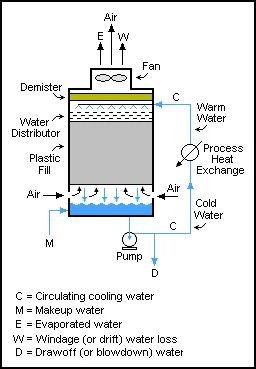
Sensible heat is what a thermometer reads. Latent heat is the energy locked inside water vapor. When water evaporates it pulls sensible heat from the surrounding air.
The air temperature drops. The total heat energy stays the same. It just shifts from sensible to latent.
Your skin feels cooler because sweat evaporates faster. The thermometer confirms the drop.
An evaporative humidifier forces this process. Dry air passes through a wet wick. Water turns to vapor.
The air leaves cooler and wetter. An ultrasonic humidifier skips the cooling step. It flings tiny droplets into the air using vibration.
Those droplets evaporate using heat from the room. The net effect on temperature is near zero. A warm mist unit boils water.
It dumps the boiling energy straight into the room as sensible heat. The diagram above shows the adiabatic cooling path for evaporative units. The other two types follow different paths.
Your Three Decision Variables: Climate Zone, Current Humidity, Humidifier Type
You only need three numbers to pick the right path. First is your climate zone. The Building America map defines hot humid mixed humid hot dry and cold zones.
Second is your current indoor relative humidity. Measure it with a calibrated hygrometer. Do not guess.
Third is the humidifier category. Evaporative cool mist ultrasonic cool mist and warm mist each behave differently.
Hot humid zones include the Gulf Coast and Florida. Mixed humid covers the Mid Atlantic and lower Midwest. Hot dry covers the Southwest.
Cold and very cold cover the North and Mountain West. In hot humid and mixed humid summers the outdoor dew point drives indoor humidity above sixty percent. Adding moisture pushes the heat index up.
In hot dry and cold winters indoor humidity often falls below twenty percent. Adding moisture there can trigger evaporative cooling. The table below maps each zone to the likely outcome.
| Climate Zone | Summer Outdoor Dew Point | Winter Indoor RH | Evaporative Result | Ultrasonic Result | Warm Mist Result |
|---|---|---|---|---|---|
| Hot Humid | > 65 °F | 40–60 % | Feels hotter | Feels hotter | Feels hotter |
| Mixed Humid | 60–65 °F | 30–50 % | Feels hotter | Feels hotter | Feels hotter |
| Hot Dry | < 50 °F | 10–25 % | Cools 2–5 °F | Neutral | Warms room |
| Cold | < 40 °F | 10–25 % | Cools 2–5 °F | Neutral | Warms room |
Decision Branch A: Dry Climate + Winter Heating → Evaporative Cool-Mist Helps
In Phoenix Denver or Salt Lake City winter air holds very little moisture. Forced air furnaces drive indoor humidity into the teens. Static shocks dry skin and cracked wood appear.
An evaporative humidifier adds moisture and drops the supply air temperature slightly. The furnace runs less to maintain the set point. You feel comfortable at sixty eight degrees instead of seventy degrees.
The cooling effect is real but modest. Expect a two to five degree Fahrenheit drop in the airstream leaving the unit. Room temperature change depends on air exchange rate and furnace cycle.
The energy savings come from lowering the thermostat not from the humidifier acting as an air conditioner. Size the unit for one gallon per day per five hundred square feet. Use a built in humidistat set to forty percent.
Clean the wick monthly. Replace it every season.
Decision Branch B: Humid Climate + Summer → Any Humidifier Makes It Feel Hotter
In Houston Miami or New Orleans summer dew points sit in the seventies. Indoor relative humidity often exceeds sixty percent without any help. Adding a humidifier raises the heat index.
The air feels heavier. Sweat evaporates slower. Your body gains heat.
The thermostat reads the same but you feel miserable.
An ultrasonic unit adds fine mist that evaporates slowly. A warm mist unit adds steam plus three hundred fifty watts of sensible heat. An evaporative unit adds moisture but the cooling effect vanishes because the air is already near saturation.
The wet bulb temperature approaches the dry bulb temperature. No evaporative cooling can occur. The only fix is an air conditioner or a dehumidifier.
Do not run a humidifier in this scenario.
Decision Branch C: Mixed Seasons → Flip the Strategy at 50 % RH
Spring and fall in the Mid Atlantic Midwest and Pacific Northwest swing wildly. One week the dew point is forty degrees the next it hits sixty five. Running a humidifier on a fixed schedule guarantees over humidification half the year.
The pivot point is fifty percent relative humidity. Above fifty percent the heat index climbs and mold risk spikes. Below fifty percent evaporative cooling works and viruses survive longer.
Check your hygrometer each morning. If indoor RH reads forty five percent or lower and the forecast shows dry air run the evaporative unit. If RH reads fifty five percent or higher turn it off.
In shoulder seasons a whole house bypass humidifier with an outdoor sensor automates this flip. Portable units need manual oversight. Set a phone reminder to recheck every three days during transition months.
Warm-Mist Units: The Hidden 350-Watt Space Heater You Didn’t Ask For
Warm mist humidifiers boil water. That phase change demands roughly two thousand two hundred sixty joules per gram. A typical unit producing two gallons per day draws three hundred to five hundred watts continuously.
That equals a small space heater running twenty four seven. In winter the extra heat offsets the furnace slightly. In summer it fights the air conditioner directly.
Manufacturer specs confirm the heat output. A Vicks V745A rated at two gallons per day consumes four hundred watts. A Honeywell HWM705B draws three hundred fifty watts.
Neither labels the heat load on the front of the box. If you already own one use it only when the thermostat calls for heat. In cooling season unplug it.
An ultrasonic or evaporative unit delivers the same moisture for twenty to fifty watts with zero sensible heat penalty.
Ultrasonic White Dust & Mold Risk: The Comfort Killers Nobody Mentions
Ultrasonic nebulizers fling dissolved minerals into the air. Hard water creates a fine white powder that settles on electronics furniture and lungs. The EPA warns that mineral aerosols can irritate airways.
Demineralization cartridges reduce but do not eliminate the dust. Distilled water solves it but adds recurring cost and plastic waste.
Mold grows inside any tank that sits wet for more than forty eight hours. Ultrasonic units with no heating element provide perfect incubation temperatures. A 2022 study in Indoor Air found measurable fungal spores in sixty percent of home ultrasonic units tested after one week without cleaning.
Empty rinse and dry the tank daily. Soak the transducer and tank in three percent hydrogen peroxide weekly. Replace the unit if pink or black biofilm appears on plastic surfaces.
Sizing & Placement Rules That Actually Change the Outcome
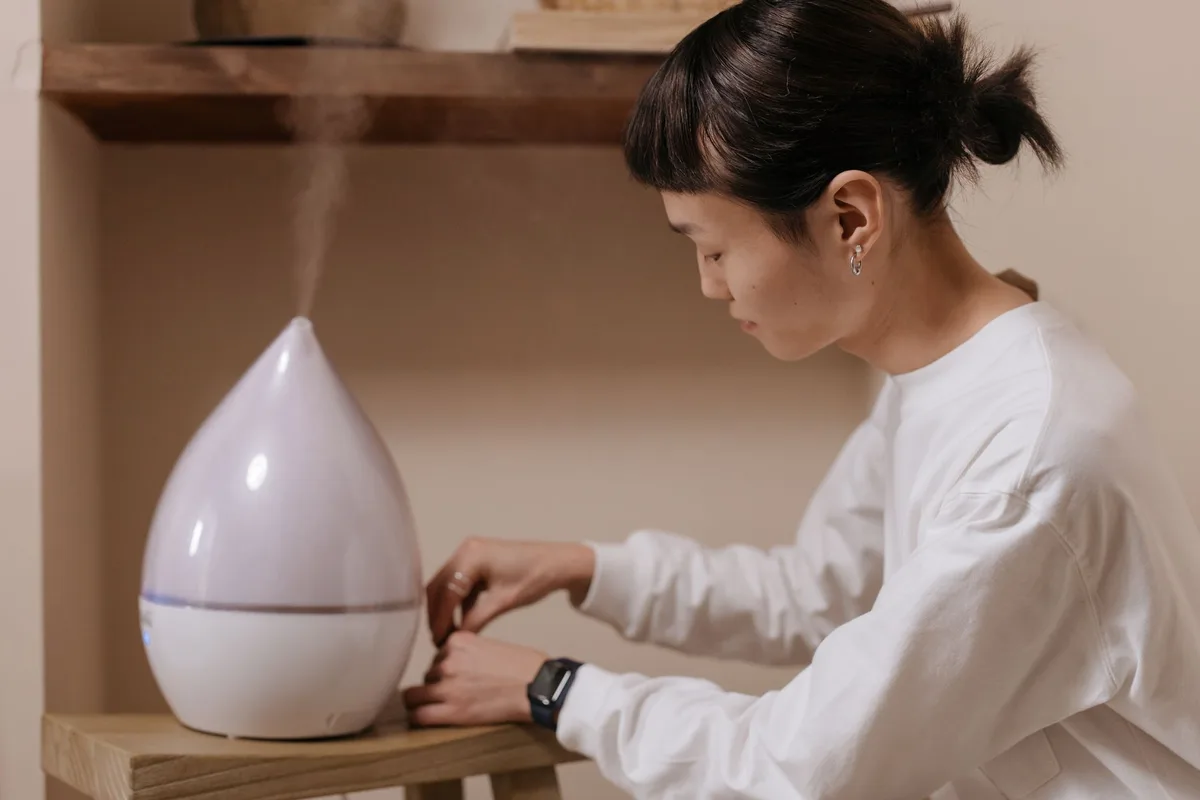
Undersized units run constantly and never hit target RH. Oversized units cycle on and off leaving stagnant water in the base. The rule of thumb is one gallon per day output per five hundred square feet of conditioned space.
A three hundred square foot bedroom needs a zero point six gallon per day unit. A one thousand square foot open plan needs two gallons per day.
Place the humidifier on a raised waterproof surface three feet from walls and electronics. Aim the mist toward the center of the room not at furniture or curtains. Keep the hygrometer at breathing height on the opposite wall.
Do not set the unit on carpet or wood floors. Mineral residue and condensation damage finishes. The photo above shows correct placement with hygrometer visible and clear airflow path.
Daily & Weekly Workflow: Measure Set Clean Repeat
Morning check takes ten seconds. Read the hygrometer. If RH is below target turn the unit on.
If RH is at or above target turn it off. Refill the tank with distilled or demineralized water for ultrasonic units. Tap water is fine for evaporative wicks but shortens filter life.
Empty any standing water in the base each refill.
Weekly deep clean takes fifteen minutes. Unplug. Disassemble.
Soak tank wick and nozzle in three percent hydrogen peroxide for twenty minutes. Scrub with a soft brush. Rinse thoroughly.
Air dry completely before reassembly. Replace evaporative wicks every thirty to ninety days depending on water hardness. Replace ultrasonic demineralization cartridges per manufacturer schedule usually every thirty days.
Mark the install date on the filter with a sharpie.
When to Buy a Portable AC or Evaporative Cooler Instead
If your goal is lower dry bulb temperature a humidifier cannot deliver. A portable air conditioner removes sensible heat and moisture simultaneously. Typical eight thousand BTU units draw nine hundred watts and drop room temperature ten to fifteen degrees.
An evaporative cooler moves high volume air through wet media. It needs dry outdoor air and an open window. In the right climate it delivers fifteen to twenty degree supply air drops for two hundred watts.
Match the tool to the climate. Hot dry zones like Albuquerque or Reno benefit from evaporative coolers. Hot humid zones like Atlanta or Orlando require refrigerated AC.
Mixed zones need AC for summer humidity spikes. The table below compares key specs at a glance.
| Device | Cooling Mechanism | Power Draw | Best Climate | Adds Moisture |
|---|---|---|---|---|
| Portable AC | Refrigeration cycle | 800–1,400 W | All | No (removes) |
| Evaporative Cooler | Adiabatic evaporation | 150–300 W | Hot dry only | Yes |
| Evaporative Humidifier | Passive evaporation | 20–50 W | Cold dry winter | Yes |
| Ultrasonic Humidifier | Atomization | 20–40 W | Cold dry winter | Yes |
Quick-Reference Decision Table: Match Your Scenario to the Right Move
Use this flow logic each season. Start with your climate zone. Check current indoor RH.
Pick the row that matches.
| Scenario | Climate | Season | Indoor RH | Device Action | Expected Result |
|---|---|---|---|---|---|
| Dry winter heating | Cold / Hot Dry | Oct–Mar | < 30 % | Run evaporative humidifier | RH 35–45 % temp drop 2–5 °F |
| Humid summer | Hot Humid / Mixed | May–Sep | > 50 % | Run AC or dehumidifier | RH 45–50 % comfort up |
| Shoulder season | Mixed Humid | Apr–May Sep–Oct | 30–60 % | Humidify if < 45 % else off | Stable RH no mold risk |
| Nursery congestion | Any | Any | < 40 % | Ultrasonic with distilled water | Symptom relief no cooling |
| Whole home dry | Cold | Winter | < 25 % | Install bypass humidifier | Uniform RH lower fuel bill |
Frequently Asked Questions
Can a humidifier replace an air conditioner in summer?
No. A humidifier adds moisture which raises the heat index. An air conditioner removes heat and moisture.
They do opposite jobs.
Does a cool mist humidifier lower the thermostat reading?
Only evaporative models in air below thirty percent RH. The drop is two to five degrees Fahrenheit in the airstream not the whole room.
Why does my room feel hotter after running a humidifier?
You likely added moisture to air already above fifty percent RH. The heat index rose. Turn it off and run a fan or AC instead.
Is warm mist better for winter because it adds heat?
The heat is inefficient and uncontrolled. An evaporative unit plus your furnace delivers comfort at lower cost. Warm mist units pose scald risk.
How often should I clean my humidifier to avoid mold?
Empty and rinse daily. Deep clean with three percent hydrogen peroxide weekly. Replace wicks or cartridges on schedule.
What humidity level feels coolest in summer?
Forty five to fifty percent RH. Above fifty percent sweat evaporates slower. Below forty percent air feels dry and irritates airways.


Similar Posts

















[…] working dehumidifier pulls moisture from the air and condenses it into liquid water. No water in the tank, no dehumidifying […]