How to Tell If a Dehumidifier is Working

You’ve plugged it in, set the dial, and listened to the compressor hum. But is it actually doing its job? A dehumidifier can run for days and still leave your basement feeling damp, and that’s the problem, running doesn’t always mean working.
Let’s cut through the guesswork and show you exactly how to tell if a dehumidifier is working, step by step.
Image source: Pexels / Srattha Nualsate (Pexels License)
Most people assume that if the fan is spinning and the lights are on, the unit is fine. Not true. A dehumidifier can operate at half capacity, freeze up internally, or short-cycle without ever throwing an error code.
The only reliable way to know is to check the results, not the noise.
Test the Water Collection
The simplest test requires zero tools. Check the bucket. If you’ve run the unit for 24 hours and the reservoir is bone dry, something’s wrong.
A working dehumidifier pulls moisture from the air and condenses it into liquid water. No water in the tank, no dehumidifying happening.
Here’s the catch. In very dry climates or during winter months, a unit might legitimately collect only a trickle. But in a humid basement or during muggy summer weather, you should see a noticeable amount.
How much? A standard 50-pint unit can pull up to 50 pints in 24 hours under ideal conditions. Realistically, expect 10, 20 pints in a damp space.
If you’re getting zero, check the next steps before calling it broken.
What If the Bucket Has Water but the Room Feels Damp?
Hold on, this is a common trap. The dehumidifier is removing water, but the air still feels sticky. That’s not a broken unit, that’s an undersized one.
The machine is working, but it’s fighting a losing battle against a space that’s too large, or against continuous moisture sources like leaks or unvented dryers. Check the unit’s coverage rating. A 30-pint model won’t handle a 2,000-square-foot crawl space.
We’ll circle back to sizing later.
Monitor the Humidity Level with a Hygrometer
Your dehumidifier has a built-in humidistat, most do anyway, but those readings can be off by 10% or more. Trusting them is like checking your own fever with a warm hand. You need an external reference.
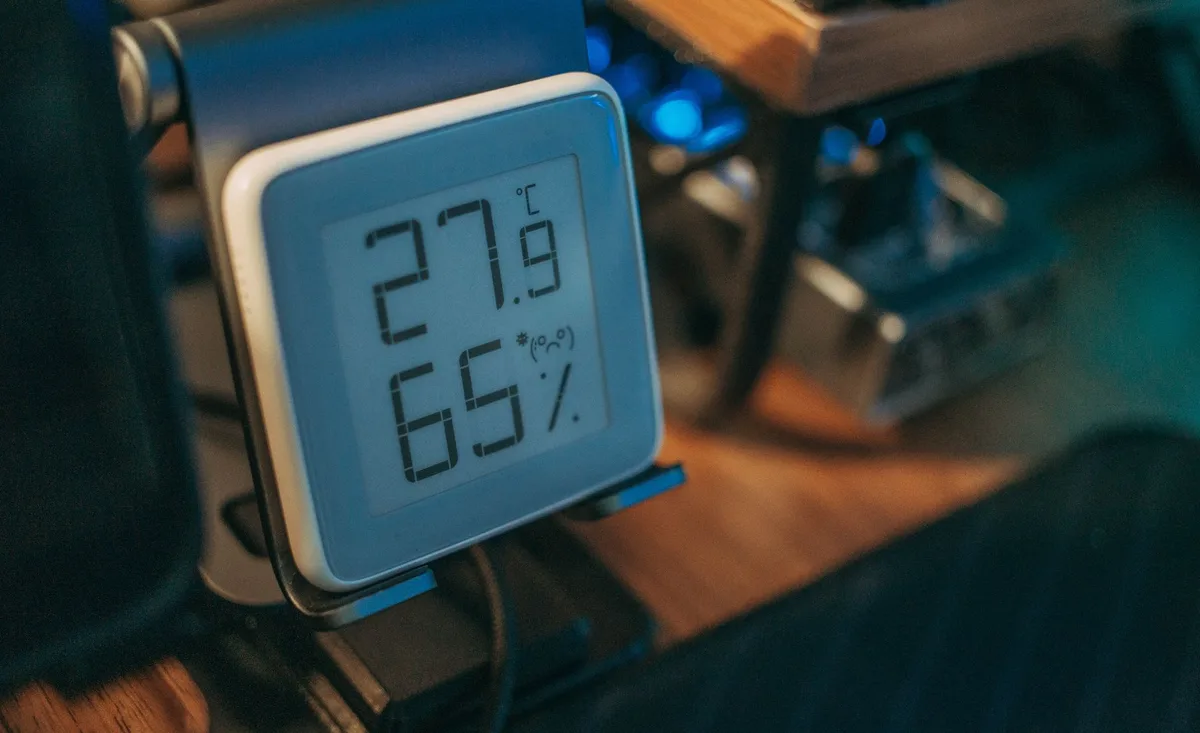
Image source: Pexels / FOX ^.ᆽ.^= ∫ (Pexels License)
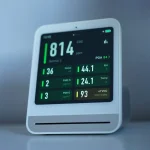
Pick up a digital hygrometer. They cost about the price of a pizza and they give you the ground truth. Place it in the same room as the dehumidifier, ideally on a central wall, away from direct drafts and sunlight.
Wait for a few hours and see what it says.
Here’s the test. Set your dehumidifier to 50% relative humidity. Let it run for 24 hours.
Then check the hygrometer. If the room stays at 65, 70% while the unit chugs along, you have a problem. A properly functioning unit should pull the room down to your set point, or at least make a significant dent within a day.
Now, a word of caution. If your starting humidity was 85%, the unit won’t reach 50% overnight. It’s not a miracle worker.
A 10, 20 percentage point drop in 24 hours is a solid sign the unit is working. Any less, and the unit might be failing.
What Should the Humidity Reading Be?
The EPA recommends keeping indoor humidity between 30% and 50%. The EPA’s guidance on mold and moisture is straightforward: above 60%, you’re in the danger zone for mold and dust mites. So, your target is simple.
If your dehumidifier can’t get below 60% in a normal-sized room, it’s underperforming.
But remember, external factors matter. It’s raining outside? Humidity might spike temporarily.
Just finished showering or cooking? Same deal. Give the unit time to recover, that’s normal operation, not a failure.
Listen to the Compressor, Not Just the Fan
Here’s a trick many folks miss. Put your hand on the unit’s side. Do you feel vibration?
That’s the compressor running. The compressor is the heart of the machine. It cools the coils, which condenses the moisture.
If you only hear the fan but feel no vibration, the compressor might have died.
A working dehumidifier makes a hum, a low, steady drone. It should run in cycles, not continuously, especially once the room hits the target humidity. If the compressor runs non-stop for days, the room isn’t reaching the set point and the unit is working overtime.
That could mean it’s undersized, or it could mean the refrigerant is low. Remember, a dehumidifier is essentially an air conditioner with both coils in the same box. Low refrigerant means poor cooling, which means poor dehumidification.
The Warm Air Test
Feel the air blowing out of the exhaust vent. It should be noticeably warmer than the room air. That’s the condenser coil rejecting heat.
Warmer exhaust equals working refrigerant cycle. If the air is merely lukewarm or room temperature, the compressor might be running but the system has lost its refrigerant charge. That’s a repair, not a replacement necessarily, but it’s definitely a failure.
Watch for Frost or Ice on the Coils
Here’s a weird one. A dehumidifier can work too well and then stop working, all at once. If the room temperature is below 65°F, the coils can ice up.
The ice acts as an insulator, preventing the coils from pulling moisture from the air. The unit runs, the bucket stays empty, and the room stays damp.

Image source: Pexels / Lorenzo Manera (Pexels License)
Pop the front grille off and look at the coils. If you see ice forming, unplug the unit and let it thaw completely. This is often a sign of operating conditions that are too cold, not a mechanical failure.
Many modern units have a defrost sensor that handles this automatically, but older or budget models don’t.
If you live in a cold basement, you might need a low-temperature-capable dehumidifier. These models are designed to operate down to 40°F or lower without freezing up. The standard models?
They’ll ice over, cycle off, and basically waste your electricity.
Measure the Airflow
Think of airflow like breath. A healthy dehumidifier moves air easily. If you hold a piece of paper near the intake grille, it should be sucked against it.
If the paper barely flutters, the filter is clogged or the fan is failing.
Check the Air Filter
This is the most common fix for a “broken” dehumidifier. The filter sits behind the front grille. Pull it out and hold it up to the light.
Can you see through it? If not, it’s clogged. Wash it with warm soapy water, let it dry, and pop it back in.
You’d be shocked how many units come back to life with just a clean filter.
While you’re at it, check the fin coils on the back of the unit. Dust can mat on the coils and reduce airflow. Vacuum them gently with a brush attachment.
Again, instant revival for many ailing units.
Check the Drain Hose or Pump
If you’re using the continuous drainage option with a hose, check for clogs. A kinked hose, a blocked drain hole, or a bucket that’s not seated correctly will shut the unit down, triggering a full-tank sensor that turns the entire machine off.
The same applies to units with a condensate pump. If the pump is dead or the drain line is blocked, the unit will run for a few minutes, shut off, and beep. This looks like a failure when it’s really a user-error or maintenance issue.
Check the float switch and the pump’s reservoir for debris.
Track the Power Consumption
Here’s a test for the more methodical types. Plug the dehumidifier into a smart plug or a watt meter. A typical 50-pint unit draws somewhere between 500 and 800 watts when the compressor runs.
If the unit is pulling power but the wattage is much lower than usual, say 100 watts, the compressor likely isn’t running, only the fan.
This won’t tell you if the dehumidifier is working effectively, but it will tell you if it’s working electrically. If you want the full picture, combine this with the hygrometer test. It’s overkill for most people, but it’s a definitive diagnostic that doesn’t require any guesswork.
How Long Should a Dehumidifier Run Each Day?
This is one you’ll want to nail down. A working dehumidifier in a significantly damp room runs almost continuously. Once the room reaches the target humidity, it cycles.
So, on day one, expect it to run non-stop for 12, 18 hours. By day three, if the space is dry, it should cycle: 15 minutes on, 30 minutes off, and so on.
If your unit cycles on and off every few minutes, that’s short cycling. That’s a sign of a failing humidistat or a compressor overheating. Not a good look.
If it never cycles off, but the bucket never fills, that’s another red flag.
Environmental Signs That It’s Working
Sometimes the room tells you more than the machine does. Look for these physical signs that the dehumidifier is doing its job:
- Windows fog up less. Condensation on glass in the morning is a humidity sign. If it disappears, the air is drying out.
- Musty smell fades. Mold and mildew need moisture. Dryer air means less of that earthy, cellar smell.
- Clothes in closets feel dry. This is a subtle one, but check your linens after a week of dehumidifying. They should feel crisp, not clammy.
- Dust mite activity drops. You can’t directly see this, but if allergies improve, the humidity is dropping. Dust mites die below 50% RH.
- Wooden doors and windows stop sticking. Swelling wood is a moisture symptom. When the air dries, swell goes down, and doors close easily again.
These are the passive signs. They take a few days to appear, but they’re the most honest indicators of all.
A Quick Troubleshooting Checklist
If you suspect your unit isn’t working, run through this checklist before you call anyone or buy a replacement:
- Is the filter clean?
- Is the bucket seated correctly?
- Is the room temp above 65°F?
- Is the unit correctly sized for the room?
- Is the humidity set lower than the current room level?
- Is the exhaust vent blocked?
- Are the coils free of ice and dust?
- Is the drain hose clear?
Nine times out of ten, one of these is the culprit. A dehumidifier is a simple machine. It just needs airflow, a refrigerant charge, and a temperature it can handle.
The Sizing Question: Is It Undersized?
We touched on this earlier, but it deserves a straight answer. If the room is too large for the unit, no amount of running will dry it out. The unit isn’t broken; it’s outmatched.
Here’s a quick rule of thumb. A humid basement around 1,000 square feet needs a 50-pint unit. A 500-square-foot space is fine with a 30-pint.
If you have a 70-pint unit in a 2,000-square-foot space, you’re looking at a lost cause. The machine will run forever, collect some water, but the relative humidity will never drop to the target.
In that case, the unit is working, it’s just not enough. You can verify by checking the hygrometer and confirming that the humidity is dropping slightly but plateauing at 60% or higher. That’s a cape and tights situation, not a repair manual situation.
When to Call a Professional
If the unit runs, the filter is clean, the bucket fills with a decent amount of water, but it still short-cycles, trips the breaker, or makes rattling noises, call an HVAC technician. They can check the refrigerant pressure and the sealed system. If the compressor is dead, the repair cost might exceed the price of a new unit.
That’s economics, not rocket science.
Also, look for error codes. Modern units have digital displays that flash codes for full buckets, faulty humidistats, or compressor failures. Consult your owner’s manual for the specific code.
If you lost the manual, most manufacturers have PDF copies online.
The Bottom Line
So, how do you tell if a dehumidifier is working? You check the results, not the sound. Clean the filter first.
Then watch the bucket. Verify with a hygrometer. Listen for the compressor and feel for the vibration.
Once you see the humidity drop, you’ll know for certain.
Don’t overthink it. If the humidity is falling and the tank is filling, it’s working. There’s no mystery hidden behind the grille.
It’s air in, water out, drier air back. That’s the whole trick.


Similar Posts
















[…] unit runs but the humidity reading never […]