Which Is Better Cold or Hot Humidifier
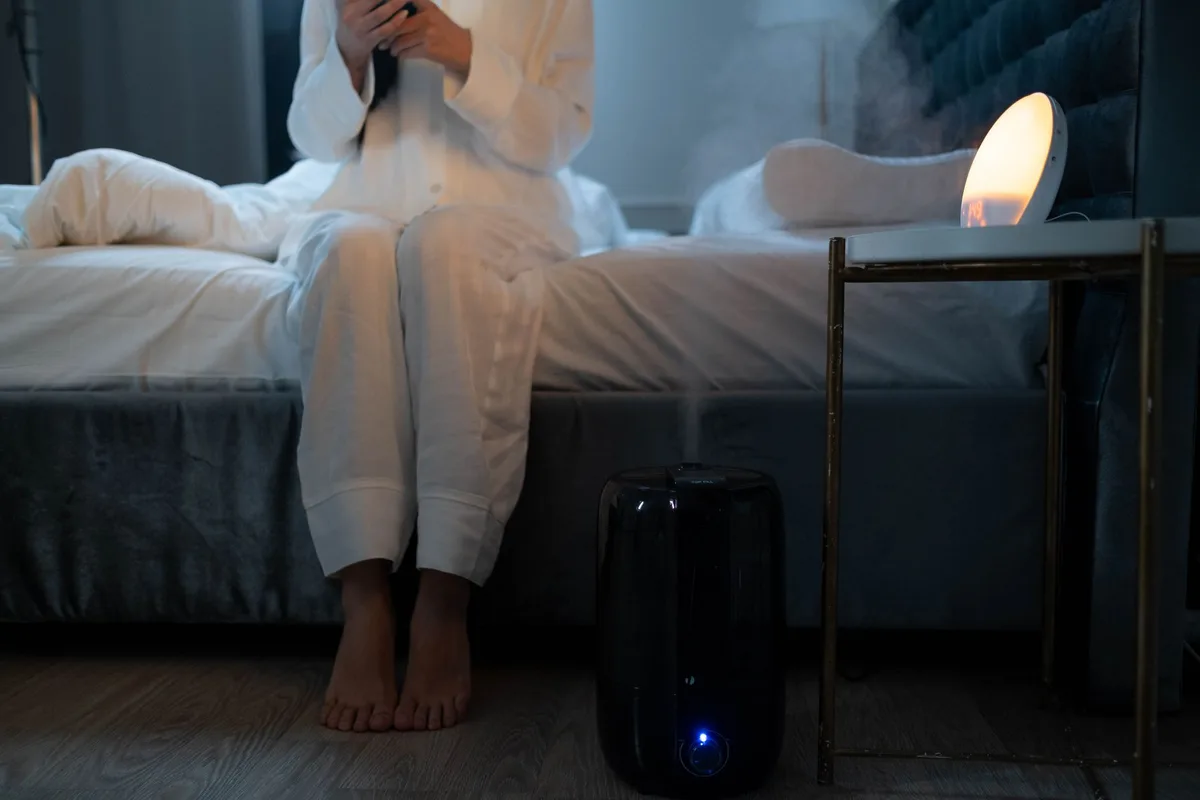
Choosing which is better cold or hot humidifier depends on who sleeps in the room and what symptoms you are managing. Cool mist units use ultrasonic vibration or a wick fan to disperse room-temperature water. Warm mist vaporizers boil water and release steam.
Both raise indoor humidity but the safety profile and maintenance load differ sharply.
The EPA recommends keeping indoor relative humidity between 30 and 50 percent. Levels above 60 percent encourage mold growth and dust mites. Most portable tanks hold one to two gallons and run 12 to 36 hours per fill.
Let’s break down the mechanics so you can match the right type to your situation.
Quick Answer
Cool mist humidifiers are safer for children and use less electricity. Warm mist humidifiers kill more bacteria through boiling and run quieter without a fan. Cool mist covers larger areas more efficiently.
Warm mist adds slight warmth to a cold room. Choose based on who uses the room and your maintenance tolerance.
Why the Cool Mist vs. Warm Mist Choice Actually Matters
The decision affects safety and daily effort. A warm mist unit holds boiling water. A tip-over can cause serious burns in seconds.
The American Academy of Pediatrics recommends cool mist only for nurseries. Cool mist models eliminate that hazard entirely. They also cost less to run.
A typical ultrasonic unit draws 25 watts. A warm mist unit draws 250 to 400 watts. Over a heating season that difference adds up.
Maintenance also diverges. Warm mist units need regular descaling of the heating element. Cool mist ultrasonic units produce white dust with hard water unless you use distilled water or a demineralization cartridge.
Evaporative cool mist units trap minerals in the wick. Your water hardness and willingness to clean dictate the better fit.
How Cool Mist Humidifiers Work: Ultrasonic and Evaporative Explained
Ultrasonic models use a metal diaphragm vibrating at 1.7 MHz. That vibration shatters water into micro-droplets. A small fan pushes the mist into the room.
No heat is involved. Evaporative models pull dry air through a saturated wick filter. Water evaporates naturally into the airflow.
The process self-regulates. As humidity rises evaporation slows. Both types release cool mist.
Ultrasonic units are nearly silent. Evaporative units produce fan noise around 30 to 40 decibels. Ultrasonic units can disperse minerals from tap water as white dust.
Evaporative units trap minerals in the wick. The wick needs replacement every 30 to 90 days. Manufacturer specifications confirm ultrasonic output ranges from 1.5 to 3 gallons per day.
Evaporative output ranges from 2 to 4 gallons per day depending on fan speed.

Which Cool Mist Type Fits Your Water
Hard water areas favor evaporative models. The wick captures calcium and magnesium. Ultrasonic units in hard water zones need distilled water or a cartridge.
Cartridges cost $10 to $15 and last one to two months. Distilled water costs about $1 per gallon. Over a season that exceeds cartridge cost.
Soft water areas work fine with ultrasonic units. No white dust appears. Maintenance drops to weekly tank cleaning only.
How Warm Mist Humidifiers Work: Steam Vaporizer Mechanics
Warm mist units use a heating element to boil water. Steam rises and cools slightly before exiting the nozzle. The boiling process kills most bacteria and mold spores in the water.
That means fewer microbes enter your air. The steam feels warm on your face. It can raise a small room temperature by one to two degrees.
Most units include a medicine cup for vapor pads or inhalants. Menthol or eucalyptus pads release medicated vapor. That helps congestion but avoid essential oils in plastic tanks.
Oils degrade plastic and void warranties. Heating elements accumulate scale. Descaling with vinegar every two weeks keeps output strong.
Power draw ranges from 250 to 400 watts. Runtime per tank fill averages 12 to 18 hours. Output typically reaches 1.5 to 2.5 gallons per day.
Side-by-Side Comparison: Performance, Safety, and Maintenance
| Feature | Cool Mist Ultrasonic | Cool Mist Evaporative | Warm Mist Steam |
|---|---|---|---|
| Safety around kids | Excellent | Excellent | Burn risk |
| Noise level | <25 dB | 30-40 dB | Gurgling boil |
| Electricity use | 20-50 W | 30-60 W | 250-400 W |
| White dust risk | High with hard water | None | Low (minerals stay in tank) |
| Microbe control | Tank cleaning only | Wick traps some | Boiling kills most |
| Coverage area | Up to 500 sq ft | Up to 600 sq ft | Up to 400 sq ft |
| Filter/wick cost | None | $10-30 per pack | None |
| Descaling needed | Rare | Never | Every 2 weeks |
| Medicated vapor | No | No | Yes with pads |

Cool mist wins on safety and operating cost. Warm mist wins on microbe control and medicated vapor option. Evaporative cool mist wins on hard water tolerance.
Ultrasonic wins on silence.
Best for Nurseries and Children’s Rooms: Safety First
Cool mist is the only responsible choice for a child’s room. The AAP position is clear. Warm mist steam causes severe burns faster than hot coffee.
A curious toddler can pull a unit down in seconds. Cool mist eliminates that hazard. Place any humidifier on a dresser or shelf at least three feet from the crib.
Aim mist away from bedding and walls. Use a hygrometer to keep humidity at 40 to 50 percent. Excess moisture grows mold on window frames and inside drywall.
Clean the tank daily with a quick rinse. Deep clean weekly with vinegar. Replace evaporative wicks on schedule.
A dirty humidifier spreads more germs than dry air. Per CDC guidance, standing water breeds legionella and other bacteria. Empty the tank when not in use.
Dry it completely before storage.
Best for Sinus Relief, Croup, and Cold Symptoms
Cool mist wins for croup. The AAP and Mayo Clinic both recommend cool mist for barking cough and stridor. Cool air reduces airway swelling faster than warm steam.
For adult sinus congestion, warm mist feels soothing on irritated nasal passages. The steam loosens thick mucus. Adding a menthol vapor pad enhances the effect.
Do not add essential oils directly to any tank. Oils damage plastic and void warranties. Use only manufacturer-approved pads.
For overnight relief, run a cool mist ultrasonic at low speed. It stays quiet and maintains steady humidity without gurgling noise. Target 40 to 50 percent RH.
Higher levels worsen congestion by promoting mold spores.
When to Use Medicated Vapor Pads
Warm mist units accept menthol or eucalyptus pads in the medicine cup. Cool mist units generally do not. Pads last 8 to 10 hours.
Replace them each night. Never use pads in a child’s room under age two. Strong vapors can irritate developing airways.
For kids over two, one pad at the lowest setting is usually fine. Check the pad packaging for age guidance.
Best for Dry Skin, Allergies, and Year-Round Comfort
Cool mist evaporative models excel here. They self-regulate. As humidity climbs evaporation slows.
You avoid the sticky 60 percent zone that feeds dust mites. Ultrasonic cool mist works too but watch for white dust on furniture. That dust is mineral residue.
It can irritate sensitive skin. Use distilled water or a cartridge. Warm mist adds heat you don’t want in summer.
It also raises energy bills year-round. For allergy sufferers, pair any humidifier with a HEPA air purifier. Humidity alone does not remove allergens.
Keep the humidifier at least six feet from the purifier intake. Moisture can damage HEPA filters.
Best for Large Spaces, Whole-House, and Hard Water Areas
Console evaporative units cover 1,000 to 3,000 square feet. They hold 3 to 5 gallons. Refill once daily.
Whole-house bypass or fan-powered units mount on the furnace supply plenum. They humidify every room through the ductwork. Steam whole-house units inject steam directly into the duct.
They handle hard water best because minerals stay in the canister. Portable warm mist units max out around 400 square feet. For large open floor plans, a console evaporative or whole-house system is the only practical choice.
Hard water clogs ultrasonic transducers fast. Evaporative wicks trap minerals. Replace wicks monthly in hard water zones.
Whole-house steam canisters last a full season before replacement.
Energy Use, Noise Levels, and Ongoing Costs Compared
| Cost Factor | Cool Mist Ultrasonic | Cool Mist Evaporative | Warm Mist Steam |
|---|---|---|---|
| Monthly electricity (8 hrs/day) | $0.50 – $1.20 | $0.70 – $1.50 | $6.00 – $10.00 |
| Annual filter/wick cost | $0 | $40 – $120 | $0 |
| Descaling solution (annual) | $5 – $10 | $0 | $15 – $25 |
| Demineralization cartridges | $60 – $120 | $0 | $0 |
| Typical unit price | $40 – $100 | $60 – $150 | $30 – $80 |
Warm mist costs 8 to 15 times more to run. Over a 150-day heating season that’s $90 to $150 extra. Evaporative wicks add up but keep white dust off everything.
Ultrasonic cartridges cost similar to wicks. Choose based on your water and budget.
Common Mistakes That Shorten Humidifier Life or Cause Mold
Running without a hygrometer. Guessing humidity leads to over-humidification. Window condensation means you’re too high.
Dial back or shut off. Using tap water in ultrasonic units. White dust coats surfaces and lungs.
Switch to distilled or add a cartridge. Skipping daily empty and rinse. Biofilm forms in 24 hours.
It smells musty and spreads bacteria. Cleaning with bleach but not rinsing. Residual chlorine aerosolizes.
Rinse until no odor remains. Storing wet. Mold blooms in sealed tanks.
Dry completely before boxing. Placing on wood floors or near walls. Mist settles and warps finish.
Use a waterproof mat. Aiming mist at electronics. Moisture kills circuits.
Keep three feet clear. Ignoring wick replacement. Clogged wicks stop output and grow mold.
Change on schedule.
Maintenance Routines That Keep Either Type Running Clean
Daily: empty tank, rinse with fresh water, wipe dry with a clean cloth. Do not leave water sitting. Weekly: fill tank with one cup white vinegar and water.
Let soak 20 minutes. Scrub tank interior with a soft brush. Rinse until vinegar smell disappears.
For warm mist, descale heating element monthly. Use equal parts vinegar and water. Run unit 10 minutes outdoors or in a ventilated bathroom.
Rinse tank twice. Evaporative wicks: remove and rinse weekly. Replace every 30 to 90 days per manufacturer schedule.
Ultrasonic transducers: wipe gently with vinegar-dampened cloth. Do not scratch the ceramic disc. Demineralization cartridges: replace when white dust reappears.
End of season: run tank dry. Clean full vinegar cycle. Dry all parts 24 hours before storage.
Store in original box or sealed bag. Dust covers help.
Quick Weekly Checklist
- Empty and rinse tank
- Wipe exterior and mist nozzle
- Check wick or cartridge condition
- Verify hygrometer reads 30-50%
- Inspect cord for damage
Decision Guide: Pick the Right Type for Your Situation
If children or pets share the room → cool mist only. If hard water and no distilled supply → evaporative cool mist. If quiet is paramount → ultrasonic cool mist.
If you want medicated vapor for congestion → warm mist. If room exceeds 500 square feet → console evaporative or whole-house. If budget tight on electricity → cool mist.
If you hate filter changes → ultrasonic cool mist or warm mist. If winter air feels freezing → warm mist adds comfort. If summer humidity needed → cool mist only.
If whole-home control wanted → bypass, fan-powered, or steam duct unit. Match one primary need to the row above. That narrows the field fast.
FAQs: Cool Mist vs. Warm Mist Questions Answered
Can I use essential oils in my humidifier?
No. Oils degrade plastic tanks and void warranties. Use only manufacturer-approved vapor pads in warm mist medicine cups.
Does warm mist kill more germs than cool mist?
Yes. Boiling kills most bacteria and mold in the water. Cool mist relies on tank cleaning alone.
Why is my ultrasonic humidifier leaving white dust?
Your tap water has high mineral content. Switch to distilled water or install a demineralization cartridge.
How often should I replace the evaporative wick?
Every 30 to 90 days depending on water hardness and runtime. Replace sooner if output drops or odor appears.
Is a whole-house humidifier worth the cost?
Yes for homes over 2,000 square feet in cold climates. It protects wood floors, reduces static, and cuts heating bills.
Can I run a humidifier all night?
Yes. Use a built-in humidistat or external hygrometer. Shut off if humidity exceeds 50 percent.
Final Verdict: Which Humidifier Type Wins for You
Cool mist wins for most households. Safer, cheaper to run, covers larger areas. Ultrasonic fits light sleepers.
Evaporative fits hard water homes. Warm mist earns its place for medicated vapor lovers and small cold bedrooms. No single type wins every category.
Pick the one that solves your top annoyance, dry skin, congestion, static, or noise, and maintain it religiously. A clean $40 cool mist outperforms a dirty $150 warm mist every time.


Similar Posts

















[…] models self regulate as humidity rises. They never overshoot the target. Warm mist units boil water which kills microbes but uses more […]