How Do You Dry A Wet Carpet
You spill a bucket of water. The toilet overflows. A pipe bursts.
Suddenly you’re staring at a soaked carpet, and your brain screams “how do you dry wet carpet fast before mold sets in?”
I’ve walked into homes where the water was sitting for three days. The smell hit me before I even opened the front door. That’s the worst-case scenario.
The good news? If you catch it within the first 24 hours, you can usually save the carpet, and avoid a costly replacement.
Drying wet carpet isn’t rocket science, but it demands speed, the right tools, and a little patience. In this guide I’ll walk you through every step: extracting the water, setting up fans, using dehumidifiers, and knowing when to call the pros. No fluff, no filler, just what actually works.
Image source: Pexels / Pixabay (Pexels License)
Assess the Situation Before You Do Anything
Before you grab a fan, stop. The method you use depends on three factors:
- How much water? A glass of wine is different from a flooded basement.
- Where did the water come from?Clean water from a supply line is one thing. Gray water from a washing machine or black water from a sewer requires professional hazmat treatment.
- How long has it been sitting? Carpet can start growing mold within 24, 48 hours. If it’s been longer, you might need to replace the padding regardless.
If the water is from a clean source (rain, burst pipe, drinking water), you can handle it yourself. If it’s contaminated, stop reading and call a certified water damage restoration company. Seriously.
The EPA has clear guidelines on mold and sewage cleanup, you don’t want that stuff in your home.
External link:EPA Mold Cleanup Guide
Now, assuming you’ve got clean water and a fresh spill, let’s get that carpet dry.
Remove Standing Water First — This Is Non-Negotiable
You can’t dry carpet if there’s a puddle sitting on top. The water has to come out. Period.
For small spills: Blot with clean, dry towels. Press down firmly, absorb as much as you can, then replace with fresh towels. Repeat until the towels come up barely damp.
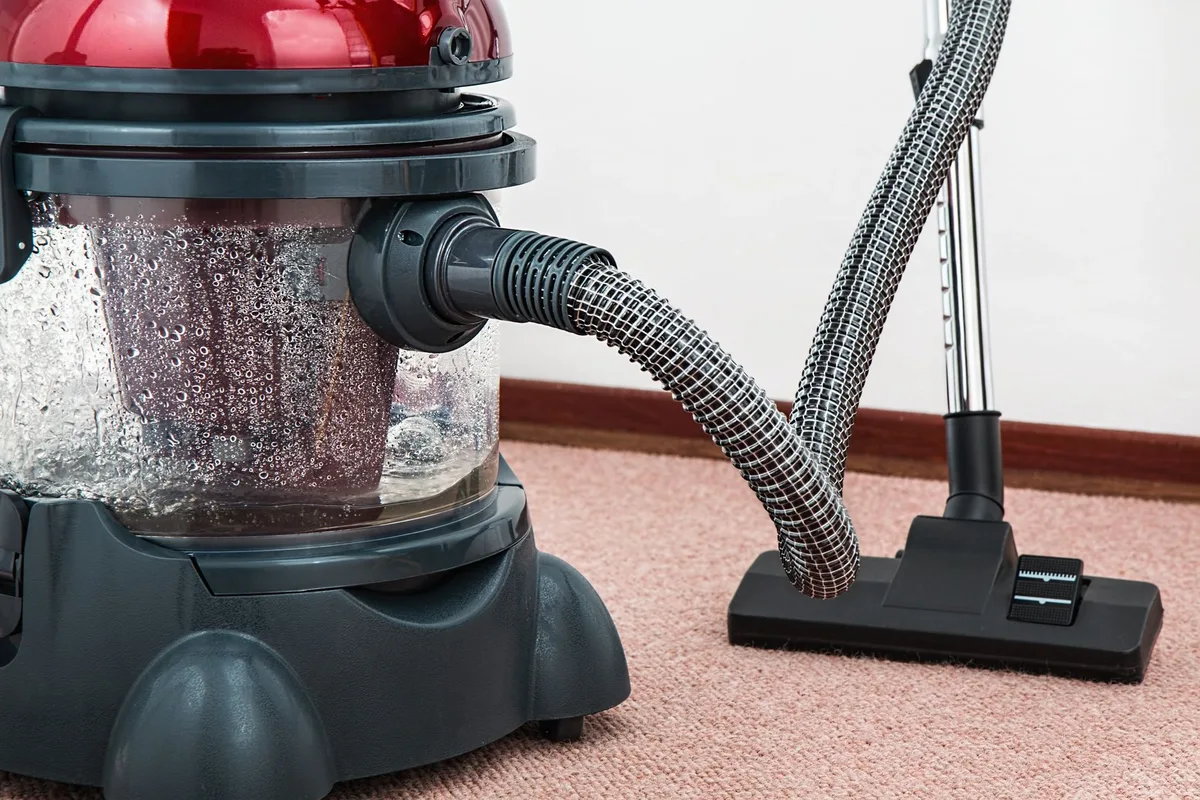
For medium spills (a few gallons): Use a wet/dry vacuum. Rent one from a hardware store if you don’t own one. Run the vacuum over the wet area slowly, back and forth, overlapping passes.
Dump the water tank outside. Do this until the carpet barely feels damp when you press down with a paper towel.
For large floods (inches of standing water): Rent or buy a submersible pump first. Remove the bulk water, then follow up with a wet/dry vac. Never skip the vacuum step, pumps leave a thin film of water in the fibers.
Pro tip: Work from the edges of the wet area toward the center. That prevents spreading the water to dry carpet nearby.
How to Set Up Air Movers for Fast Drying
Fans are your best friend. But not just any fan. A regular box fan blows air, sure.
An air mover (also called a carpet dryer) forces high-velocity air across the surface, creating a low-pressure zone that pulls moisture up from the backing. That’s the physics shortcut.
If you don’t own an air mover, rent one. They’re about $30, 40 per day at rental yards. In a pinch, three or four box fans placed at a 45-degree angle will work, but it’ll take twice as long.
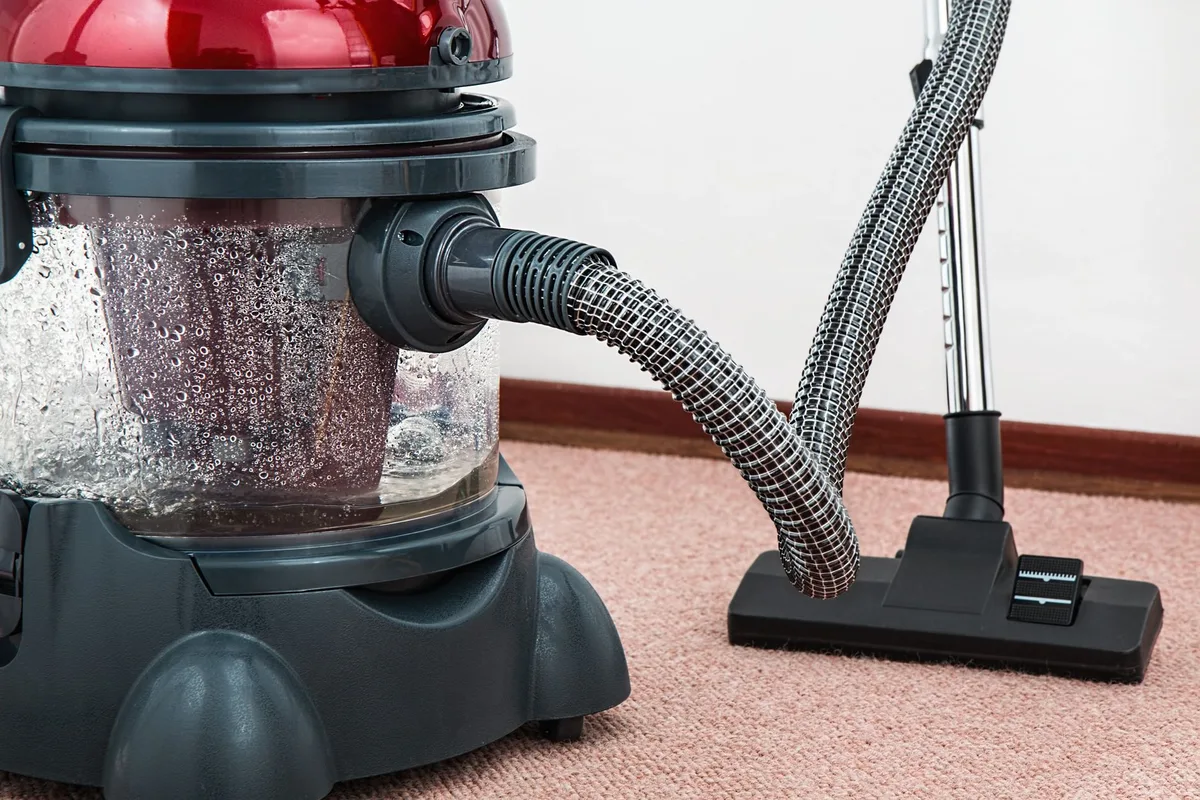
Image source: Pexels / Pixabay (Pexels License)
Fan Placement Strategy
- Position fans so they blow across the carpet surface, not straight down. Downward airflow can trap moisture in the backing.
- Create a “drying lane”, point fans toward open windows or a door. That pushes humid air outside and pulls in drier air from the other side.
- Overlap the airflow. If you have multiple fans, aim them so the streams cross. This creates turbulence that breaks the boundary layer of moist air clinging to the carpet fibers.
- Lift the carpet edges if possible. Tuck small plastic spacers or plastic caps under the corners to let air circulate underneath. Don’t use wood, it’ll wick moisture into the subfloor.
How long does it take with air movers? Typically 6, 12 hours for light spills, 24, 48 hours for moderate saturation. Keep them running nonstop. Don’t turn them off at night.
When to Use a Dehumidifier
Fans remove moisture from the carpet. A dehumidifier removes moisture from the air. You need both.
Here’s why: If you blow dry air over wet carpet, the air picks up moisture, becomes humid, and then can’t absorb any more. The drying slows to a crawl. A dehumidifier keeps the air dry so the carpet keeps losing water.
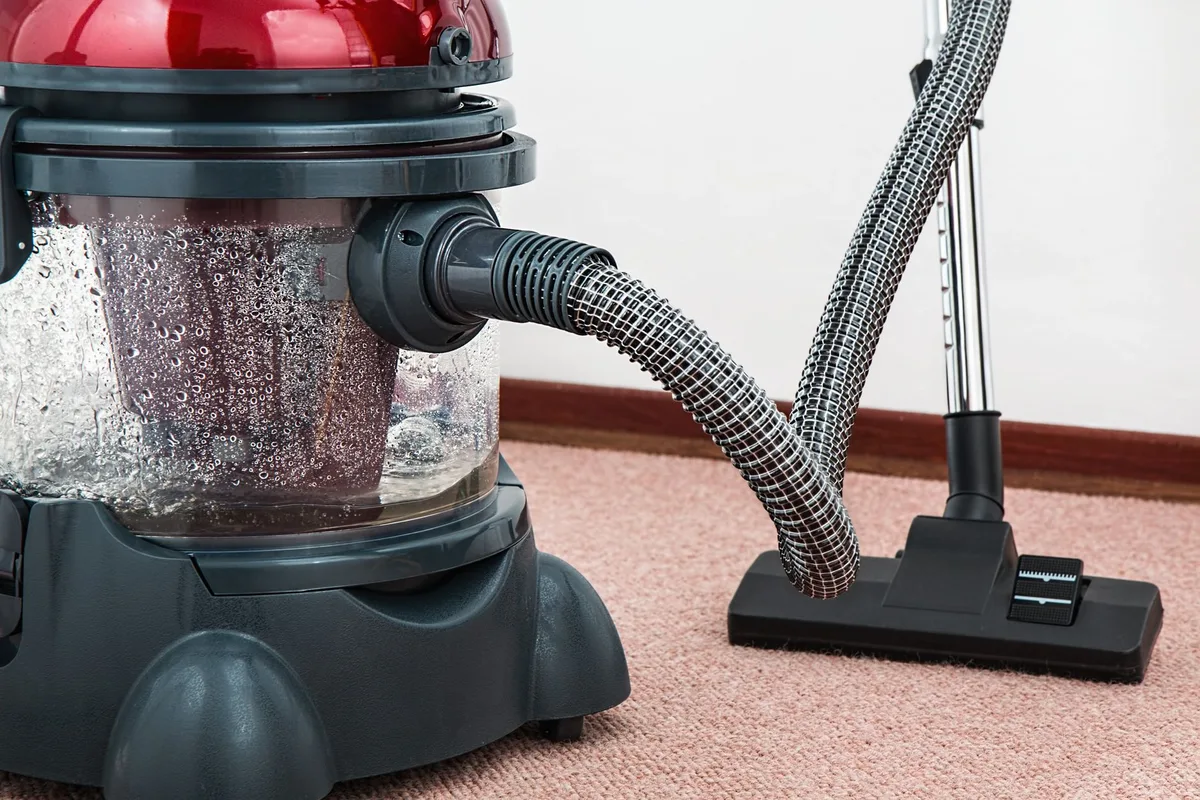
Image source: Pexels / Pixabay (Pexels License)
When is a dehumidifier essential?
- Any carpet drying job larger than a 3×3 foot area
- Rooms with closed windows or poor ventilation
- Basements and below-grade rooms where humidity is already high
- Any situation where the carpet padding got wet
What size do you need? A small portable unit that pulls 30, 50 pints per day works for one room. For large basement floods, you may need a 70+ pint unit or a refrigerant dehumidifier with a built-in pump. Rentals are cheap, $30, 50 per day.
Placement: Put the dehumidifier near the center of the wet area, not in a corner. Make sure its intake isn’t blocked. Empty the reservoir every few hours, or hook up a hose to a drain.
Dealing with the Carpet Padding
Carpet padding is a sponge. Once it gets wet, it stays wet for days unless you do something about it.
For small spills where water only hit the surface: The padding may stay dry if you extracted quickly. Press your hand into the carpet, if you feel no moisture in the backing, you’re probably fine.
For any spill that soaked through: You have to pull up the carpet. No shortcuts.
Here’s the process:
- Pull back the edge of the carpet from the tack strip. Use a crowbar or a carpet knee kicker if you have one.
- Roll the carpet back carefully. Don’t fold it, that creates wrinkles. Roll it like a burrito.
- Remove the wet padding. Cut it into manageable strips and trash it. New padding costs pennies per square foot. Replacing it is cheaper than dealing with moldy subfloor.
- Clean the subfloor with a disinfectant (1 cup bleach per gallon of water for concrete; for wood, use an enzymatic cleaner).
- Dry the subfloor thoroughly with fans and dehumidifier. Concrete takes 2, 3 days to fully dry. Do not reinstall carpet until a moisture meter reads below 12%.
- Install new padding and stretch the carpet back into place.
Can you save the padding? In rare cases, if it’s only slightly damp and you have industrial drying equipment, you might. But honestly? Don’t risk it.
Padding is cheap peace of mind.
Preventing Mold and Mildew
Mold is the real enemy. It can start growing within 24 hours on damp carpet backing. By 48 hours, you’re looking at spore release.
Signs of impending mold: Musty smell, discoloration, any visible fuzz or slime. If you smell it, you’ve already got mold somewhere.
To prevent it:
- Dry the carpet completely within 24, 48 hours. Use a moisture meter to verify. The carpet should register under 15% moisture content.
- Increase airflow. Open windows if the outdoor humidity is below 60%. If it’s humid outside, keep windows closed and run the dehumidifier.
- Spray the carpet backing with an antimicrobial solution after extraction. Products like Concrobium or Simple Green Mold Killer work. Follow label directions.
- Check under furniture. Any legs or feet that are wet should be lifted off the carpet using foil or plastic caps. Metal furniture can rust and stain.
- Don’t forget baseboards and walls. Wet drywall wicks water upward. Remove baseboards if they’re soaked and dry the wall cavity.
What if mold appears anyway? Small patches (under 3 feet square) can be cleaned with a mild detergent or vinegar solution. Larger infestations, call a professional mold remediator. The EPA’s guide on mold cleanup is your official go-to: EPA Mold Cleanup Guide.
How to Dry Carpet After a Flood or Major Spill
Major events, burst aquarium, washing machine hose breaks, basement flood from heavy rain, require a different approach.
Safety first: Turn off electricity to the affected room if water is anywhere near outlets or appliances. Wear rubber boots and gloves. Contaminated water may carry bacteria.
Step 1: Remove all furniture. Get everything off the carpet. If furniture is too heavy to move, place plastic wrap or aluminum foil under the legs to prevent staining and wicking.
Step 2: Extract water with a pump or wet vac. For standing water over an inch, use a submersible pump connected to a garden hose. Drain outside or into a utility sink. Follow up with a wet vac.
Step 3: Pull up the carpet and pad. In a flood, the padding is almost always a loss. Remove it. If the carpet itself is salvageable (clean water, no sewage), you can reinstall it after cleaning.
Step 4: Clean and disinfect the subfloor. Concrete subfloors need scrubbing with a stiff broom and a cleaner. Wood subfloors, especially plywood, may need partial replacement if they’ve been saturated for more than 48 hours.
Step 5: Dry the room thoroughly. This can take a week. Use multiple high-velocity fans, a dehumidifier, and maybe even a portable heater if the room is cold. Monitor with a moisture meter.
Step 6: Treat the carpet before reinstalling. Wash it with a carpet cleaner or take it to a professional cleaning service. Then re-stretch and re-install over new padding.
When to Call a Professional
You can handle a lot yourself. But sometimes you’re better off handing the job to someone with commercial-grade equipment.
Call a pro if:
- The water source is contaminated (sewage, flood water, gray water from a dishwasher)
- The wet area covers more than 500 square feet
- Water has been sitting for more than 48 hours
- You have no access to a wet/dry vac or air movers
- You smell mold or see visible growth
- The subfloor is wood and has been soaked
- You have health conditions like asthma or immune suppression
Professional water damage restoration companies use truck-mounted extraction units, desiccant dehumidifiers, and moisture meters that cost thousands. They can dry a room in 2, 3 days that you might struggle with for two weeks. Cost is typically $500, 1,500 for a moderate room, but that’s cheaper than replacing carpet, padding, and subfloor.
Look for IICRC-certified technicians (Institute of Inspection, Cleaning and Restoration Certification). They follow industry standards that insurance companies recognize.
Final Tips to Speed Up Drying
- Lift the carpet. Even just the corners. Air circulation underneath halves drying time.
- Use heat if you can. Warmer air holds more moisture and speeds evaporation. But don’t blast high heat directly on the carpet, that can cause delamination. 80, 85°F is ideal.
- Avoid walking on wet carpet. You push water deeper into the backing and pad. Lay down plywood boards if you need to cross the room.
- Don’t use a heater alone. Heat without air movement just creates steam. Always pair with fans.
- Check the carpet backing. The surface may feel dry while the backing is still damp. Use a moisture meter or press a paper towel firmly against the backing.
- Replace the padding if in doubt. It’s $0.50, 1.00 per square foot. Carpet replacement can be $3, 10 per square foot. The math is simple.
- Act fast. Every hour you delay, the damage compounds. Mold spores are microscopic and start reproducing within 12, 24 hours. You want to be drying before they even think about growing.
You’ve got the knowledge now. Next time water hits your carpet, you won’t panic. You’ll pull out the wet vac, set up the fans, drop in the dehumidifier, and get that carpet bone-dry inside a day.
And when the job’s done, you’ll know you saved yourself a headache, and a few hundred bucks.
Drying wet carpet is work. But it’s work you can do.


Similar Posts