How to Choose the Right Size Wall Sconce for Room
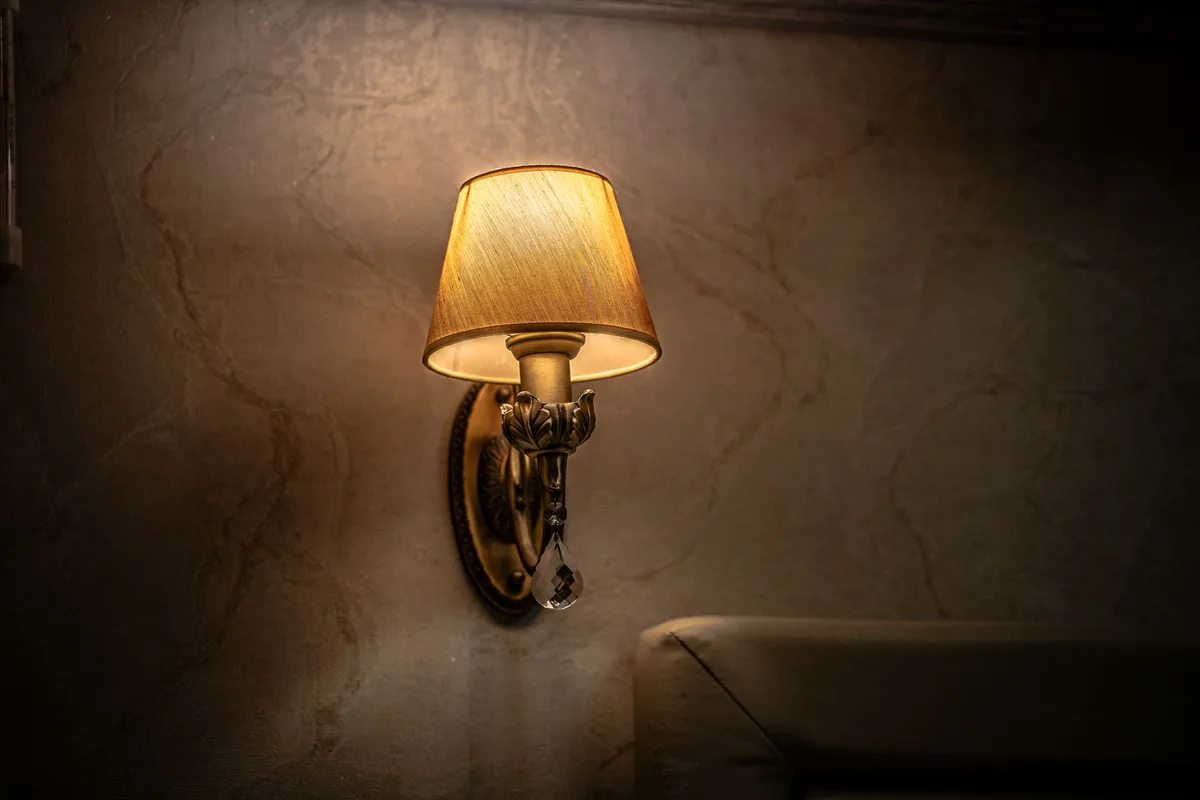
Image source: Pexels / Александр (Pexels License)
Finding the perfect wall sconce isn’t just about style; it’s about proportion. A sconce that’s too big can overpower a room, while one that’s too small can get lost, leaving your lighting feel incomplete. Getting the size right is crucial for achieving balanced, functional, and aesthetically pleasing illumination.
This guide will walk you through everything you need to know to select the ideal size wall sconce for any room in your home.
Choosing wall sconces involves a blend of art and science. You’re not just placing a light source; you’re adding a decorative element that influences the mood, defines spaces, and enhances your décor. The scale of your sconce must harmonize with the scale of your room and the furniture within it.
Think of it like picking out a piece of art for your wall, it needs to have a presence without dominating.
We’ll cover how to measure your space, consider ceiling height, evaluate wall size, and even factor in the function of the sconce. Whether you’re lighting a grand entryway or a cozy reading nook, these principles will ensure your chosen sconces are both beautiful and effective.
Understanding the Key Factors for Sconce Sizing
Before you even start browsing sconces, grab a tape measure. Accurate measurements are your foundation for selecting the right size. Several elements dictate the appropriate scale for your wall sconces.
Room Dimensions: The Foundation of Sconce Selection
The overall size of your room is the most significant factor. A vast living room can accommodate larger, more statement-making sconces, whereas a smaller bedroom or hallway will benefit from more modest fixtures.
- Measure your room’s width and length. This gives you a general idea of the space you have to work with. For example, a room that’s 10×12 feet requires a different approach than a 20×25 foot room.
- Consider the purpose of the sconce. Is it meant to be a primary light source, accent lighting, or task lighting? This impacts how prominent you want the fixture to be.
- Think about furniture placement. Large sofas, beds, or cabinets can influence the perceived size of the wall space and how a sconce will visually relate to it.
Ceiling Height: Vertical Scale Matters
Ceiling height plays a vital role in how sconces will look and function. Higher ceilings can handle more elongated or substantial sconces without feeling cramped. Lower ceilings require more compact designs.
- Standard Ceilings (8-9 feet): Most sconces will work well here. Focus on width and projection from the wall rather than extreme height.
- High Ceilings (10+ feet): You have more flexibility. Consider taller sconces or those with a more substantial design to fill the vertical space. Be mindful not to install them so high that the light is ineffective or feels disconnected from the living space. Always aim to have the bottom of the sconce at a height that allows for comfortable illumination without glare.
- Low Ceilings (<8 feet): Opt for slim, horizontally oriented sconces. Avoid anything that hangs down significantly. The goal is to draw the eye upward or keep the fixture unobtrusive.
Wall Width and Available Space
The width of the wall itself, and any significant architectural features on it, will dictate how many sconces you can install and their spacing.
- Measure the wall width where you plan to hang the sconces. This is especially important for hallways or symmetrically placed sconces flanking a fireplace or artwork.
- Account for doorways, windows, artwork, and furniture. You don’t want a sconce to interfere with a doorway swing or cast unflattering shadows on a cherished piece of art.
- Consider the space between fixtures. If you’re placing multiple sconces, the distance between them is as important as their individual size.
Sconce Projection and Width: The Physical Dimensions
These are the actual measurements of the sconce itself, and they need to be proportional to your wall.
- Width: This refers to the side-to-side measurement of the fixture.
- Height: The top-to-bottom measurement.
- Projection: How far the sconce extends from the wall. This is crucial for pathways and areas where someone might walk past. You don’t want to bump into it. As a general rule, a sconce should not project more than 4 inches from the wall in a main walkway or hallway.
Lumens and Light Output: Functionality
While not directly a size measurement, the lumens (brightness) of a sconce are directly tied to its purpose and how its size influences its light-emitting potential. Larger sconces often house more bulbs or larger wattage bulbs, thus producing more light.
- Task Lighting: Requires more focused, brighter light. The sconce might be smaller but designed to direct light effectively.
- Ambient Lighting: Needs a softer, more diffused glow. Larger sconces with frosted shades can achieve this.
- Accent Lighting: Often smaller, directed beams to highlight art or architectural features.
General Sizing Rules of Thumb (and When to Break Them)
While precise measurement is key, a few handy rules of thumb can get you started. Remember, these are guidelines, not rigid laws. Your personal style and specific room needs always come first.
Sconces Flanking a Fireplace or Artwork
When you’re creating a symmetrical arrangement, the goal is balance.
- Width Rule: The total combined width of the two sconces (including any mounting hardware or shades) should ideally be about one-third to one-half the width of the object they are flanking (fireplace or artwork).
- Spacing Rule: Leave about 6-12 inches of space between the edge of the artwork/fireplace and the outer edge of the sconce.
- Height Rule: The bottom of the sconce should typically be installed at eye level, around 60-66 inches from the floor. However, adjust this based on the height of the artwork or fireplace. If the artwork is particularly tall, you might need to place the sconces higher to maintain visual balance. If they are flanking a mantelpiece, ensure they don’t overwhelm it.
Sconces in a Hallway or Stairwell
Hallways and stairwells are primarily circulation spaces, so functionality and safety are paramount.
- Projection is Key: As mentioned, aim for a projection of no more than 4 inches from the wall. This prevents accidental bumps.
- Spacing: Place sconces evenly along the wall. A common guideline is to space them 8-10 feet apart in longer hallways. In stairwells, place them roughly every 4-6 risers.
- Height: Mount sconces so the light source is roughly at eye level, around 60-66 inches from the floor. This provides sufficient light without causing glare as people walk by. In a stairwell, ensure the light casts downwards to illuminate the steps clearly.
Sconces in a Living Room or Bedroom
These are spaces where mood and ambiance play a larger role.
- Wall Width Consideration: For a long wall, consider placing sconces in pairs, ideally flanking a sofa, armchair, or a significant piece of furniture. The combined width of two sconces should be roughly 1/4 to 1/3 the width of the furniture piece it’s near.
- Height: Install them so the bottom of the sconce is about 60-66 inches from the floor, or at a height that complements the furniture. For instance, if you have high-backed chairs, you might mount them slightly higher.
- Sconces as Reading Lights: If a sconce is intended for reading beside a chair or bed, ensure its height and shade direct light downwards onto the reading material without creating harsh glare. The bottom of the shade should be above head height when seated.
Sconces in a Dining Room
Dining room sconces often flank a large piece of art or are placed symmetrically around the room.
- Height: Generally, install sconces so the bottom of the fixture is about 7-8 feet from the floor. This allows for sufficient light over the dining table without being too low. If you have very high ceilings, you can go slightly higher.
- Spacing: If flanking a buffet or sideboard, ensure the sconces are proportionate to the furniture piece. The total width of the sconces should be about one-third to one-half the width of the sideboard.
Sconces in Bathrooms
Bathroom sconces are often installed beside or above a mirror, serving a crucial task-lighting role.
- Beside the Mirror: Mount them at eye level (around 60-66 inches from the floor). The width of each sconce should ideally be about one-third the width of the mirror. Their projection should be minimal to avoid shining directly into the user’s eyes.
- Above the Mirror: If placed above, ensure they don’t cast shadows directly onto the face. A diffuser or frosted shade is recommended.
Calculating Sconce Size Based on Room Dimensions
Let’s get more specific with some calculations. These formulas provide a starting point and help quantify what “proportional” means in practice.
The Wall Width to Sconce Width Ratio
This is a fundamental calculation for any situation where sconces are being placed along a wall, especially in hallways, stairwells, or flanking architectural features.
- Formula:
(Total Wall Width / Number of Sconces) * 0.33 to 0.5= Desired Total Sconce Width (including shades/mounting hardware). - Explanation: This formula suggests that the available wall space dedicated to each sconce (or pair) should be between 1/3 and 1/2 the width dedicated to the fixture itself.
Example:
You have a 12-foot (144 inches) hallway and plan to install two sconces, one on each side, to flank a console table.
- Available width per sconce is 144 inches / 2 = 72 inches.
- Using the 1/3 rule:
72 inches * 0.33 = 23.76 inches. This means the combined width of the sconce and its shade should be around 24 inches. - Using the 1/2 rule:
72 inches * 0.5 = 36 inches. This means the combined width could be up to 36 inches.
You would look for sconces with a combined width (both shades together if it’s a double sconce, or the width of a single sconce if you’re placing two separate ones) in the range of roughly 24-36 inches, leaving adequate wall space between them and the console table.
The Ceiling Height to Sconce Height Ratio
This is particularly relevant for taller rooms where sconces can visually fill vertical space.
- Formula:
Ceiling Height * 0.15 to 0.25= Recommended Sconce Height. - Explanation: This guideline suggests that the height of your sconce (from its top to its bottom) should be between 15% and 25% of your room’s ceiling height.
Example:
You have a room with 10-foot (120 inches) ceilings.
- Using the 15% rule:
120 inches * 0.15 = 18 inches. - Using the 25% rule:
120 inches * 0.25 = 30 inches.
For a 10-foot ceiling, you might choose sconces that are approximately 18-30 inches tall, assuming they are proportionally slender. This helps them feel substantial enough without looking dwarfed by the ceiling. For standard 8-foot (96 inches) ceilings:
96 inches * 0.15 = 14.4 inches96 inches * 0.25 = 24 inches
So, for an 8-foot ceiling, you’d likely be looking at sconces in the 15-24 inch height range.
The Furniture to Sconce Width Ratio
When sconces are positioned near or flanking furniture, their scale should complement the furniture’s scale.
- Formula:
Width of Furniture Piece / 3 to 1/2= Desired Total Sconce Width (for a pair). - Explanation: Similar to the wall width rule, this ensures that a pair of sconces doesn’t overpower or get lost next to a sofa, bed, or console.
Example:
You have a sofa that is 96 inches wide, and you want to place a sconce on each side.
96 inches / 3 = 32 inches. This is the total width for both sconces combined. So, each sconce would ideally be around 16 inches wide.96 inches / 2 = 48 inches. This is the total width for both sconces combined. So, each sconce could be up to 24 inches wide.
You’d look for sconces that are approximately 16-24 inches wide, depending on their design and visual bulk.
The “Visual Weight” Factor
Beyond mere measurements, consider the “visual weight” of a sconce. A solid, dark sconce with a wide shade will appear heavier and larger than a delicate, thin metal sconce with an open design, even if they have similar dimensions.
- Open Designs: Tend to feel lighter and are more forgiving in smaller spaces.
- Solid Shades (glass, fabric): Can feel bulkier and require more proportional wall space.
- Armourd Designs: With multiple arms and bulbs, can appear larger and require more clearance.
Sizing Sconces for Specific Room Types: A Deeper Dive
Let’s break down how these principles apply to different areas of your home.
Entryways and Foyers
First impressions count, and entryway lighting sets the tone.
- Scale: Entryways can vary greatly in size. For a grand foyer with high ceilings, you might opt for larger, more dramatic sconces. For a small landing, subtle, slim sconces are best.
- Height Calculation: If your foyer has a standard 8-foot ceiling, install sconces with their bottom at 60-66 inches from the floor. If you have a very tall foyer, measure the wall height and apply the ceiling height to sconce height ratio (
Ceiling Height * 0.15 to 0.25). Aim to have the sconce occupy a good portion of the vertical space without feeling crammed against the ceiling or too low. - Width Calculation: If flanking a console table, measure the table’s width and use the furniture-to-sconce width ratio (
Furniture Width / 3 to 1/2for a pair). Ensure sconces don’t protrude too far (max 4 inches) into the walkway. - Consideration: In narrow entryways, single sconces placed strategically near doors or artwork can be more effective than trying to fit a pair.
Living Rooms
Living rooms are versatile spaces, and sconces can serve multiple purposes.
- Ambient Lighting: For general illumination, consider sconces with shades that diffuse light upwards and outwards. Place them to complement furniture groupings.
- Task Lighting: If you have reading chairs, sconces mounted beside them are ideal. The height should allow the light to fall directly on your book or craft. The bottom of the shade should be above seated head height.
- Accent Lighting: Smaller, adjustable sconces can highlight artwork or architectural features. Their size here is less about room proportion and more about illuminating the desired focal point.
- Sizing for Walls: If placing sconces on a main wall, measure its width. If flanking a sofa that’s 80-90 inches wide, aim for sconces whose total width (as a pair) is around 30-45 inches. The height guideline of 60-66 inches from the floor generally works well.
Bedrooms
Bedrooms are sanctuaries, and lighting should be soft and functional.
- Bedside Sconces: Often replace table lamps. They save valuable nightstand space.
- Height: Install them at a height where the bottom of the shade is roughly level with the top of your mattress or slightly above. This ensures light can be directed downwards for reading without glare. A good starting point is 58-64 inches from the floor.
- Width: Aim for sconces that are around 8-12 inches wide. They should be substantial enough to be noticeable but not so large that they overwhelm the bed.
- General Wall Illumination: If using sconces for broader lighting, consider their placement on walls without large furniture. Apply the wall width to sconce width ratio, keeping the overall scale modest for a cozier feel.
Hallways and Stairwells
These are transitional spaces where safety and clear visibility are key.
- Sconce Projection:This is critical. Sconces should not protrude more than 4 inches from the wall to prevent people from walking into them.
- Height: For both hallways and stairwells, install them at eye level, around 60-66 inches from the floor. In a stairwell, this ensures adequate light for each step.
- Spacing:
- Hallways: Space sconces evenly, typically 8-12 feet apart, depending on the brightness of the bulb and the width of the hallway.
- Stairwells: Place one sconce approximately every 4-6 risers.
Dining Rooms
Dining room sconces can add elegance and define the dining area.
- Flanking Features: If flanking a buffet or credenza, use the furniture width to determine the sconce size (
Furniture Width / 3 to 1/2for a pair). - Height: A common placement is 7-8 feet from the floor. This is high enough to provide general illumination over the table without interfering with sightlines. If your ceilings are exceptionally high (12+ feet), you might place them slightly higher, around 9-10 feet.
- Visual Impact: Dining rooms often have more formal décor, so selecting sconces that reflect that style is important. Their size should feel appropriately decorative and not utilitarian.
Bathrooms
Bathroom lighting needs to be both functional for grooming and safe for a wet environment. Ensure any sconce used in a bathroom is damp-rated.
- Mirror Placement:
- Beside Mirror: Mount on each side, at eye level (60-66 inches from the floor). The width of each sconce should be about 1/3rd the width of the mirror. They should not project too far out, so as not to create harsh shadows.
- Above Mirror: If placing above, ensure the sconce has a diffuser or frosted shade to prevent direct glare. The width should again be proportional to the mirror below.
- Size: Bathroom sconces tend to be smaller and sleeker due to space constraints and the need for focused light. A width of 4-8 inches is common for individual sconces.
Common Pitfalls to Avoid When Sizing Wall Sconces
Even with guidelines, it’s easy to make mistakes. Here are some common traps and how to sidestep them.
Rule: Sconces Should Be Mounted at Eye Level
While 60-66 inches from the floor is a good starting point, this is not absolute for every situation.
- The Trap: Blindly adhering to this height can lead to sconces being too high over low furniture or too low in rooms with high ceilings.
- The Fix: Always consider the context. If flanking a tall piece of art, you might need to mount them higher. If next to a low sofa, adjust downwards slightly. Use furniture and architectural features as your reference points.
Rule: Always Use Symmetrical Pairs
Symmetry is often desirable, but not always practical or aesthetically necessary.
- The Trap: Forcing a symmetrical placement in a space that doesn’t naturally lend itself to it can look awkward. For example, placing two sconces on a wall that’s too narrow or where furniture placement is intentionally asymmetrical.
- The Fix: Consider single sconces in strategic locations. A single well-placed sconce can be more effective than two ill-fitting ones. In some modern designs, asymmetrical placement can be a deliberate artistic choice.
Rule: The Larger the Room, The Larger the Sconce
While scale is important, there are nuances.
- The Trap: Overwhelming a large room with oversized, heavy sconces can make it feel cluttered, rather than grand. In some cases, a more minimalist approach with well-chosen, medium-sized sconces can be more elegant.
- The Fix: Always consider the visual weight and style of the sconce. A large, intricately detailed sconce will have a different impact than a large, simple drum-shade sconce. Balance the sconce’s size with the room’s overall décor and the amount of available wall space.
Rule: Projection Isn’t That Important
For hallways and doorways, this can be a significant oversight.
- The Trap: Choosing a sconce that protrudes too far into a walkway is not only a visual disruption but a safety hazard.
- The Fix: Always check the sconce’s projection measurement. For any walkway area, aim for 4 inches or less. If a sconce you love has a larger projection, consider it for a different location, like a bedroom wall away from traffic flow.
Rule: Ignoring Light Output (Lumens)
Sizing the fixture physically doesn’t guarantee the right amount of light.
- The Trap: A beautifully sized sconce that doesn’t provide enough, or provides too much, light for its intended purpose is ultimately unsuccessful.
- The Fix: Consider the lumen output in conjunction with the fixture’s size and shade. A large shade may diffuse light effectively, but if the bulb wattage is too low, the room will still feel dim. Conversely, a small sconce with a very powerful bulb can be blinding. Match the light output to the room’s function. For example, reading lights need higher lumen output focused downwards.
Types of Wall Sconces and Their Sizing Considerations
Different styles of sconces have unique sizing implications.
Arm Sconces
These typically feature an arm extending from the wall, holding the light source.
- Sizing Focus: Arm length and the width of the shade are important. A longer arm can reach further, but balance its length with the overall size of the wall and furniture.
- Projection: Check the arm’s length and the shade’s depth to ensure it doesn’t project too far.
- Visual Impact: Can be traditional or modern, depending on design. Ensure the scale matches the room’s aesthetic.
Flush Mount Sconces
These fixtures sit directly against the wall, with no arm.
- Sizing Focus: The overall diameter or width of the fixture.
- Projection: Minimal, as they are designed to sit flat. Ideal for tight spaces and hallways.
- Visual Impact: Can be statement pieces or subtle additions, depending on their design and the size of the shade.
Candle Sconces
Often decorative, these mimic traditional candle holders.
- Sizing Focus: Height and width of the backplate and the candle holder elements.
- Visual Impact: Usually more traditional. Their size should complement classic décor without looking too heavy or too delicate.
Lantern Sconces
These enclose the bulb within a lantern-style frame.
- Sizing Focus: The dimensions of the lantern itself.
- Visual Impact: Can range from rustic to contemporary. Their size will depend on the architectural style of your home.
Up/Down Lights
These cast light both upwards and downwards, creating dramatic wall effects.
- Sizing Focus: The fixture’s height and width. Since they illuminate the wall, their visual presence is significant.
- Projection: Generally less of a concern as they are often sleek and mounted flush or near-flush.
- Impact: Can make ceilings appear higher. Their size should be proportionate to the wall they are accentuating.
Material, Finish, and Style: How They Influence Sconce Size Perception
The physical dimensions are only part of the equation. The material, finish, and overall style of a sconce dramatically affect how it’s perceived in a space.
- Material: A wrought iron sconce will appear heavier and more substantial than a glass or acrylic one of the same dimensions. Polished brass or chrome might seem more delicate than brushed nickel or dark bronze.
- Finish: Darker finishes (bronze, black) tend to recede, while lighter or reflective finishes (brass, silver, white) can draw more attention.
- Style: A minimalist, geometric sconce will have a different visual weight than an ornate, traditional fixture with many scrolling details. Keep the style of the sconce consistent with your room’s décor. A massive, ornate sconce in a starkly modern living room would likely clash.
Installing Wall Sconces: Beyond Just Sizing
Once you’ve chosen the right size sconce, proper installation is essential for both safety and aesthetics.
- Electrical Wiring: Always ensure you have a qualified electrician for installing or modifying any electrical wiring. Incorrect wiring can be a serious fire hazard and potentially cause electrical shock.
- Placement: Double-check your measurements before drilling. Use a level to ensure the sconce is straight.
- Weight Support: Ensure the wall junction box where the sconce is mounted is rated to support the weight of the fixture. If installing a heavy sconce on drywall, you may need to reinforce the mounting location.
Frequently Asked Questions About Sconce Sizing
Q: How high should I hang wall sconces in a hallway?
A: For hallways, aim for the bottom of the sconce to be around 60-66 inches from the floor. This height provides good illumination for walkways without being blinding. Crucially, ensure sconces do not project more than 4 inches from the wall to prevent people from bumping into them.
Q: Can I use large sconces in a small room?
A: It depends on the specific sconce and the room. While generally avoided, a very slender, open-design large sconce might work if it’s the sole decorative light element. However, for most small rooms, smaller, more proportionate sconces are recommended to avoid overwhelming the space.
Always consider the visual weight and projection.
Q: What if my ceiling is very high? What size sconce should I choose?
A: For high ceilings (10 feet or more), you have more flexibility. You can opt for taller sconces or those with a more substantial design to fill the vertical space. Use the Ceiling Height * 0.15 to 0.25 guideline for the sconce’s height.
Ensure the sconce is mounted at a height that still provides effective light for the inhabited space below, not just at attic level.
Q: How do I determine the width of a sconce if it has two lights or shades?
A: When calculating width ratios, measure the total width of the sconce fixture from its widest point on one side to its widest point on the other. This usually includes the shades or the decorative elements. You’re looking at the overall visual footprint of the fixture on the wall.
Q: Should sconces be taller or wider? What’s more important?
A: Both are important, but they serve different visual purposes. Height is crucial in rooms with high ceilings or when flanking tall artwork. Width is critical for balancing with furniture, wall sections, or other sconces.
Ultimately, the overall proportion (width, height, and projection relative to the space) is what matters most.
Q: My sconce has a metal backplate. Does that count towards its overall size?
A: Yes, the backplate is part of the fixture’s dimensions. When measuring for width and height, include all integral parts of the sconce that will be visible on the wall.
Q: Are there any ADA (Americans with Disabilities Act) guidelines for sconce installation?
A: While there aren’t specific ADA guidelines solely for decorative sconce placement in residential settings, general accessibility principles apply. Projection is key: ensuring fixtures do not obstruct pathways (often a maximum of 4 inches projection applies in public spaces, and it’s a good practice for home hallways) is a fundamental accessibility consideration.
The Final Word on Sconce Sizing
Choosing the right size wall sconce is an investment in your home’s overall atmosphere and functionality. By understanding the interplay between room dimensions, ceiling height, wall space, and the fixture’s own measurements, you can make informed decisions. Don’t be afraid to measure twice, use the rules of thumb as starting points, and always trust your eye.
A well-sized sconce doesn’t just illuminate a space; it enhances it, adding polish, purpose, and personality. Happy sconce hunting!


Similar Posts