How to Organize Storage Bins in a Closet
Your closet. That one space in your home where things go to disappear, often never to be seen again. We’ve all been there.
Clothes pile up, odds and ends scatter, and that feeling of “I can’t find anything!” becomes all too familiar. But what if I told you there’s a simple, effective way to bring order to that chaos? It’s all about smart storage bin organization.
Storage bins are your closet’s best friend. They’re the unsung heroes that can transform a jumbled mess into a streamlined, functional space. But simply tossing things into bins isn’t enough.
True organization comes from a strategic approach, a method that makes it easy to find what you need, when you need it. This guide is your roadmap to mastering that art. We’re going to break down exactly how to organize storage bins in your closet, from assessing your needs to implementing a system that actually works.
Let’s reclaim your closet, one bin at a time.
Why Bother Organizing Your Closet Storage Bins?
It might seem like a hassle, but the payoff for organizing your closet storage bins is immense. Think about it. When your closet is a disaster zone, you waste time searching for items.
You might even buy duplicates of things you already own but can’t locate. That’s money down the drain and frustration building up.
A well-organized closet, however, saves you precious minutes every single day. It reduces stress and makes getting ready a breeze. Plus, it protects your belongings.
Clothes stored neatly in bins are less likely to get damaged, wrinkled, or lost. It’s about making your life easier and more efficient. It’s about creating a calm, functional space that supports, rather than hinders, your daily routine.
Step 1: Take Stock and Declutter Ruthlessly
Before you even think about bins, you need to know what you’re dealing with. This is the most crucial step. Don’t skip it!
Empty Everything Out
Seriously, everything. Pull all the clothes, shoes, accessories, and yes, those random items that have somehow migrated into your closet, out into your bedroom or living area. Seeing the sheer volume of stuff you have is often eye-opening.
Sort and Purge
Now comes the tough part: decluttering. Be honest with yourself. Handle each item and ask:
- Have I used this in the last year? If not, it’s probably time to let it go.
- Does it fit? Be realistic about your current body and lifestyle.
- Is it in good condition? Stains, holes, or excessive wear mean it’s probably beyond repair or donation.
- Do I love it? If it doesn’t bring you joy or serve a practical purpose, it’s taking up valuable space.
Create three piles: Keep, Donate/Sell, and Trash. Be decisive. The less you have, the easier your organization will be.
Step 2: Assess Your Storage Needs and Choose the Right Bins
With your decluttering complete, you’ll have a clearer picture of what you need to store. Now, let’s talk bins. The type of bins you choose significantly impacts the effectiveness of your organization.
Measure Your Space
Before buying any bins, measure your closet shelves, floor space, and hanging rod height. Knowing these dimensions prevents you from buying bins that are too big or too small.
Consider Your Items
What are you storing?
- Clothing: Sweaters, t-shirts, activewear.
- Accessories: Scarves, belts, hats, bags.
- Shoes: Sneakers, heels, boots.
- Linens: Extra blankets, towels, bedding.
- Miscellaneous: Cleaning supplies, hobby items, seasonal decorations.
Different items require different bin solutions.
Types of Storage Bins
There’s a bin for every need. Here are some common options:
- Fabric Bins: These are great for clothing, linens, and lighter items. They’re often collapsible, making them easy to store when not in use. Look for sturdy ones with handles.
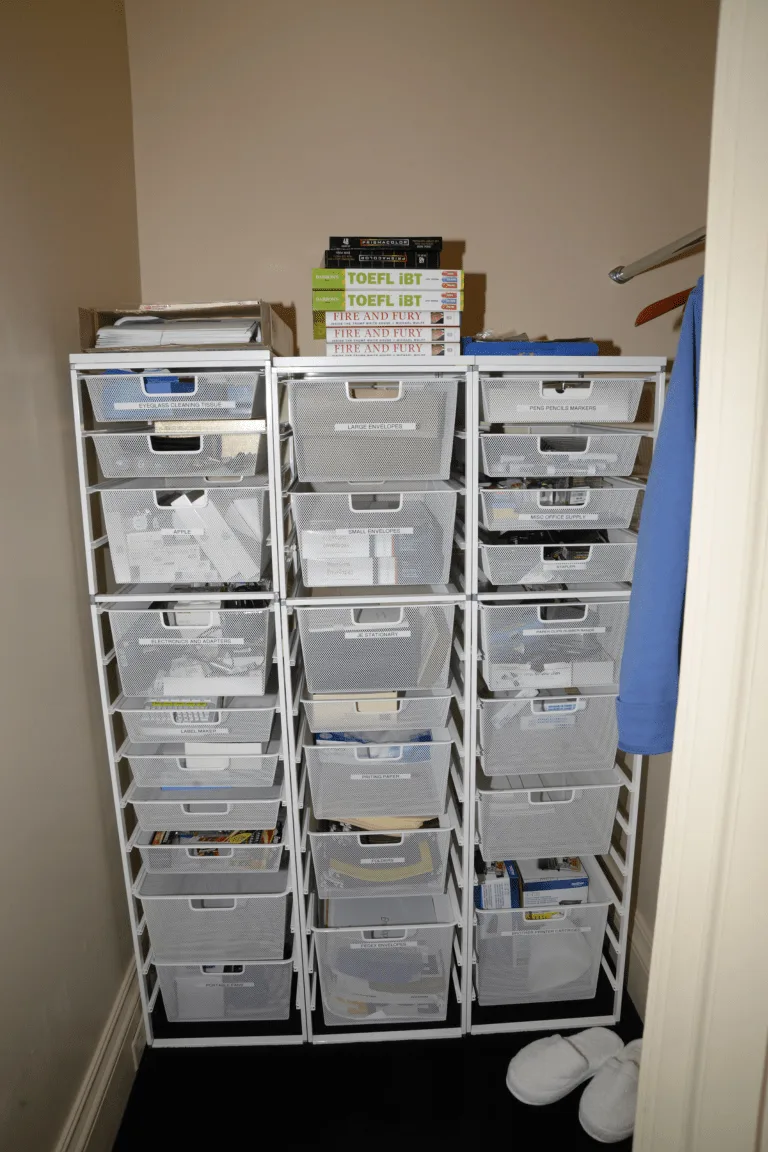
- Clear Plastic Bins: Ideal for seeing contents at a glance. Perfect for anything you need to find quickly, like craft supplies or seasonal decorations. Lids are a big plus for protecting contents from dust.
Image source: Wikimedia Commons / Federal Bureau of Investigation
- Woven baskets: These add a decorative touch and are good for blankets, throws, or even shoes. They offer a more textured, natural look.
- Drawer Organizers: While not strictly “bins,” these internal dividers are essential for drawers within a closet system. They keep small items like socks and underwear tidy.
- Stackable Bins: Maximize vertical space in your closet. Ensure they are designed to stack securely.
Key Features to Look For
- Durability: Choose bins that will hold up to regular use.
- Lids: Essential for protecting items from dust and pests, especially for long-term storage.
- Handles: Make bins easier to pull out from shelves.
- Size and Shape: Opt for sizes that fit your shelves and the items you’re storing. Consider modular systems.
Step 3: Implement Your Closet Bin Organization System
Now that you’ve got your decluttered space and the perfect bins, it’s time to put them to work.
Assign Zones in Your Closet
Think of your closet as having different zones. This helps you categorize what goes where.
- High Shelves: Best for seasonal items or things you don’t use often.
- Mid-Level Shelves: For frequently used items.
- Floor Space: Good for larger bins, shoes, or heavier items, provided they’re stable.
- Hanging Rod: Use for specific hanging organizers or bins designed to hang.
Categorize Your Belongings
Group similar items together. This is where the decluttering piles come in handy.
Category Example: Apparel
- Sweaters in one set of bins.
- T-shirts in another.
- Activewear in a third.
Category Example: Accessories
- Scarves in a wide, shallow bin.
- Belts neatly rolled in a divided bin.
- Hats in a rigid, stackable bin.
Label Everything Clearly
This is non-negotiable. Without labels, even the most organized bins can become a mystery.
- Use a label maker: For a clean, professional look.
- Chalkboard labels: Allow for easy changes if you re-categorize.
- Write with a permanent marker: Quick and effective.
Make sure the labels are visible and easy to read from a distance. Include not just the general category but specifics, like “Winter Sweaters” or “Summer T-shirts.”
Strategic Placement of Bins
- Frequent Use: Place bins with items you use most often at eye level and within easy reach.
- Less Frequent Use: Store bins with seasonal items or less-used belongings on higher shelves or towards the back.
- Weight Distribution: Place heavier bins on lower shelves or the floor to prevent accidents and make them easier to manage.
- Visibility: If using clear bins, arrange them so you can easily see what’s inside. If using opaque bins, rely heavily on clear labeling.
Step 4: Maximize Specific Storage Areas with Bins
Let’s get granular. How can bins enhance specific parts of your closet?
Shelving Solutions
This is where bins truly shine.
- Shelf Dividers: Use these to keep stacks of bins from toppling.
- Uniformity: Using bins of the same size and style on a single shelf creates a streamlined look and maximizes space.
- Depth: Choose bins that fit the depth of your shelves. A bin that overhangs creates clutter and can be a tripping hazard.
Hanging Space Optimization
You can utilize hanging bins too!
- Hanging Shelf Organizers: These fabric units hang directly from your closet rod. They have multiple shelves perfect for folded sweaters, jeans, or smaller bins.
- Accessory Hangers with Bins: Some specialized hangers have built-in small bins or pockets for scarves, belts, or jewelry.
Floor Space Utilization
Don’t let the floor become a dumping ground.
- Stackable Bins: Allow you to create vertical storage on the floor. Ensure they are stable before stacking.
- Shoe Bins: Dedicated bins for shoes keep them contained, protected, and off the main floor surfaces. Wheelable bins are great for easy access.
- Larger Bins: For bulky items like extra blankets, duffel bags, or seasonal decorations.
Step 5: Maintain Your Organized Closet
Organization isn’t a one-time event. It’s an ongoing habit.
The “One In, One Out” Rule
When you buy something new, try to get rid of something similar. This prevents clutter from accumulating again.
Regular Mini-Declutters
Schedule a quick 10-15 minute decluttering session every month or two. Quickly go through your bins and discard anything no longer needed.
Put Things Back Immediately
This is the golden rule. When you’re done with an item, put it back in its designated bin and spot. It takes seconds and prevents the chaos from returning.
Seasonal Swaps
If you store seasonal clothing or items, have dedicated bins for them. When the season changes, swap out the bins. This keeps your active closet space relevant and manageable.
Common Pitfalls to Avoid
Even with the best intentions, some mistakes can derail your efforts.
- Buying Too Many Bins: Resist the urge to buy bins before decluttering. You might end up with more bins than you need, creating more clutter.
- Over-Organizing: Don’t make the system so complicated that it’s hard to maintain. Simplicity is key.
- Not Labeling: This is a fast track to losing track of what’s where.
- Ignoring Vertical Space: Closets often have more vertical space than you realize. Use stackable bins and hanging organizers to your advantage.
- Not Being Realistic: Design a system that fits your lifestyle and your belongings, not one you saw in a magazine.
Making Your Closet Work For You
Organizing storage bins in a closet isn’t just about tidiness. It’s about creating a functional space that makes your life easier. By decluttering thoroughly, choosing the right bins, implementing a clear system with labels, and committing to maintenance, you can transform your closet from a source of stress into a sanctuary of order.
Start small if you need to, but start today. That perfectly organized closet is well within your reach.


Similar Posts