How to Choose a Shower Base Material
Choosing the right shower base material sets the foundation for your bathroom’s durability, style, and functionality. It’s not just about what looks good; it’s about what performs best for years to come. I’ve seen plenty of bathrooms, and I can tell you, the shower base is often overlooked until it’s too late.
Let’s dive into the materials available and figure out which one is your perfect fit.
Why Your Shower Base Material Matters
Think of your shower base as the unsung hero of your bathroom. It bears the brunt of daily use, meaning it needs to be tough. But it also significantly impacts the overall aesthetic.
A warped, stained, or cracked shower base can bring down the entire room. Conversely, a solid, well-chosen base enhances the look and feel of your shower enclosure.
It affects:
- Durability: How well it resists scratches, chips, and cracks.
- Maintenance: How easy it is to clean and keep looking new.
- Cost: The initial investment and potential long-term repair expenses.
- Safety: Its slip resistance.
- Style: How it complements your bathroom’s design.
Getting this choice right means a shower that’s a joy to use and a durable addition to your home.
Understanding Common Shower Base Materials
There are several popular options for shower base materials. Each has its own set of pros and cons, making some better suited for certain situations than others.
Acrylic Shower Bases
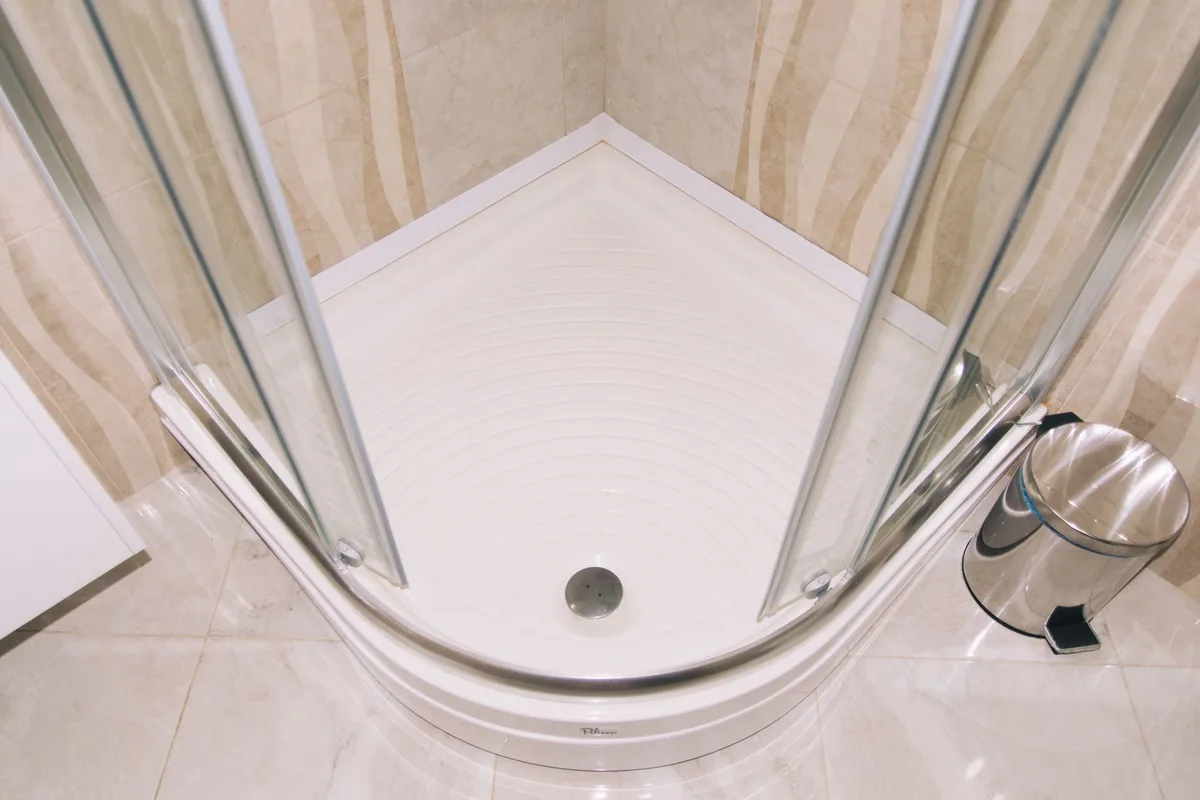
Acrylic is incredibly popular for shower bases, and for good reason. It’s a thermoplastic, meaning it’s molded from sheets of acrylic that are heated and vacuum-formed.
Image source: Pexels / Алексей Вечерин (Pexels License)
Pros:
- Lightweight: Makes installation much easier, especially for DIYers.
- Affordable: Generally one of the most budget-friendly options.
- Easy to Clean: Its non-porous surface resists stains and mildew. A quick wipe down usually does the trick.
- Variety of Styles: Comes in many shapes, sizes, and colors to match your bathroom.
- Warm to the Touch: Doesn’t feel as cold underfoot as some other materials.
Cons:
- Less Durable Than Some: Can be prone to scratching or cracking if subjected to heavy impact or sharp objects.
- Can Flex: Cheaper acrylic bases might flex slightly over time, which can lead to issues with seals and leaks. Ensuring proper subfloor support during installation is key.
- Chemical Sensitivity: Harsh abrasive cleaners or certain chemicals can damage the surface.
Who is it for? Budget-conscious homeowners, DIY enthusiasts, and those looking for a lightweight, easy-to-install option with minimal fuss. If you’re renovating quickly or on a tight budget, acrylic is a strong contender.
Solid Surface Shower Bases
Solid surface materials are engineered stone products, often made from a blend of acrylic resins and bauxite filler. They are non-porous and seamless.
Pros:
- Seamless and Non-Porous: This is a major advantage. No grout lines means no mold or mildew buildup. It’s incredibly hygienic.
- Durable: More resistant to scratches and chips than acrylic. It’s a robust material.
- Repairable: Minor scratches can often be buffed out, restoring the surface.
- Luxurious Feel: Offers a solid, high-end appearance.
Cons:
- Heavy: These bases are significantly heavier than acrylic, requiring more effort (and potentially a second person) for installation.
- Higher Cost: Generally more expensive than acrylic.
- Can Be Cold: Similar to stone, it might feel cooler underfoot than acrylic.
Who is it for? Homeowners who prioritize hygiene, durability, and a seamless, premium look. If you want to invest in a bathroom that’s easy to maintain and feels high-quality, solid surface is excellent.
Fiberglass Shower Bases
Fiberglass is made from glass fibers embedded in resin. It’s similar to acrylic but often has a slightly different texture and feel.
Pros:
- Lightweight: Easy to handle and install, much like acrylic.
- Cost-Effective: Usually very affordable, often comparable to or less than acrylic.
- Water Resistant: Naturally repels moisture.
Cons:
- Least Durable: This is usually the most fragile option. It’s prone to cracking, chipping, and scratching under normal use.
- Fades Over Time: The gel coat finish can wear down and fade, especially with harsh cleaning.
- Flexing Issues: Similar to lower-quality acrylic, fiberglass can be prone to flexing, which can compromise seals.
Who is it for? Very budget-conscious projects where extreme longevity isn’t the top priority, or for temporary installations. For most primary residences, I’d recommend looking at acrylic or solid surface for better durability.
Stone Shower Bases
Natural stone, like granite, marble, or slate, offers unparalleled beauty and durability. These bases are typically carved from a solid slab.
Pros:
- Unmatched Beauty: Each stone is unique, providing a natural, luxurious, and high-end look.
- Extremely Durable: Stone is incredibly hard-wearing and resistant to scratches.
- Long-Lasting: A properly sealed stone base will last for decades.
Cons:
- Very Expensive: This is the premium option, with costs significantly higher than other materials.
- Extremely Heavy: Installation is challenging and often requires professional help.
- Porous (Requires Sealing): Natural stone is porous. It must be properly sealed to prevent staining and water absorption. This also requires regular re-sealing.
- Cold Underfoot: Stone can feel quite cold.
- Slippery When Wet: Unless specifically treated or textured, stone can be very slippery.
Who is it for? Those seeking a truly luxurious, custom bathroom and willing to invest significant money and maintenance. It’s for homeowners who appreciate the unique character of natural materials and are prepared for the upkeep.
Composite/Engineered Stone Shower Bases
These bases are made from a mix of materials, often including quartz, granite, or resin. They can mimic the look of natural stone but offer more consistent performance.
Pros:
- Durable: Offers excellent resistance to chips, scratches, and stains.
- Consistent Appearance: Unlike natural stone, the look is uniform across the base.
- Non-Porous: Many composite materials are inherently non-porous, reducing maintenance needs compared to natural stone.
- Can Be Lighter Than Stone: Easier to handle than a solid granite slab.
Cons:
- Cost: Can be more expensive than acrylic or solid surface, though typically less than natural stone.
- Weight: Still denser and heavier than acrylic.
Who is it for? Homeowners who want the durability and aesthetic of stone without the high cost and maintenance of natural stone. It’s a good middle ground for a premium feel.
Cast Iron Shower Bases
Cast iron bases are made from molten iron poured into a mold and then coated with a thick porcelain enamel.
Pros:
- Extremely Durable: Cast iron is incredibly strong and resistant to impact. The enamel finish is very tough.
- Easy to Clean: The porcelain enamel is smooth, non-porous, and resists stains well.
- Timeless Aesthetic: Offers a classic, substantial look.
Cons:
- Very Heavy: Installation is a significant undertaking.
- Cold Underfoot: Can feel very cold.
- Prone to Chipping: While very durable, the enamel can chip if a heavy object is dropped on it. These chips can be difficult to repair seamlessly.
- Limited Design Options: Fewer shapes, sizes, and styles compared to acrylic or solid surface.
Who is it for? Those building or renovating in a style that suits its classic, heavy-duty appeal, and who have the structural support and installation expertise for its weight.
Ceramic/Porcelain Tile Shower Bases
While a shower surround is often tiled, a shower base can also be tiled. This involves creating a waterproof, sloped pan and then tiling over it.
Pros:
- Unmatched Customization: You can match your shower base to your entire shower or bathroom tile precisely.
- Seamless Look (if done well): Creates a continuous flow from floor to shower.
- Material Variety: Endless choices in tile.
Cons:
- Grout Lines: This is the biggest drawback. Grout is porous, prone to mold, mildew, and staining. It requires diligent cleaning and sealing.
- Installation Complexity: Creating a properly sloped, waterproof pan and then tiling it is complex, requiring skilled labor to avoid leaks.
- Potential for Cracking/Slipping: Tiles can crack under impact. Small tiles are often used to achieve slope, but grout lines remain a concern.
- Higher Cost (Labor): Professional installation is almost always necessary and can be costly.
Who is it for? Design-focused homeowners who want a completely bespoke look and are willing to commit to regular, thorough grout maintenance. This is less about material choice for the base itself and more about the finishing.
Key Factors When Choosing Your Shower Base Material
Now that you know the options, let’s break down how to make the actual decision. It boils down to your priorities.
Budget Considerations
This is often the first filter for any renovation.
- Most Affordable: Fiberglass, lower-end acrylics.
- Mid-Range: Standard acrylics, solid surface, some composites.
- High-End: Natural stone, cast iron, premium composites, high-quality solid surface.
- Installation Costs: Remember that heavy materials like stone or cast iron will incur higher installation labor costs, potentially making them more expensive overall than their initial material price suggests. A tiled base also usually has significant labor costs.
Durability and Longevity
How long do you want your shower base to last? And how much abuse can it take?
- Toughest: Cast iron, natural stone, high-quality composites. These are built to last generations.
- Very Durable: Solid surface, premium acrylics. They hold up well to daily use.
- Moderate Durability: Standard acrylics. Good for most households.
- Least Durable: Fiberglass. Might be an option for guest baths or less-frequented spaces.
- Longevity & Maintenance: While stone is durable, its porous nature means a chipped or unsealed base can fail prematurely. Acrylic and solid surface are generally lower maintenance for their lifespan.
Maintenance and Cleaning Ease
Nobody wants to spend hours scrubbing their shower base.
- Easiest: Seamless solid surface and acrylic bases are a breeze. Their non-porous nature means spills and soap scum don’t penetrate.
- Moderate: Cast iron and composite materials are also quite easy to clean, so long as the finish isn’t compromised.
- Most Difficult: Tiled bases are the biggest chore due to grout lines. Natural stone requires specific cleaners and regular sealing.
Installation Requirements
Are you a DIYer, or will you be hiring professionals?
- DIY Friendly: Acrylic and fiberglass are lightweight and easy to handle.
- Professional Recommended: Solid surface, stone, cast iron, and tiled bases are heavy and complex. Proper subfloor support and waterproofing are critical, and mistakes can be costly. If you’re looking at these, ensure you’re working with experienced installers. For example, ensuring proper support for a solid surface base is crucial.
Slip Resistance and Safety
This is vital. No one wants a slip-and-fall incident in their shower.
- Textured/Matte Finishes: Many acrylic, solid surface, and composite bases come with textured surfaces or matte finishes that provide better grip. Always check product specifications.
- Tiled Bases: Small tiles can offer more grout lines for traction, but the grout itself can become slippery. Larger tiles can be very slick. Textured tiles are a must.
- Natural Stone: Some stones are naturally more textured, but many can be very slippery. You might need special treatments or to opt for smaller, tessellated patterns if using stone.
Aesthetics and Style
The shower base is a significant visual element.
- Modern & Clean: Acrylic and solid surface offer clean lines and a vast array of colors and finishes.
- Luxurious & Unique: Natural stone provides unparalleled natural beauty.
- Classic & Sturdy: Cast iron has a traditional, robust appeal.
- Custom & Integrated: Tiled bases allow for complete design integration.
- Color and Finish: Consider how the material’s color and sheen will interact with your tiles, walls, and other fixtures. Matte finishes are currently very popular for their understated elegance and tendency to hide water spots better than high gloss.
Popular Shower Base Configurations
Beyond the material, the shape and type of shower base also influence your choice.
Single Threshold Shower Bases
These are the most common and straightforward. They have one entry point, usually with a flat front edge where the shower door sits.
Three-Wall Alcove Shower Bases
Designed to fit into a three-wall corner like a bathtub typically would. They have a flat front edge and two side edges that butt up against the walls.
Corner Shower Bases
These are designed for corner installations and often come in quarter-round or neo-angle shapes to maximize space in smaller bathrooms.
Custom Shower Bases
For truly unique layouts or specific design visions, custom bases can be fabricated from materials like solid surface or even concrete. This offers ultimate flexibility but comes at a higher cost and complexity.
Making Your Final Choice: A Practical Approach
Let’s synthesize this. When I’m helping someone choose, I start with these questions:
- What’s your absolute maximum budget for the shower base and installation? This narrows it down significantly.
- How much maintenance are you willing to do? Be honest here! If you hate scrubbing grout, avoid tiled bases. If you want to wipe and walk away, acrylic or solid surface are your best friends.
- What’s the overall style of your bathroom? A modern minimalist bathroom might not suit a cast iron base, while a vintage-inspired bath might look out of place with a sleek, ultra-modern solid surface.
- Who is using the shower? For a primary bathroom with adults, robustness might be key. For a guest bath that sees less frequent use, a more budget-friendly acrylic might be fine. For a family bathroom, slip resistance is paramount.
My Go-To Recommendations:
- For most homeowners wanting a balance of quality, cost, and ease of maintenance: A good quality acrylic or solid surface base is usually the winner. They’re durable enough for daily use, easy to clean, relatively affordable, and come in many styles. If your budget allows, solid surface offers that seamless, high-end feel that’s worth the extra.
- For the budget-conscious DIYer: A well-supported acrylic base is a fantastic choice. Just make sure to buy a reputable brand and install it correctly to prevent flexing.
- For the luxury enthusiast:Natural stone offers unparalleled beauty, but be prepared for the cost and meticulous upkeep. A high-end composite can offer a similar aesthetic with less fuss.
Ultimately, the “best” shower base material is the one that best aligns with your specific needs, budget, and design preferences. Take the time to feel the materials if you can, read reviews, and consider the long-term implications. You’re investing in a functional centerpiece for your bathroom that you’ll use every day, so choose wisely!


Similar Posts