How Does a Cold Mist Humidifier Work
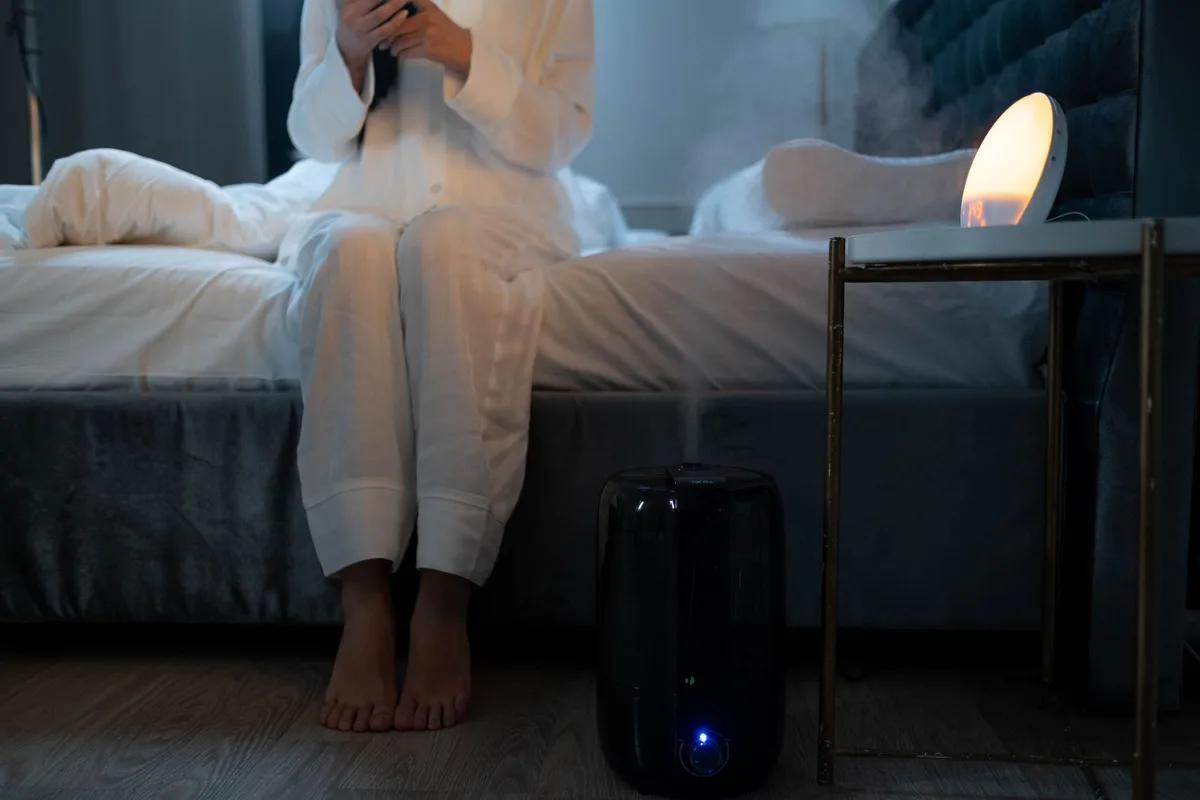
If you’ve ever wondered how does a cold mist humidifier work without boiling water the answer comes down to two distinct technologies. Ultrasonic models use a metal diaphragm vibrating at 1.7 megahertz to shatter water into a fine aerosol. Evaporative models pull dry air through a wet wick using a fan and let physics do the rest.
Both raise room humidity. They do it in completely different ways.
Per EPA guidance the ideal indoor relative humidity sits between 30 and 50 percent. Most portable units deliver 150 to 350 milliliters per hour on their highest setting. That translates to a noticeable humidity lift in a 300 square foot bedroom within 60 to 90 minutes.
Let’s break down the mechanics so you can see which approach fits your space.
Quick Answer
Cold mist humidifiers use either ultrasonic vibration or evaporative wicking to add moisture without heat. Ultrasonic units vibrate a metal plate to create microscopic droplets. Evaporative units blow air through a saturated filter.
Both raise humidity safely. Neither boils water.
Core Explanation: How Ultrasonic Vibration Turns Water into Aerosol
An ultrasonic humidifier holds a small piezoelectric transducer at the bottom of its water tank. Electricity excites this ceramic disc. It flexes up and down 1.7 million times per second.
The rapid motion creates standing waves in the water. Tiny droplets break free at the wave peaks. A quiet fan pushes this cool fog out through the nozzle.
The droplets measure one to five microns. They stay suspended long enough to disperse through the room. Minerals dissolved in tap water ride along inside those droplets.
When the water evaporates the minerals settle as fine white dust. That is why manufacturers and the EPA recommend distilled or reverse osmosis water for ultrasonic models. Hard water makes the dust problem worse.
No heating element exists. Power draw stays low at 10 to 25 watts. Noise levels hover around 20 to 30 decibels on low.
That is quieter than a whisper. The lack of heat makes these units safe for nurseries and pet areas.
Core Explanation: How Evaporative Wick + Fan Creates Invisible Humidity
An evaporative humidifier skips vibration entirely. It uses a porous wick made of paper foam or mesh. The wick sits in a water reservoir.
Capillary action pulls water up through the fibers. A fan draws dry room air across the wet surface. Water evaporates naturally into the air stream.
The humidified air exits the front grille.
Evaporation is self regulating. As room humidity rises the vapor pressure difference shrinks. Less water evaporates per minute.
The unit cannot over humidify the way an ultrasonic can. Minerals stay trapped in the wick. They never become airborne.
Tap water works fine. The wick eventually clogs with scale and needs replacement.
Fan noise runs 35 to 45 decibels on high. That is similar to a quiet refrigerator. Power draw ranges from 20 to 40 watts.
The wick acts as a filter catching dust and pet hair. That can help allergy sufferers. The trade off is a larger footprint and the recurring cost of replacement wicks.
Components Breakdown: What You’d See Inside Each Type
Open an ultrasonic unit and you find the water tank a transducer base a small circuit board and a mist chimney. The transducer is a silver dollar sized metal disc bonded to a ceramic ring. It sits in a shallow well.
Water covers it by a few millimeters. The circuit board drives the transducer at its resonant frequency. A tiny DC fan blows across the chimney opening.
Mist rises and exits through a rotating nozzle.
Open an evaporative unit and the layout differs. A large flat wick frames the air path. A reservoir sits below or behind it.
A centrifugal or axial fan pulls air through the wick. A float valve or sensor maintains water level. Many models add a humidistat probe near the outlet.
Some include a demineralization cartridge slot in the fill path. The wick is the only consumable part.
Top fill designs dominate newer models. They let you pour water directly into the tank without flipping it. Bottom fill units require removing the tank turning it over and unscrewing a cap.
Top fill reduces spills. It also makes daily rinsing easier.
Ultrasonic vs. Evaporative: Side-by-Side Performance Comparison
| Feature | Ultrasonic | Evaporative |
|---|---|---|
| Mist visibility | Visible cool fog | Invisible vapor |
| White dust risk | High with tap water | None |
| Noise level | 20–30 dB | 35–45 dB |
| Power use | 10–25 W | 20–40 W |
| Water requirement | Distilled preferred | Tap water OK |
| Maintenance | Weekly descaling | Wick replacement 1–3 months |
| Over humidification risk | Yes if unmonitored | Self limiting |
| Allergen capture | No | Wick traps particles |
| Typical coverage | 250–500 sq ft | 300–600 sq ft |
Choose ultrasonic for bedrooms where silence matters most. Choose evaporative for hard water homes or allergy sensitive users. Both hit the 30 to 50 percent RH target when sized correctly.
Setup Walkthrough: Placement, Water Choice, and First-Run Checks
Place the unit on a waterproof surface at least twelve inches from walls outlets and electronics. Mist can condense on nearby surfaces and cause damage. A nightstand dresser or dedicated shelf works well.
Avoid carpet unless you use a tray.
Fill the tank with the right water. Ultrasonic models need distilled or reverse osmosis water to prevent white dust. Evaporative models accept tap water.
Check your manual for demineralization cartridge installation if your model includes one. Prime evaporative wicks by soaking them for ten minutes before first use. Dry wicks pull air and reduce output.
Plug in the unit and set the target humidity. Start at forty percent if you have a built in humidistat. Run on high for the first hour to bring the room up to speed.
Then drop to low or auto. Watch for condensation on windows. That means the room is over humidified.
Dial back the setting or crack a door.
Daily & Weekly Maintenance: Visual Cues That Tell You It’s Time to Clean
Empty the tank every morning. Rinse it with clean water. Wipe the interior with a soft cloth.
Standing water breeds biofilm fast. A pink or orange film means Serratia marcescens has moved in. That bacteria thrives in damp plastic.
Weekly deep clean takes twenty minutes. Mix equal parts white vinegar and water. Fill the tank and let it sit thirty minutes.
For ultrasonic units submerge the transducer well. For evaporative units remove the wick and soak it separately. Scrub the transducer gently with a soft toothbrush.
Rinse everything until the vinegar smell disappears.
Look for mineral crust on the transducer or wick frame. Hard white deposits mean your water is too hard or you skipped a cleaning. Scale on the transducer kills output.
Scale on the wick blocks airflow. Both reduce efficiency. Replace the wick if it stays stiff after soaking.
Common Visual Mistakes: White Dust, Pink Biofilm, and Mineral Crust
White dust settles like flour on dark furniture near an ultrasonic humidifier. It wipes away with a damp cloth but returns daily if you keep using tap water. The fix is distilled water or a demineralization cartridge.
Cartridges last one to two months depending on hardness.

Pink biofilm looks like slime on tank walls and float valves. It smells musty. Vinegar kills it but you must scrub every crevice.
The float valve stem is a favorite hideout. Miss it and the colony rebounds in days.
Mineral crust builds up as a chalky ring around the transducer or a white armor on the wick. Ultrasonic transducers with heavy scale sputter and spit water. Evaporative wicks turn rigid and stop wicking.
Both signal overdue maintenance. Soak longer in vinegar. Replace the part if it does not come clean.
Best Fit Scenarios: Bedrooms, Nurseries, Plant Rooms, and Hard-Water Homes
Bedrooms benefit from ultrasonic silence. Twenty decibels won’t wake a light sleeper. Aim the nozzle away from the bed.
Mist on bedding encourages dust mites. A three liter tank runs all night on low.
Nurseries need safety first. Cool mist eliminates burn risk. Evaporative models add the advantage of no white dust on baby furniture.
Place the unit out of reach of curious toddlers. Keep the cord secured.
Plant rooms and grow tents often run higher humidity targets. Sixty to seventy percent suits tropicals. Evaporative units handle the load better because they self regulate.
They also filter dust that can clog leaf stomata. Size the unit for the tent volume not just floor area.
Hard water homes should default to evaporative. The wick traps calcium and magnesium. You avoid white dust entirely.
Wick cost over a season runs twenty to forty dollars. That beats daily distilled water runs.
Safety & Standards: Certifications, Water Guidelines, and Oil Warnings
Look for UL 998 or CSA 22.2 No. 104 markings on the label. These standards cover electrical safety tip over protection and leak resistance. FCC Part 15 compliance means the ultrasonic transducer won’t interfere with other devices.
The EPA advises distilled water for ultrasonic humidifiers to reduce mineral aerosol exposure. Studies show PM2.5 spikes up to fifty micrograms per cubic meter with hard tap water. That exceeds the twenty four hour outdoor standard.
Vulnerable lungs notice the difference.
Never add essential oils unless the manual explicitly allows it. Oils degrade the ultrasonic diaphragm. They clog evaporative wicks.
They void warranties. Use a separate diffuser if you want scent. Keep the humidifier focused on humidity.
FAQs: Output, Noise, Runtime, and Replacement Parts
How much area does a typical cold mist humidifier cover?
Most portable units rated for 250 to 500 square feet deliver noticeable humidity in a 300 square foot bedroom. Real world coverage runs about sixty percent of the manufacturer claim. Closed doors improve results.
Why does my ultrasonic humidifier leave white powder everywhere?
Tap water minerals aerosolize with the mist and settle as dust when the water evaporates. Distilled water or a demineralization cartridge stops it. Evaporative models trap minerals in the wick so they never go airborne.
How often should I replace the evaporative wick?
Plan on a new wick every one to three months depending on water hardness and run time. A stiff discolored wick that stays flat after soaking is done. Generic compatible wicks cost five to fifteen dollars each.
What noise level should I expect in a bedroom?
Ultrasonic units run 20 to 30 decibels on low which is quieter than a whisper. Evaporative fans hit 35 to 45 decibels on high similar to a quiet refrigerator. Low fan mode drops evaporative noise into the low thirties.
Can I run a humidifier all night safely?
Yes if the tank holds enough water for eight to twelve hours on low. Most three liter tanks manage this. Auto shutoff triggers when empty.
Keep the unit on a stable surface away from bedding and electronics.
What humidity setting prevents mold growth?
Target 30 to 50 percent relative humidity per EPA and ASHRAE guidance. Above 60 percent encourages mold dust mites and bacteria. A standalone hygrometer verifies the built in humidistat accuracy.


Similar Posts


















[…] answer is no. The water collected is pure distilled water in a sense. The condensation happens on the coil, and it drips straight […]
[…] you must use tap water in an ultrasonic unit a demineralization cartridge helps. Cartridges last one to two months. They reduce but do not […]