How Many Space Heaters Can You Run In a House
Let’s get straight to it. You’re cold. Your central heating isn’t cutting it, or maybe you’re trying to save on the gas bill by spot-heating the rooms you actually use.
So you plug in a space heater. Then you think about plugging in another one. Maybe two.
Maybe three.
Before you trip a breaker or start a fire, you need the real answer. And I’m not going to give you a vague “it depends.” I’m going to give you the math, the safety rules, and the hard limits that every homeowner needs to know.
Image source: Pexels / Kleison Leopoldino (Pexels License)
The Short Answer: It’s Not About the House, It’s About the Circuit
Here’s what most people get wrong. They ask, “How many space heaters can I run in my house?” The house isn’t the limiting factor. Your electrical panel can handle a lot of load.
The real question is: How many space heaters can you run on one circuit?
The answer is almost always one. Maybe two, if you’re lucky and the heaters are small. But generally, one per circuit is the safe limit.
Why? Because a standard space heater draws between 1,200 and 1,500 watts. A typical home circuit is rated for 15 or 20 amps at 120 volts.
That works out to 1,800 watts for a 15-amp circuit and 2,400 watts for a 20-amp circuit. But you can’t run a circuit at 100% capacity continuously. The National Electrical Code says you should only load a circuit to 80% for continuous use.
That drops you to 1,440 watts for a 15-amp circuit and 1,920 watts for a 20-amp circuit.
So a single 1,500-watt space heater already pushes a 15-amp circuit to its limit. Plug in a second heater on the same circuit, and you’re almost guaranteed to trip the breaker.
How Much Power Does a Space Heater Actually Use?
Let’s look at the numbers. Most portable space heaters are designed to plug into a standard 120-volt outlet. They come in two common sizes.
Image source: Pexels / Brett Sayles (Pexels License)
Low settings (750 watts): These are usually the “low” or “eco” mode on a heater. They draw about 6.25 amps. You could potentially run two of these on a 15-amp circuit, but you’d be right at the 80% limit.
It’s risky.
High settings (1,500 watts): This is the standard max for most residential space heaters. They draw 12.5 amps. That’s already over the 80% limit for a 15-amp circuit.
You can’t safely run a second one on the same circuit.
Smaller heaters (500, 900 watts): You’ll find these in ceramic tower heaters or compact units. A 750-watt heater draws about 6.25 amps. A 900-watt heater draws about 7.5 amps.
These are the only heaters where running two on one circuit might work, but only if nothing else is on that circuit.
Here’s a simple table for reference:
| Heater Wattage | Amps Drawn (120V) | Max on 15A Circuit | Max on 20A Circuit |
|---|---|---|---|
| 750 watts | 6.25 amps | 2 (tight) | 2 (safe) |
| 1,000 watts | 8.33 amps | 1 (with nothing else) | 2 (tight) |
| 1,500 watts | 12.5 amps | 1 only | 1 (with nothing else) |
| 1,800 watts | 15 amps | 1 (will trip) | 1 (risky) |
What Happens When You Overload a Circuit?
You might think, “I’ll just plug them in and see if the breaker holds.” That’s a bad idea. Here’s what actually happens when you push a circuit too hard.
The breaker trips. That’s the best-case scenario. You lose power to that room, and you have to go reset the breaker. Annoying, but not dangerous.
The wires overheat. Before the breaker trips, the wires inside your walls are getting hot. If you do this repeatedly, you can damage the insulation on those wires. That creates a fire risk.
The outlet fails. Cheap outlets can melt or catch fire under sustained high loads. I’ve seen outlets with scorch marks from people running space heaters on them.
The breaker fails. Breakers wear out over time. If you trip a breaker enough times, it can lose its ability to trip properly. That means the next time you overload the circuit, the breaker might not protect you.
The National Fire Protection Association (NFPA) reports that space heaters cause about 44% of home heating fires. Overloading circuits is a major contributor. Don’t gamble with this.
How to Identify Which Outlets Are on Which Circuit
This is the practical part. You can’t know how many space heaters you can run until you know which outlets share a circuit. Here’s how to figure it out.
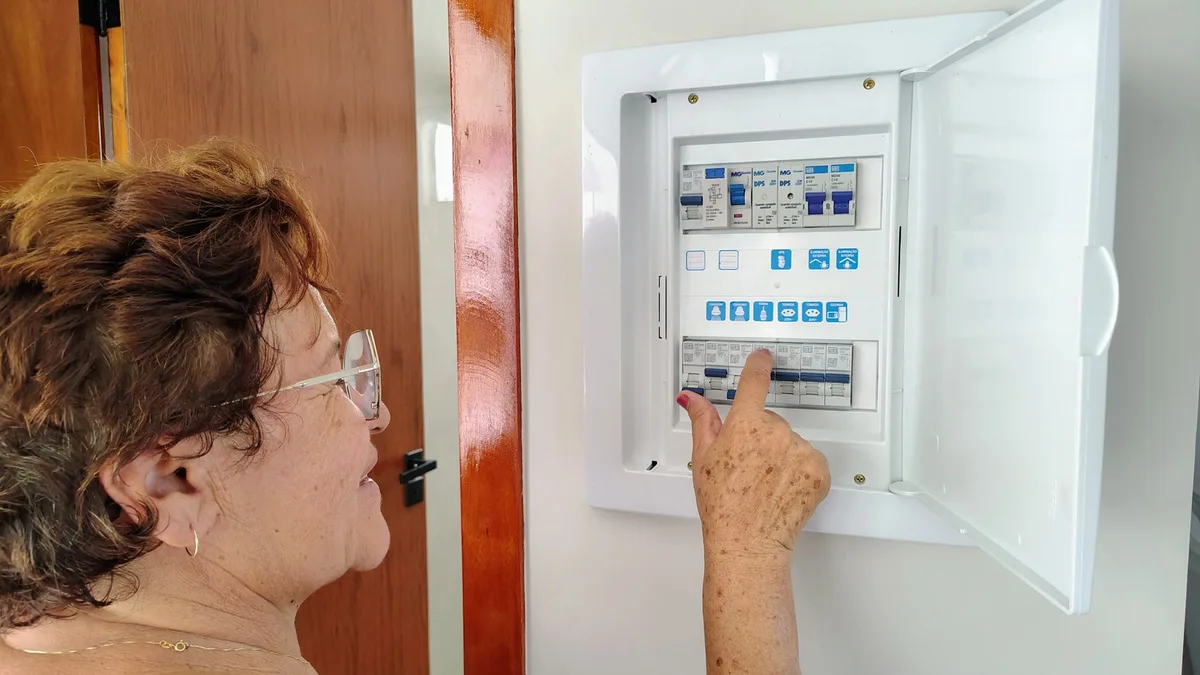
Find your breaker panel. It’s usually in the basement, garage, or a utility closet. The panel door should have a list of what each breaker controls. Those lists are often wrong or incomplete.
Map your circuits. Plug a lamp into an outlet. Turn off one breaker at a time and see which outlets go dead. Label each outlet with the breaker number.
This takes an hour, but it’s worth it.
Check the kitchen and bathroom. These rooms should have dedicated circuits per code. A kitchen counter circuit should only serve kitchen outlets. A bathroom circuit should only serve bathroom outlets.
Don’t run a space heater on a kitchen circuit if you’re using the microwave or toaster.
Watch out for shared circuits. Bedrooms are often daisy-chained together. Three bedrooms might share one 15-amp circuit. That means you can run one space heater in any of those rooms, but not two in separate rooms if they’re on the same circuit.
Can You Run Space Heaters in Different Rooms?
Yes, if they’re on different circuits. That’s the whole trick. You can run a space heater in the living room, one in the bedroom, and one in the home office, as long as each is on a separate circuit.
Most homes have at least 8 to 12 circuits. A typical 2,000-square-foot house might have 15 to 20 circuits. So in theory, you could run a space heater in every room.
But here’s where it gets tricky.
The main breaker matters. Your house has a main breaker that limits the total power coming in. Typical homes have 100-amp or 200-amp service. A 100-amp panel can handle about 24,000 watts of load.
If you run ten 1,500-watt heaters, that’s 15,000 watts. You’re fine on the main breaker. But if you also run the oven, dryer, air conditioner, and water heater, you could trip the main.
Don’t forget the other loads. A space heater isn’t the only thing on that circuit. You’ve got lights, a TV, a computer, phone chargers, a clock radio. All of those draw power.
A TV draws 100 to 400 watts. A computer draws 200 to 500 watts. A few lights draw 50 to 100 watts.
Add those to a 1,500-watt heater, and you’re over the limit.
The 80% Rule Explained Simply
The 80% rule is not a suggestion. It’s an electrical code requirement for continuous loads. A continuous load is anything that runs for three hours or more.
A space heater running all night qualifies.
Here’s the math in plain English:
- 15-amp circuit: Safe continuous load = 12 amps (1,440 watts)
- 20-amp circuit: Safe continuous load = 16 amps (1,920 watts)
A 1,500-watt heater draws 12.5 amps. That’s over the 12-amp safe limit for a 15-amp circuit. You’re already breaking the rule with one heater.
The only way to stay within the 80% rule is to use a heater on a 20-amp circuit, or use a smaller heater. A 1,000-watt heater draws 8.33 amps, which is fine on either circuit. But most people buy the 1,500-watt heaters because they’re more powerful.
What About Extension Cords and Power Strips?
Never use an extension cord with a space heater. I mean it. Don’t do it.
Extension cords are not designed for high continuous loads. They overheat, the insulation melts, and fires start. Even a heavy-duty 12-gauge extension cord is risky.
The cord can get hot enough to ignite carpet, curtains, or furniture.
Power strips are even worse. Most power strips are rated for 15 amps total. A space heater alone uses 12.5 amps.
Plug anything else into that power strip, and you’re over the limit. Plus, power strips often have internal circuit breakers that can fail under repeated high loads.
Plug the space heater directly into a wall outlet. That’s the only safe option.
What About the New “Smart” Space Heaters?
Some newer heaters have smart plugs, timers, and thermostats. They claim to be safer. And they are, in some ways.
But they don’t change the electrical load.
A smart heater still draws 1,500 watts on high. It still needs a dedicated circuit. The only difference is that it might cycle on and off to maintain a temperature, which reduces the average load.
But the peak load is still 1,500 watts. And the electrical code cares about peak load, not average.
The same goes for oil-filled radiator heaters, ceramic heaters, and infrared heaters. They all convert electricity to heat. The efficiency is nearly 100% for all of them.
The wattage is the wattage.
How Many Space Heaters in a 100-Amp House?
Let’s do a real-world example. You have a 100-amp main panel. That gives you 24,000 watts of total capacity.
But you’re also running other things.
Here’s a typical winter evening load in a 100-amp house:
- Refrigerator: 800 watts (running, but cycles)
- Furnace blower: 500 watts
- Lights: 300 watts
- TV and modem: 200 watts
- Oven (if cooking): 3,000 watts
- Microwave: 1,200 watts
- Computer: 300 watts
That’s about 6,300 watts without the oven, or 9,300 watts with the oven. You have about 14,700 to 17,700 watts of capacity left. That’s enough for 10 to 12 space heaters.
But you can’t run them all because you don’t have enough circuits.
The circuit limit will stop you long before the main breaker does. You’ll run out of places to plug them in.
What About a 200-Amp House?
A 200-amp panel gives you 48,000 watts. You could theoretically run 30 space heaters at once. But again, the circuit limit is the bottleneck.
The real limit in a 200-amp house is the number of circuits you have. A typical 200-amp panel has 20 to 40 circuits. If you ran a 1,500-watt heater on each circuit, you’d be at 30,000 to 60,000 watts.
Some of those circuits are for the oven, dryer, and water heater, so you can’t use them all.
Realistically, a 200-amp house can safely run 10 to 15 space heaters, as long as they’re on separate circuits and nothing else is running on those circuits. But that’s a ridiculous number. You’d never need that many.
The Real Danger Nobody Talks About
The breaker isn’t the only safety device. The wiring in your walls has a rating. So do the outlets.
So do the plugs on the heater.
Here’s what can go wrong even if you don’t trip a breaker:
Loose connections. An outlet that’s 20 years old might have loose wires. A loose connection creates resistance. Resistance creates heat.
That heat can melt the outlet or the wire nut behind it.
Backstabbed outlets. Many outlets are installed using the “backstab” holes instead of the screw terminals. These are notoriously unreliable. They can fail under continuous high loads.
If your outlets are backstabbed, consider replacing them if you plan to run space heaters.
Aluminum wiring. If your house was built between 1965 and 1973, you might have aluminum wiring. It’s more prone to overheating and fire than copper. You should not run space heaters on aluminum wiring circuits without having an electrician check the connections.
Can You Run a Space Heater on a GFCI Outlet?
Yes, you can. But it might trip the GFCI. Space heaters can cause small electrical noise that looks like a ground fault to a sensitive GFCI.
If your heater keeps tripping the GFCI, don’t just defeat it. Find another outlet.
Bathroom and garage outlets are required to be GFCI-protected. If you’re running a space heater in the bathroom, you might have trouble. Try a different outlet or use a smaller heater.
What About the “Energy-Saving” Space Heaters?
I get this question all the time. “My space heater says it’s energy-efficient. Does that mean I can run more of them?”
No. Energy efficiency in a space heater doesn’t mean it uses less electricity. It means it converts electricity to heat more efficiently.
But all electric space heaters are already 100% efficient. They turn every watt of electricity into heat. The “energy-saving” features are just programmable thermostats and timers that turn the heater off when the room is warm enough.
The wattage is the wattage. A 1,500-watt “energy-saving” heater draws the same 12.5 amps as a $20 budget heater from the hardware store.
How Many Space Heaters Should You Actually Run?
Now we get to the practical answer. Not the technical limit. The sensible limit.
Most homes should run no more than two space heaters at a time, and only if they’re on different circuits. That covers the most common scenarios:
- One in the bedroom you’re sleeping in
- One in the living room where you’re watching TV
That’s it. If you need more heat than that, you should fix your central heating system or add insulation. Space heaters are a band-aid, not a solution.
When You Can Run Three or More
There are exceptions. If you have a large house with many circuits, and you know exactly which outlets are on which circuits, you can run more. But you need to verify everything.
Here’s a checklist for running three or more space heaters:
- Confirm each heater is on a separate circuit
- Verify that circuit is at least 15 amps
- Make sure nothing else significant is running on that circuit
- Use only 1,500-watt or smaller heaters
- Plug directly into the wall, no extensions
- Check the outlets for warmth after 30 minutes
- Feel the breaker for warmth
- Install smoke detectors in every room with a heater
If you can’t check all those boxes, don’t do it.
The Bottom Line
Here’s what you need to remember.
One space heater per circuit. That’s the golden rule. Most of the time, that means one heater per room, because most rooms are on their own circuit. But some rooms share circuits, so check.
Never use extension cords. Direct to wall outlet only.
Never exceed 1,500 watts per circuit. Even on a 20-amp circuit, be careful.
Don’t run space heaters while you’re sleeping or away from home. Unless they’re the newer models with tip-over switches and overheat protection. Even then, it’s risky.
If your breaker trips, don’t just reset it. Move the heater to a different circuit or use a smaller heater.
The short answer is this: You can safely run as many space heaters as you have circuits, but no more than one per circuit, and no more than 1,500 watts per circuit. For most homes, that’s between two and four space heaters max. Anything beyond that, and you’re asking for trouble.
Stay warm. Stay safe.


Similar Posts