How to Fill Up Humidifier

Learning how to fill up humidifier units the right way stops white dust, mold blooms, and costly repairs before they start. Most people grab the tap, top off the tank, and walk away. That habit shortens the machine’s life and can push minerals or microbes into your air.
The fix takes thirty seconds once you know your model’s quirks.
EPA indoor air guidance recommends 30 to 50 percent relative humidity for health and comfort. ASHRAE Standard 55 backs that range. Ultrasonic models fed with hard tap water can emit respirable particles under 2.5 microns.
Warm mist units draw 300 to 500 watts and stay hot for fifteen minutes after shutdown. Let’s match your hardware to the correct fill routine.
Quick Answer: The 30-Second Rule for Your Specific Model
Turn off and unplug the unit. Warm mist models need a fifteen minute cool down. Remove the tank or open the top lid.
Fill with distilled water or tap water plus a demineralization cartridge. Stop at the max line. Reseat the tank until the valve clicks.
Wipe drips. Power on and set your target humidity. Empty and dry the tank daily.
Why Filling Your Humidifier Correctly Actually Matters
Wrong water creates white dust that settles on furniture and lungs. Ultrasonic nebulizers aerosolize every dissolved solid in the tank. EPA studies show those particles reach deep airways.
Standing water grows biofilm in twenty four hours. Pink slime means Serratia marcescens or mold spores. A missed daily dump reseeds the room every cycle.
Scale on a heating element cuts efficiency and trips safety thermostats. Leaks from an overfilled tank warp floors and trigger electrical shorts. Manufacturer warranties void when mineral damage is evident.
Proper fill habits protect the machine and your air.
Identify Your Humidifier Type Before You Fill
Four main categories dictate the fill method. Top fill units have a wide lid on the reservoir. You pour straight in without lifting anything.
Bottom fill units use a removable tank that flips upside down. Console whole house models often have a fixed basin filled by bucket or hose. Warm mist vaporizers boil water and need a cool down before opening.
Check the label on the base or the manual. Look for terms like ultrasonic, evaporative, steam, or impeller. The tank shape and cap location tell the rest.
Decision Branch: Top-Fill Units (Tank Stays In Place)
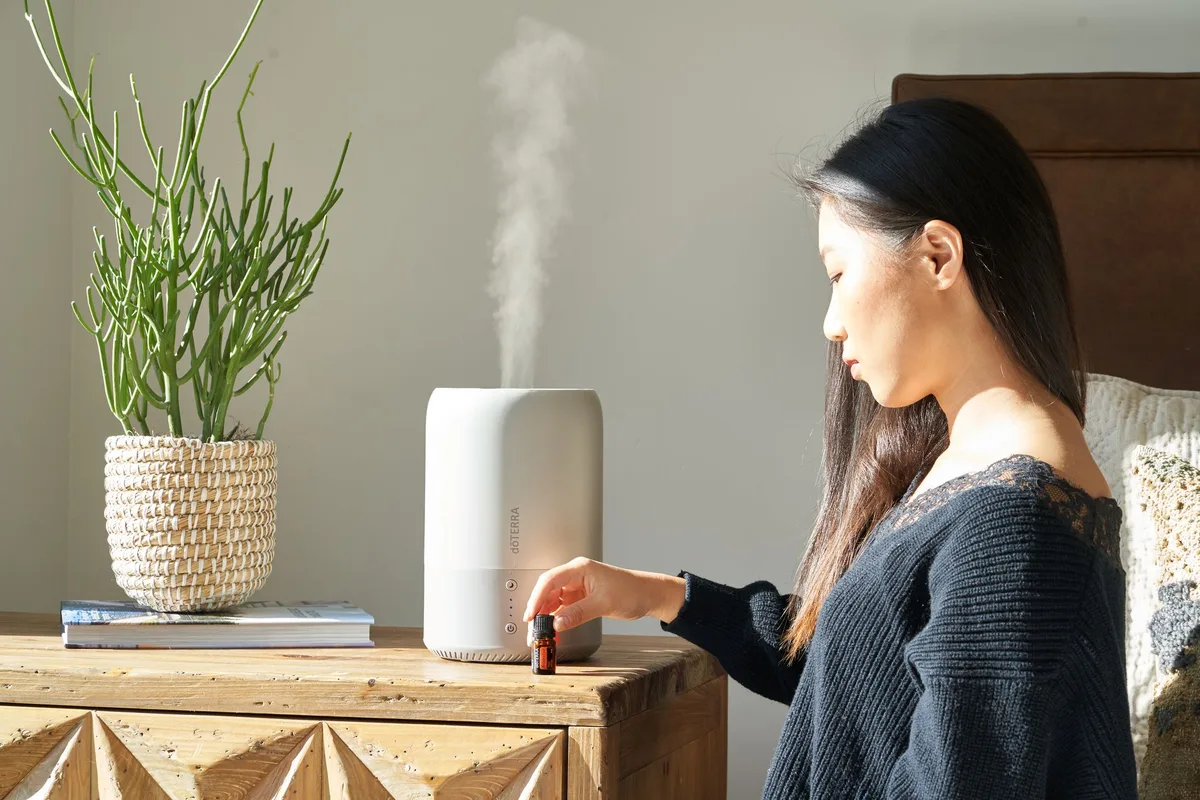
Top fill designs dominate the current market. Brands like Levoit, Honeywell, and Vornado use this style. The reservoir sits on the base with a hinged or screw cap.
No heavy lifting required. Follow these steps.
Power off and unplug. Open the fill lid. Check the max fill line molded into the tank wall.
Pour distilled water slowly. Stop at the line. Close the lid securely.
Wipe any splashes from the base. Plug in and select your setting. The float valve seals automatically when the tank seats.
| Step | Action | Key Detail |
|---|---|---|
| 1 | Power off | Unplug from wall |
| 2 | Open lid | Hinged or twist cap |
| 3 | Check max line | Molded indicator |
| 4 | Pour water | Distilled preferred |
| 5 | Close lid | Snap or twist tight |
| 6 | Wipe base | Prevent slips |
| 7 | Power on | Set humidity target |
Decision Branch: Bottom-Fill Units (Removable Tank Flip)
Bottom fill tanks detach from the base. You carry them to the sink. Common on Crane, Pure Enrichment, and older Honeywell models.
The tank cap faces down when installed. Flip it up to fill. The weight of a full tank can reach fifty pounds on console sizes.
Use two hands.
Power off and unplug. Lift the tank straight up. Flip it over.
Unscrew the cap. Check the max fill line inside the neck. Fill with distilled water or tap plus cartridge.
Screw the cap on snug. Flip the tank back. Lower it onto the base until the valve clicks.
Wipe drips. Power on.
| Step | Action | Key Detail |
|---|---|---|
| 1 | Power off | Unplug from wall |
| 2 | Remove tank | Lift straight up |
| 3 | Flip tank | Cap faces up |
| 4 | Unscrew cap | Wide mouth usual |
| 5 | Check max line | Inside neck |
| 6 | Fill water | Distilled or cartridge |
| 7 | Cap tight | Prevent leaks |
| 8 | Reseat tank | Listen for click |
| 9 | Wipe base | Dry surface |
| 10 | Power on | Set target RH |
Decision Branch: Console & Whole-House Systems (Fixed Reservoir)
Console units sit on the floor and serve multiple rooms. Aprilaire, Aircare, and Essick Air lead this category. The reservoir does not remove.
You fill it with a pitcher, bucket, or permanent hose connection. Capacities run from four to six gallons. That equals thirty to fifty pounds of water.
Plan your fill station accordingly.
Power off the unit. Open the top cover or fill port. Check the max line inside the basin.
Pour distilled water or tap water with a cartridge inserted. Stop at the line. Close the cover.
If your model has a float valve, listen for the click. Wipe spills. Power on and set the humidistat.
Some consoles connect to a water line. Those need a saddle valve and quarter inch tubing. Follow local plumbing codes.
| Step | Action | Key Detail |
|---|---|---|
| 1 | Power off | Switch or unplug |
| 2 | Open cover | Top lid or port |
| 3 | Check max line | Inside basin |
| 4 | Fill water | Pitcher or hose |
| 5 | Close cover | Seal tight |
| 6 | Wipe spills | Prevent slips |
| 7 | Power on | Set humidistat |
Decision Branch: Warm Mist / Steam Vaporizers (Cool-Down Required)
Warm mist units boil water. The steam kills most bacteria and minerals stay in the tank. Vicks, Honeywell, and Crane make popular models.
The heating element reaches two hundred twelve degrees Fahrenheit. The tank and steam nozzle stay hot after shutdown. Burn risk is real.
Never open a warm mist unit immediately after use.
Power off and unplug. Wait fifteen full minutes. The element cools and pressure equalizes.
Open the tank lid or remove the tank. Check the max fill line. Fill with distilled water only.
Tap water scales the element fast. Replace the tank or close the lid. Wipe condensation.
Plug in and turn on. The unit will gurgle for the first minute as steam builds. Keep the nozzle aimed away from walls and faces.
| Step | Action | Key Detail |
|---|---|---|
| 1 | Power off | Unplug unit |
| 2 | Wait 15 min | Critical cool down |
| 3 | Open tank | Lid or remove |
| 4 | Check max line | Inside tank |
| 5 | Fill distilled | Tap scales element |
| 6 | Close tank | Secure seal |
| 7 | Wipe moisture | Dry exterior |
| 8 | Power on | Steam starts in 1 min |
Water Choice Decision: Distilled, Tap + Cartridge, or Filtered
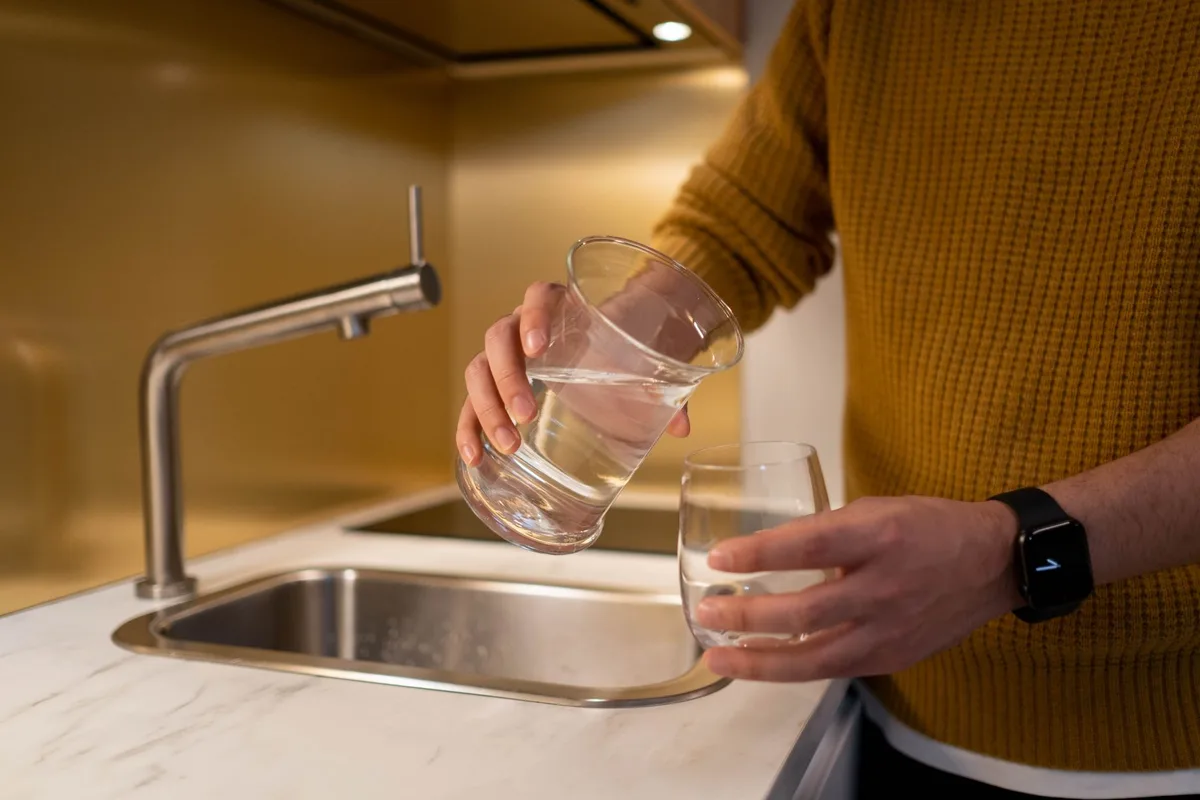
Water type determines white dust, scale, and microbial load. Distilled water removes ninety nine percent of dissolved solids. Cost runs one dollar per gallon.
Best for ultrasonic and warm mist units. Tap water with a demineralization cartridge works for ultrasonic models. Cartridges last thirty to forty fills or one to two months.
Replace on schedule or white dust returns. Filtered pitcher water (Brita, ZeroWater) reduces but does not eliminate minerals. Acceptable for evaporative wick units.
Not recommended for ultrasonic or steam.
| Water Type | Best For | White Dust Risk | Cost Per Fill |
|---|---|---|---|
| Distilled | Ultrasonic, warm mist | Near zero | $0.50–$1.00 |
| Tap + cartridge | Ultrasonic | Low if fresh | $0.10–$0.20 |
| Filtered pitcher | Evaporative only | Moderate | $0.05–$0.15 |
| Straight tap | Evaporative only | High | Near zero |
Never add essential oils to the main tank. They coat the ultrasonic disc or clog the wick. Use the separate aroma tray if your model has one.
Never add medication, vapor rub, or bleach to the water. Those chemicals aerosolize into your lungs.
Step-by-Step Filling Workflow for Your Type
Match your unit to the right column. Follow the row sequence top to bottom.
| Step | Top Fill | Bottom Fill | Console | Warm Mist |
|---|---|---|---|---|
| 1 | Power off, unplug | Power off, unplug | Power off | Power off, unplug |
| 2 | Open lid | Remove tank | Open cover | Wait 15 min cool down |
| 3 | Check max line | Flip, check line | Check max line | Check max line |
| 4 | Pour distilled | Fill distilled | Pour distilled | Fill distilled only |
| 5 | Close lid | Cap, flip, reseat | Close cover | Close tank |
| 6 | Wipe base | Wipe base | Wipe spills | Wipe moisture |
| 7 | Power on, set RH | Power on, set RH | Power on, set RH | Power on |
Print this table and tape it near your fill station. Consistency prevents the errors that cause leaks and dust.
Common Mistakes That Cause Leaks, White Dust, or Mold
Overfilling past the max line is the number one leak cause. The float valve cannot seal. Water spills into the base and onto the floor.
Using straight tap water in an ultrasonic unit creates white dust within hours. Skipping the daily empty and dry cycle lets biofilm form. Pink or black slime appears in forty eight hours.
Forgetting to replace the demineralization cartridge lets minerals through. Adding oils to the main tank gums up the nebulizer disc. Placing the unit on carpet traps moisture and grows mold underneath.
Running a warm mist unit without the fifteen minute cool down risks steam burns and cracked tanks. Ignoring the humidistat setting lets humidity exceed sixty percent. Dust mites and mold thrive above that level.
Safety Lines You Should Never Cross
Never operate a warm mist unit in a child’s room. The steam nozzle and tank surface exceed one hundred twenty degrees Fahrenheit. A tip over causes instant scalds.
Keep all humidifiers at least three feet from beds and cribs. Never add essential oils, vapor rub, or medication to the main water tank. Those substances coat ultrasonic discs and clog evaporative wicks.
They also aerosolize into lungs. Use only the manufacturer’s aroma tray if provided. Never run a humidifier without water.
Dry operation burns out the nebulizer or heating element. Most units have auto shutoff floats. Test yours monthly by lifting the tank until the unit stops.
Never block the mist outlet. Aiming steam at walls, outlets, or electronics causes condensation damage and shock risk. Never submerge the base unit in water.
The electronics and motor are not waterproof. Clean the base with a damp cloth only.
Daily & Weekly Maintenance That Keeps It Running Clean
Daily: Empty the tank and base. Rinse both with clean water. Wipe dry with a clean towel.
Leave the tank cap off to air dry completely. This breaks the biofilm cycle. Weekly: Unplug the unit.
Remove the tank and any filters or cartridges. Fill the tank with one cup white vinegar and one cup water. Let sit twenty minutes.
Scrub the interior with a bottle brush. Rinse until vinegar smell disappears. For the base, wipe the nebulizer disc or heating element with a vinegar dampened cloth.
Do not scrub the disc hard. Rinse the base with a damp cloth. Disinfect monthly with one teaspoon bleach per gallon water.
Soak tank ten minutes. Rinse thoroughly. Replace evaporative wicks every one to three months per manufacturer schedule.
Replace demineralization cartridges every thirty to forty fills. Descale steam units monthly with undiluted vinegar. Run the unit with vinegar solution for fifteen minutes outdoors.
Rinse three full tanks.
| Task | Frequency | Method |
|---|---|---|
| Empty and dry | Daily | Rinse, wipe, air dry |
| Vinegar soak tank | Weekly | 1:1 vinegar water, 20 min |
| Wipe nebulizer disc | Weekly | Vinegar cloth, gentle |
| Bleach disinfect | Monthly | 1 tsp per gallon, 10 min |
| Replace wick filter | 1–3 months | Per manual |
| Replace cartridge | 30–40 fills | Or when dust appears |
| Descale steam unit | Monthly | Run vinegar 15 min outside |
Quick-Reference Decision Card: Match Your Unit to the Right Steps
Print this card. Tape it to your fill station.
| Your Unit Type | Fill Method | Water Required | Cool Down | Key Warning |
|---|---|---|---|---|
| Top fill (Levoit, Honeywell, Vornado) | Pour in place | Distilled or tap + cartridge | None | Don’t overfill past line |
| Bottom fill (Crane, Pure Enrichment) | Remove, flip, fill | Distilled or tap + cartridge | None | Seat until click heard |
| Console whole house (Aprilaire, Aircare) | Bucket or hose to basin | Distilled or tap + cartridge | None | Heavy, use pitcher |
| Warm mist steam (Vicks, Honeywell) | Remove tank or open lid | Distilled only | 15 min mandatory | Burn risk, no oils |
Check your manual for model specific max line location and cartridge part number. Set a phone reminder for daily empty and weekly vinegar soak. Consistency is the only hack that works.
Frequently Asked Questions
Can I use tap water in my ultrasonic humidifier?
Only with a demineralization cartridge installed and replaced on schedule. Without it, tap water minerals become airborne white dust. Distilled water is the zero risk choice.
Why does my humidifier leak from the bottom?
The tank is overfilled past the max line, the cap is loose, the float valve is stuck, or the tank seal is cracked. Empty to the line, tighten the cap, clean the valve, or replace the tank.
How often should I clean the humidifier tank?
Empty and dry daily. Vinegar soak weekly. Bleach disinfect monthly.
This schedule prevents pink slime and mineral scale buildup.
Is warm mist or cool mist better for a baby’s room?
Cool mist only. Warm mist units pose a scald hazard if tipped. The American Academy of Pediatrics recommends cool mist for nurseries.
What causes white dust on my furniture?
Ultrasonic nebulizers aerosolize dissolved minerals from tap water. Switch to distilled water or install a fresh demineralization cartridge. The dust stops within one fill cycle.
Can I run vinegar through the humidifier to clean it?
Only for steam vaporizers run outdoors for fifteen minutes. For ultrasonic and evaporative units, soak the tank only. Never run vinegar mist into your living space.


Similar Posts