How to Fold Net Laundry Bag
Let me be straight with you: a mesh laundry bag is one of those everyday items that somehow turns into a tangled mess the second you look away. You stuff it in a suitcase, and by the time you reach your hotel, it’s a crumpled ball taking up more space than your jeans. But here’s the thing, folding a net laundry bag properly takes about 15 seconds once you know the trick.
And yet, almost nobody does it right.
I’ve been working with travel gear and organizational products for years. I’ve tested dozens of methods for packing, storing, and maintaining mesh bags. The folding technique I’m about to show you isn’t guesswork, it’s the result of figuring out what actually survives a suitcase, what fits in a drawer, and what doesn’t dissolve into a knotted disaster the first time you need it.
So let’s get this sorted. You’re here to learn how to fold a net laundry bag, and that’s exactly what we’re doing. Nothing else.
Why Folding Your Net Laundry Bag Actually Matters
Before we jump into the step-by-step, I need you to understand why this isn’t just about being tidy. A properly folded mesh laundry bag does three critical things:
First, it saves real space. Unfolded, most mesh bags are a floppy, air-filled blob. Folded correctly, they compress into a flat rectangle that slides into any luggage pocket or drawer gap.
Second, it prevents tangling. Mesh fabric is highly grabby. It catches on zippers, buttons, and itself. A neat fold keeps the bag contained so it doesn’t become a fishing net for everything around it.
Third, it extends the bag’s life. Constant wadding and crushing puts stress on the mesh seams and the drawstring channel. A controlled fold distributes that stress evenly. The bag lasts longer.
If you’ve ever pulled a wrinkled, half-twisted laundry bag out of your luggage and thought “there has to be a better way”, there is.
The Two Best Methods for Folding a Net Laundry Bag
There isn’t just one right way. There are two, and which one you use depends on where you’re storing the bag. I’ll cover both.
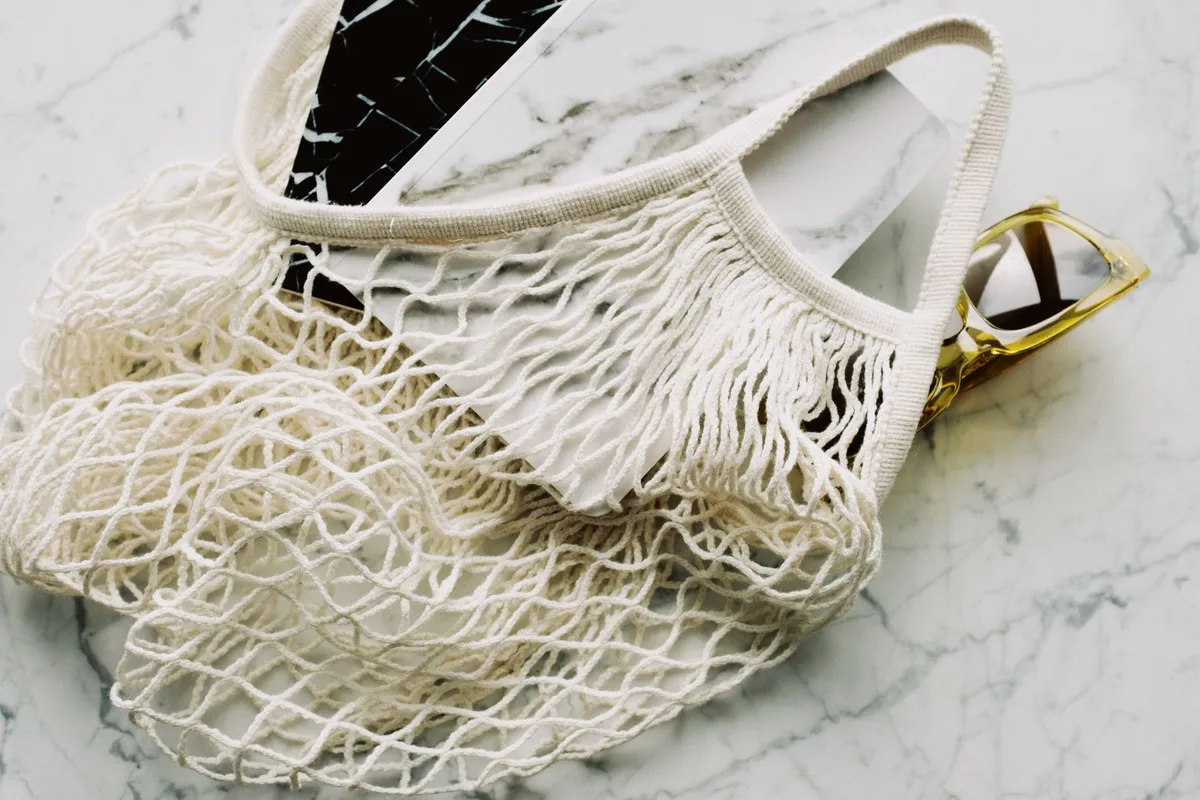
Image source: Pexels / ready made (Pexels License)
Method 1: The Flat Fold (Best for Drawers and Closets)
This is your go-to for home storage. It gives you a neat, stackable rectangle.
Step 1: Shake it out. Hold the bag by the top edge and give it a sharp snap. You want the mesh fully open and the drawstring pulled loose so it runs freely. If the drawstring is tangled inside the bag, pull it all the way out first.
Step 2: Lay it flat. Spread the bag on a clean surface, a bed, a table, or the floor. Smooth out any wrinkles with your hands. The bag should be a rough circle or oval, depending on the shape.
Don’t worry about perfect symmetry.
Step 3: Fold in half. Bring the top edge down to meet the bottom edge. Match the seams as best you can. You now have a half-circle or half-oval.
Step 4: Fold in half again. Bring the left edge to the right edge. You’re making a quarter-circle. For a standard 20-inch mesh bag, this gives you a shape roughly the size of a small book.
Step 5: Fold into a rectangle. Take the curved outer edge and fold it inward toward the center point. Then fold the opposite side in. You’re aiming for a flat rectangle about the size of a smartphone.
Tuck the drawstring inside the final fold so it doesn’t dangle.
Step 6: Smooth and store. Run your hand over the folded bag to press out any trapped air. That’s it.
This flat fold works beautifully for stacking multiple bags in a linen closet or sliding into a dresser drawer with your socks and underwear.
Method 2: The Travel Roll (Best for Suitcases and Backpacks)
When space is tight and you need maximum compression, the travel roll wins every time.
Step 1: Start flat. Same as before, shake the bag out, lay it flat, and smooth the mesh.
Step 2: Fold in half lengthwise. But this time, instead of a simple top-to-bottom fold, you’re creating a long strip. Fold the bag so the drawstring end aligns with the bottom edge.
Step 3: Fold lengthwise again. You want a narrow strip about 4 to 5 inches wide. The exact width depends on your bag size, but aim for something that won’t unroll easily.
Step 4: Start rolling from the bottom. Begin at the closed end (opposite the drawstring opening) and roll tightly toward the drawstring. Keep the roll firm but not so tight that you’re straining the mesh.
Step 5: Secure with the drawstring. Once you reach the drawstring, wrap it around the roll a few times. Then tie a loose knot or just tuck the strings under themselves. The drawstring holds the whole roll together like a package.
Step 6: Tuck into a corner. This roll fits perfectly in the gap between clothes in a suitcase, inside the shoe pocket of a duffel, or at the bottom of a backpack. It takes up almost no space.
I prefer the travel roll for carry-on luggage. It stays compact and doesn’t pop open when you’re digging through your bag at airport security.
Common Folding Mistakes and How to Avoid Them
I’ve watched people fold mesh laundry bags for years. I’ve seen the same three errors again and again.
Mistake 1: Forcing the fold. Mesh doesn’t hold creases the way cotton does. If you try to force a sharp fold, you’ll stretch the fabric and create permanent wrinkles. Let the mesh guide the fold, gentle pressure, not brute force.
Mistake 2: Leaving the drawstring loose. That dangling string is a magnet for tangles. It wraps around zippers, catches on backpack straps, and knots itself into your other clothes. Always tuck or wrap the drawstring into the final fold.
Mistake 3: Folding when damp. Mesh traps moisture. If you fold a bag that isn’t completely dry, you’ll get mildew spots and that sour smell nobody wants. Wait until it’s fully air-dried before folding.
How to Store Your Folded Net Laundry Bag
Once you’ve mastered the fold, storage is straightforward. Here’s what I recommend:
In a drawer: Stack the flat-folded bags vertically like files. You can see each one at a glance and pull the one you need without disturbing the rest.
In a closet: Use a small fabric bin or basket. Keep the rolled bags standing on their edges. This stops them from being crushed under heavier items.
In a suitcase: Place the rolled bag in a packing cube or wrap it inside a pair of jeans. It doesn’t need its own pocket, just keep it contained so it doesn’t migrate.
One pro tip: keep a spare folded bag in your car’s glove compartment. It’s there when you need an emergency laundry solution on a road trip. The fold keeps it clean and ready.
Maintaining Your Mesh Laundry Bag for Long Life
A well-folded bag is one that’s been properly cared for. Here’s how to keep your mesh bag in top condition:
Wash it regularly. Mesh bags collect dirt, lint, and bacteria. Toss it in the washing machine every few uses, cold water, gentle cycle. Air dry only.
Heat from a dryer can melt synthetic mesh.
Check the drawstring. That cord takes a beating. If it starts fraying, replace it before it breaks mid-trip. You can use a shoelace or any thin cord as a replacement.
Inspect the seams. Mesh bags fail at the seams first. Run your finger along the stitching after each wash. If you see loose threads, reinforce the seam with a few hand stitches before the hole grows.
Store it dry. This is non-negotiable. Folded damp mesh breeds bacteria and smells. Always confirm the bag is bone dry before putting it away.
How to Unfold and Use Your Bag Without the Struggle
This might sound obvious, but I’ve seen people fight with a folded mesh bag for thirty seconds trying to get it open. Here’s the easy way:
For a flat-folded bag: Grab the outer edge and give it a sharp flick. The bag will pop open into its full shape. No wrestling.
For a rolled bag: Untie or unwrap the drawstring. Let the roll drop onto a flat surface. It will naturally unroll itself.
Lift by the drawstring opening and shake.
The key is not to pull from the center. Pull from the edges, that’s where the mesh has the most give.
Choosing the Right Mesh Laundry Bag Size
Not all mesh laundry bags fold the same way. The size and shape affect your folding strategy.

Image source: Pexels / www.kaboompics.com (Pexels License)
Small bags (12, 16 inches): These are great for delicates and socks. They fold into tiny squares using the flat method. The travel roll is about the size of a granola bar.
Medium bags (18, 22 inches): The standard size for most travelers. The flat fold gives you a rectangle the size of a paperback. The travel roll fits in a shoe.
Large bags (24+ inches): These are for bedding or heavy loads. The flat fold creates a larger rectangle, still manageable. The travel roll is bulkier but saves space compared to leaving it loose.
Drawstring vs. zipper closure: Drawstring bags fold flatter because there’s no zipper hardware to fight. Zipper bags can still fold, but you’ll need to position the zipper pull at the edge so it doesn’t create a lump.
When Not to Fold Your Net Laundry Bag
Believe it or not, there are times when folding is the wrong move.
If the bag is still wet: Never fold a damp bag. Let it dry completely first.
If the bag has heavy stains: Pretreat stains before folding. Folding traps the stain against the fabric and makes it harder to remove later.
If you’re storing it long-term: For storage longer than a month, use the flat fold, not the roll. The roll creates continuous tension on the mesh, which can weaken it over time. The flat fold distributes pressure evenly.
If the bag is damaged: If you have a tear or a broken drawstring, repair it before folding. Folding a damaged bag makes the damage worse.
A Quick Reference: The One-Minute Fold
Here’s my condensed version for when you’re in a hurry:
- Shake the bag open
- Lay flat and smooth
- Fold in half twice (quarter-circle)
- Fold into a rectangle matching your storage space
- Tuck the drawstring inside
Total time: under 60 seconds
For travel, substitute steps 3, 5 with the rolling method: fold into a strip, roll from the bottom, and secure with the drawstring.
Why This Method Is Better Than Just Stuffing It
Let’s talk numbers for a second. An unfolded mesh laundry bag takes up roughly 0.5 to 1 cubic foot of space, depending on size. A properly folded bag takes up less than 0.05 cubic feet.
That’s a 90% reduction.
But the real win isn’t space, it’s convenience. A folded bag is ready when you need it. You don’t have to untangle it, shake it out, or fight with it.
You pull it out, open it, and it works.
I travel roughly 20 weeks a year for work. I use the same mesh laundry bag for every trip. It’s been through two years of constant folding and unfolding.
The mesh is still intact. The drawstring is still strong. The bag still folds flat in seconds.
That’s not luck. That’s good folding technique.
Final Thoughts on Folding Your Net Laundry Bag
Look, folding a mesh laundry bag isn’t going to change your life. But it will make one small part of your daily routine smoother. You’ll stop wrestling with tangled bags.
You’ll stop wasting space in your luggage. You’ll stop finding wrinkled, lint-covered bags at the bottom of your closet.
The technique is simple. The payoff is real.
Next time you empty your laundry bag, take those extra thirty seconds to fold it right. Your future self, the one who’s packing for a trip or organizing a drawer, will thank you.
Now go fold that bag. You’ve got it.


Similar Posts