How to Nest Storage Baskets to Save Space
We all face it. That creeping feeling of clutter. Stuff piles up, and suddenly your living space shrinks.
You’ve bought storage baskets, right? They’re great. But what happens when those start filling up?
Or when you have more baskets than you have things to put in them? That’s where nesting storage baskets come in. It’s a simple, brilliant concept.
You stack them inside each other to save precious room. This article is all about how to make nesting storage baskets work for you. We’ll cover everything from choosing the right ones to arranging them for maximum neatness.
Let’s get your space back.
Why Nesting Storage Baskets Are a Game Changer
Storage baskets are fantastic for corralling clutter. They hide the mess and keep things organized. But what if you have various sizes, or just a lot of them?
Unused baskets can actually create clutter. They take up floor space or shelf space. Nesting solves this perfectly.
It’s about smart design. Many storage baskets are made to fit snugly inside one another. This means when not in use, they don’t just sit there.
They cleverly reduce their footprint. This is a big deal for anyone living in smaller homes or apartments. It’s also great if you just like things tidy.
Think about it. You have a set of three baskets. If they don’t nest, they take up the space of three separate baskets.
If they do nest, they take up the space of just the largest one. That’s a huge saving. It frees up valuable real estate in your closets, on shelves, or even in corners of rooms.
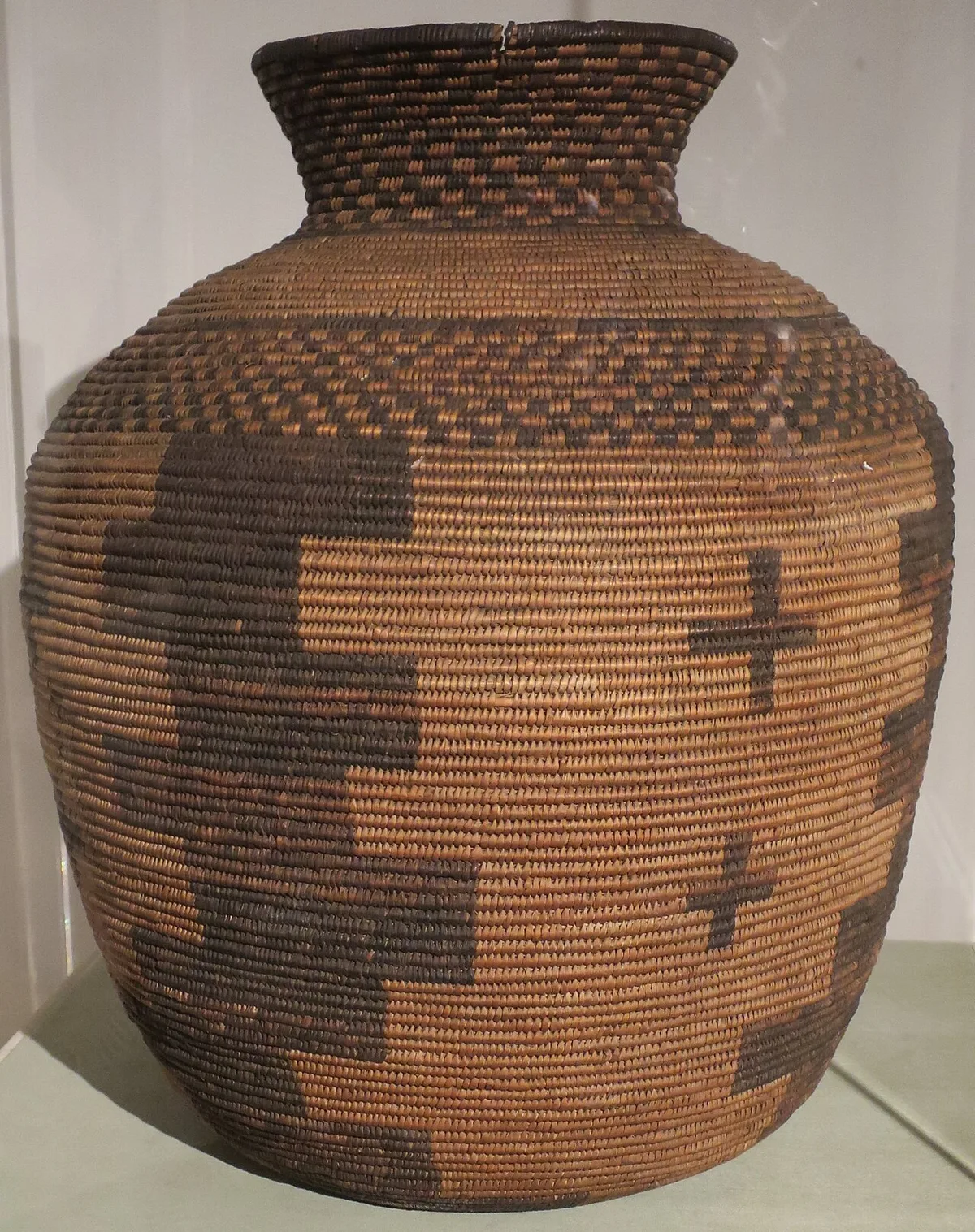
Image source: Wikimedia Commons / Wmpearl
Choosing the Right Nesting Storage Baskets
Not all storage baskets are created equal. For nesting to work, the design is key. Here’s what to look for:
Material Matters
The material affects how well baskets nest and their durability.
- Plastic Baskets: These are super common for nesting. They’re often lightweight and easy to clean. Look for sturdy plastic that won’t warp or crack easily. Many plastic sets are specifically designed for nesting. They often have staggered rims or shaped bases. This lets them sit snugly, one inside the other, without jamming.
- Wicker or Seagrass Baskets: Natural materials can also be designed for nesting. When they are, it’s usually the slightly tapered shape that allows it. The woven structure can offer a bit more flexibility. Check for sets where the shape is consistent, meaning one basket’s widest part fits comfortably over another’s narrower base.
- Fabric Baskets: Fabric bins, especially those with a collapsible frame, are excellent for nesting. When empty, you can often fold them down completely flat. Then, you can stack these flat folded bins on top of each other. This is an ultimate space-saver. Some fabric baskets have a more rigid structure and are designed to nest in the same way as plastic ones when empty.
Shape and Design for Nesting
The fundamental feature is the tapered design.
- Tapered Sides: This is the most important characteristic. A basket that tapers inwards towards the base will fit inside a larger basket with the same taper. The rim of the inner basket should sit lower than the rim of the outer basket.
- Integrated Handles: Handles can sometimes interfere with nesting. Look for baskets with built-in handles that curve inwards or are flush with the sides. If handles stick out too far, they will prevent the baskets from stacking neatly.
- Uniformity within Sets: If you’re buying a set, they are usually designed to nest. If you’re mixing and matching, it’s much harder. Stick to baskets from the same product line or with very similar dimensions and taper.
Size and Scale
Consider where you’ll store the nested baskets themselves.
- Stacking Height: How tall will the nested stack be? Make sure it will fit on your intended shelf or in your closet. Measure your available space before you buy.
- Individual Basket Size: Think about what you want to store. Do you need large baskets for blankets, or smaller ones for craft supplies? Nesting sets often come in graduated sizes, which is ideal.
How to Efficiently Nest Your Storage Baskets
Once you’ve got your nesting baskets, it’s time to put them to work. The goal is to create a compact, organized unit.
Step 1: Empty and Assess
First, make sure all your baskets are completely empty. Give them a quick clean if needed. This is also a good time to assess what you’ve been storing.
Are these the right items for these baskets? Are there items you can declutter?
Step 2: Pair Them Up
If you have a multi-sized set, the largest basket will be your base. The next largest fits snugly inside it. Continue this process, placing progressively smaller baskets inside the one above.
Step 3: The Staggered Technique (for certain designs)
Some baskets have rims that are designed to interlock or rest on each other at specific points. You might need to slightly angle the inner basket as you lower it. It should slide in without force.
Don’t try to jam them. If it requires a lot of effort, they might not be designed to nest perfectly, or you might have a slight variation in size.
Step 4: Handle and Rim Alignment
Pay attention to handles. Try to align the handles of the nested baskets. This makes the stack look tidier.
It also can help prevent the inner baskets from shifting too much. For baskets with straight rims, ensure the top of one basket aligns neatly with the lower portion of the basket it’s nested within.
Step 5: Assess the Stack
Once nested, look at the overall shape. Is it compact? Is it stable?
A well-nested set should feel like a single unit, not a wobbly tower. If it’s leaning or seems unstable, double-check that the largest basket is on the bottom and that the tapers are aligning correctly.
Decluttering with Nesting Basket Strategies
Nesting baskets aren’t just about saving space when they’re empty. They actively encourage better organization in the first place.
The “One In, One Out” Principle
When you’re dealing with nesting baskets for specific categories of items (e.g., all your kids’ toys, all your craft supplies), it’s easier to implement this rule. If you bring a new item into a category, try to remove an old one. This prevents overflow and keeps the baskets (and the nested stack) from becoming overwhelming.
Categorization is Key
Group similar items together. This is where nesting really shines.
- Toy Storage: Smallest basket for action figures, medium for building blocks, largest for stuffed animals. When not in use, they all nest.
- Craft Supplies: Small for markers, medium for scissors and glue, large for yarn and fabric scraps.
- Linens: Nested baskets can hold spare washcloths, hand towels, and face towels. The largest holds the most, the smallest holds the least, and they stack neatly when empty.
When you need a specific item, you pull out the relevant basket. If you’re not using one, it contributes to the neat, nested stack.
Seasonal Storage Simplification
This is a HUGE win for nesting baskets. Think about seasonal items.
- Holiday Decor: Store smaller decorations in smaller baskets, larger items in bigger ones. When the season is over, nest them all together. This makes storing them for 11 months of the year much easier. A stack of three nested holiday decor baskets takes up minimal space.
- Winter/Summer Clothing: Keep a large nested set in your closet. Use the individual baskets for seasonal clothing swaps. Once the season changes, empty out the baskets, nest them, and store the off-season clothes elsewhere or in a less accessible spot.
Where to Use Nested Storage Baskets
The beauty of nesting is their versatility. They save space everywhere.
Closets: The Prime Real Estate
- Shelves: Stack nested baskets on closet shelves. This maximizes vertical space. You can arrange them by category. One nested set for socks, another for t-shirts rolled up, another for PJs.
- Floor Space: If you have a bit of floor space, a neat stack of nested baskets looks much better than scattered single baskets.
- Underneath Hanging Clothes: Small to medium-sized nested baskets can often fit neatly underneath hanging clothes, utilizing dead space.
Living Areas: Tidying Up Nicely
- Living Room: Use them for remotes, magazines, throws, or gaming accessories. A set of decorative nesting baskets can enhance your decor when in use and disappear neatly when not.
- Bedroom: Keep them by your bedside for books, chargers, or personal care items.
- Entryway: For hats, gloves, scarves, or dog leashes.
Kitchen and Pantry: Organized Eats
- Pantry: Nesting baskets are perfect for grouping pantry staples. Smaller baskets for spice packets, larger ones for snacks or baking supplies. When empty, they stack away neatly.
- Under the Sink: Use them for cleaning supplies. The nested stack can keep bottles and sprays organized.
Bathrooms: Spa-Like Serenity
- Linens: As mentioned, organize spare towels or washcloths.
- Toiletries: Keep items like extra shampoo, soap, or first-aid supplies tidy.
Nesting vs. Collapsible Baskets: Which is Right?
It’s worth a quick distinction. While both save space, they do it differently.
- Nesting Baskets: These are typically rigid (plastic, woven). They save space by fitting inside each other. They maintain their shape when nested. Good for items that need a more structured container, or when you want a tidy stack that still looks like distinct baskets.
- Collapsible Baskets: These are often fabric or flexible plastic and are designed to fold flat. They save maximum space when stored because they become very thin. They are excellent for very tight spaces or when you need to stash many empty containers away.
Often, the best solution is a mix. Use rigid nesting baskets for items that need organization and shape (like pantry goods). Use collapsible baskets for bulkier seasonal items or when space is extremely limited.
Maintaining Your Nested Baskets
A little care goes a long way.
Cleaning
- Plastic: Wipe with a damp cloth and mild soap. Dry thoroughly.
- Wicker/Seagrass: Use a soft brush or vacuum cleaner attachment to remove dust. For spills, blot immediately with a clean cloth. Avoid soaking.
- Fabric: Check the care label. Many can be spot-cleaned or wiped down. Some might be machine washable (often without the frame).
Storage of Nested Baskets
When you’re not using the baskets and they’re nested, store them in a dry place, away from direct sunlight, which can fade or degrade materials. A closet shelf, laundry room, or pantry are ideal. Consider placing them in a larger, less-used space if you have many sets.
Beyond the Basics: Creative Nesting Ideas
Don’t just think about standard storage.
Customizing Nesting Baskets
- Labels: Add simple labels to the outside of each basket in a nested set. This makes it easy to identify contents even when they’re stacked.
- Decorative Liners: For wicker or plain plastic baskets, consider adding fabric liners. This can hide the contents, add a pop of color, and protect the contents. Make sure the liners don’t prevent nesting.
The “Stackable Shelf” Effect
Sometimes, a very large nested basket can act like a small shelf itself. You can place smaller, non-nesting items on top of the rim of the largest outer basket in a nested set, if the rim is sturdy enough.
Mobile Storage Units
If you have a set of nesting baskets on wheels (some industrial-style ones do), you can create a movable storage system. Nest the baskets, then use the entire unit as a portable caddy for cleaning supplies, art materials, or garden tools.
Final Thoughts on Nesting for Space Saving
Nesting storage baskets are one of the simplest, most effective ways to combat clutter and reclaim your space. It’s about choosing the right baskets for your needs, understanding how they work together, and strategically placing them. From tiny apartments to busy family homes, the principle is the same: maximize efficiency, minimize wasted space.
By following these tips, you can transform chaotic spaces into organized, calm environments. Start nesting today and see how much room you gain!


Similar Posts