How to Organize a Closet Without Shelves
Let’s face it. Most closets come with a single rod and a whole lot of wasted space. The standard advice is to install shelves.
But what if you can’t? What if you rent? What if you just want a system that’s flexible and DIY-friendly?
Here’s the truth. You don’t need shelves. I’ve organized dozens of closets without cutting a single piece of wood.
It’s not just possible. It’s often better. Shelfless systems are cheaper.
They’re more adaptable. They move with you when you move out.
This guide is about making your closet work hard. No carpentry required. No permanent fixtures.
Just smart strategies and the right tools.
Let’s get into it
The Foundation: Maximizing the Hanging Rod
Your hanging rod is your best asset. You need to exploit it ruthlessly. Most people only use half the vertical space.
That’s a mistake.
Double Your Rods
The first step is adding a second rod. Tension rods are perfect for this. They don’t require tools.
They just wedge in place. You can double your hanging space instantly.
I use the bottom rod for shirts and pants. The top rod gets dresses, jackets, and long coats. If you have a tall closet, you can fit two rods easily.
Measure the height first. You need at least 36 inches for shirts and 42 inches for pants.
Use Cascading Hangers
Cascading hangers are a game-changer. They let you hang multiple items vertically. Tanks, tees, and scarves benefit from this.
You can fit five items in the space of one.
They work like a ladder. Each item hangs below the next. It’s perfect for lightweight clothes.
Just don’t hang heavy sweaters on them. That’s what the main rod is for.
Switch to Uniform Hangers
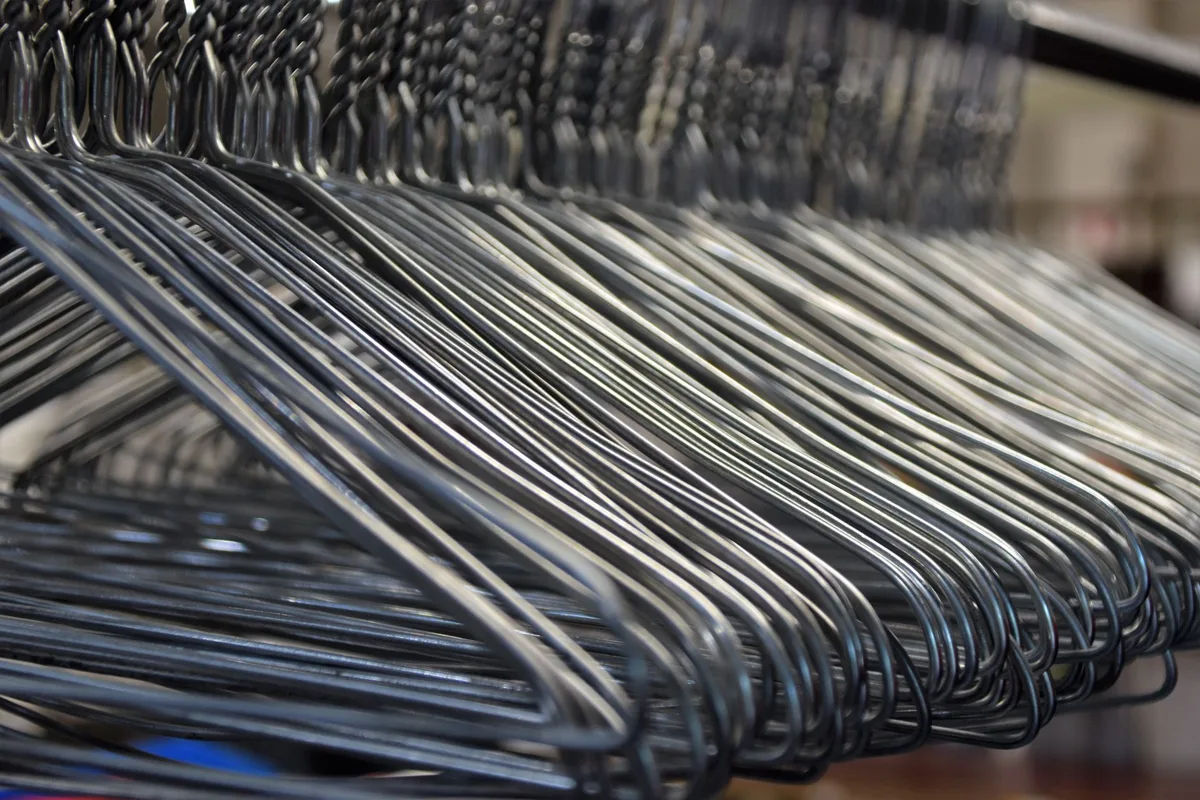
Ditch the wire hangers from the dry cleaner. They’re bulky. They’re weak.
They let clothes slip off.
I use velvet or slimline hangers. They’re thin. They grip clothes.
They prevent slipping. This simple swap gives you inches of extra space. It also makes your closet look clean.
Everything matches. Everything hangs at the same height.
Group clothes by category. Shirts, pants, dresses. Then group by color.
It makes getting dressed faster. It also looks incredibly tidy.
Hang Strategically
Think about how you use your clothes. Hang the items you wear most often at eye level. Seasonal items go higher up.
Out-of-season clothes go in bins on the floor.
Use the rod for what it’s best at. Hanging. Don’t try to fold sweaters over the rod.
It wastes space. It creates wrinkles. Use a hanging organizer instead.
Vertical Storage Solutions Without Shelves
When you don’t have shelves, you build them. With fabric. Hanging organizers are the MVP of the shelfless closet.
They hang right from the rod. They create instant shelves.
Hanging Fabric Organizers
These are the workhorses of any shelfless system. They come in different sizes. Six pockets.
Twelve pockets. Twenty-four pockets. You can use them for folded items.
Sweaters, jeans, t-shirts.
I prefer the ones with solid bottoms. They hold their shape. They don’t sag.
You can also get them with zippers. Zippers keep dust out. They’re great for off-season storage.
Hang them on the side of the closet. That’s usually dead space. Put them next to your hanging clothes.
They don’t take up much room. They hold a surprising amount.
Over-the-Door Organizers
The back of the door is pure potential. You’re not using it. You should be.
Over-the-door organizers are perfect for shoes. They’re also great for accessories. Scarves, belts, hats.
You can even use them for cleaning supplies. Small bottles. Lint rollers.
Shoe polish.
The key is to get one that fits your door. Measure the width first. Most are 18 to 22 inches wide.
They hook over the top of the door. No drilling required.
Tension Poles for Vertical Stacking
Tension poles are incredibly versatile. They go from floor to ceiling. They wedge in place with pressure.
You can use them with clip-on baskets. These become floating shelves. You can use them for hanging plants.
Bags. Scarves. They create a vertical column of storage.
I’ve used them to separate sections of a closet. You can divide hanging space. You can create a dedicated zone for shoes.
Get creative with them.
Using Storage Bins and Baskets
Bins and baskets are the backbone of a shelfless system. They contain the chaos. They keep everything in one place.
They make your closet look intentional.
Clear Bins
Clear bins are best. You can see what’s inside. You don’t need to dig through everything.
For a closet without shelves, stackable bins are gold.
I use the 5-quart bins for small items. Socks. Underwear.
Accessories. The 15-quart bins are for t-shirts and shorts. The 30-quart bins are for sweaters and jeans.
Stack them on the floor. Stack them on top of a dresser. You can even put them on a sturdy trunk.
They create a stable tower.
Label Everything
Labels make it easy to find stuff. They also make it easy to put stuff away. That’s half the battle.
I use a label maker. But you can use masking tape and a marker. Write the category clearly.
“Winter Sweaters.” “Summer Shorts.” “Workout Gear.”
When you label, you create a system. You know exactly where everything goes. It takes five minutes to set up.
It saves you hours of searching.
Baskets for Loose Items
Baskets are great for items that don’t stack well. Scarves. Gloves.
Hats. They keep everything together. They also add texture and warmth to the closet.
I recommend baskets with handles. They’re easy to pull out. You can grab the whole basket and take it to your bed.
Sort through it there. Put it back.
Use baskets for items you reach for often. Daily accessories. Baby items.
Pet supplies. They’re the most accessible option.
The Floor and Base Strategy
The floor is your bottom shelf. Don’t just dump things there. Be strategic.
The floor can hold a lot of weight. It can also become a mess quickly.
Shoe Racks
A shoe rack is a must. A tiered shoe rack keeps shoes organized. It prevents them from becoming a pile.
I use a stacking shoe rack. It holds three tiers of shoes. You can add more tiers as you need them.
It’s modular. It’s cheap. It works.
You can also use over-the-door shoe pockets. These are great for flats and sandals. They keep shoes off the floor entirely.
That’s extra space for bins.
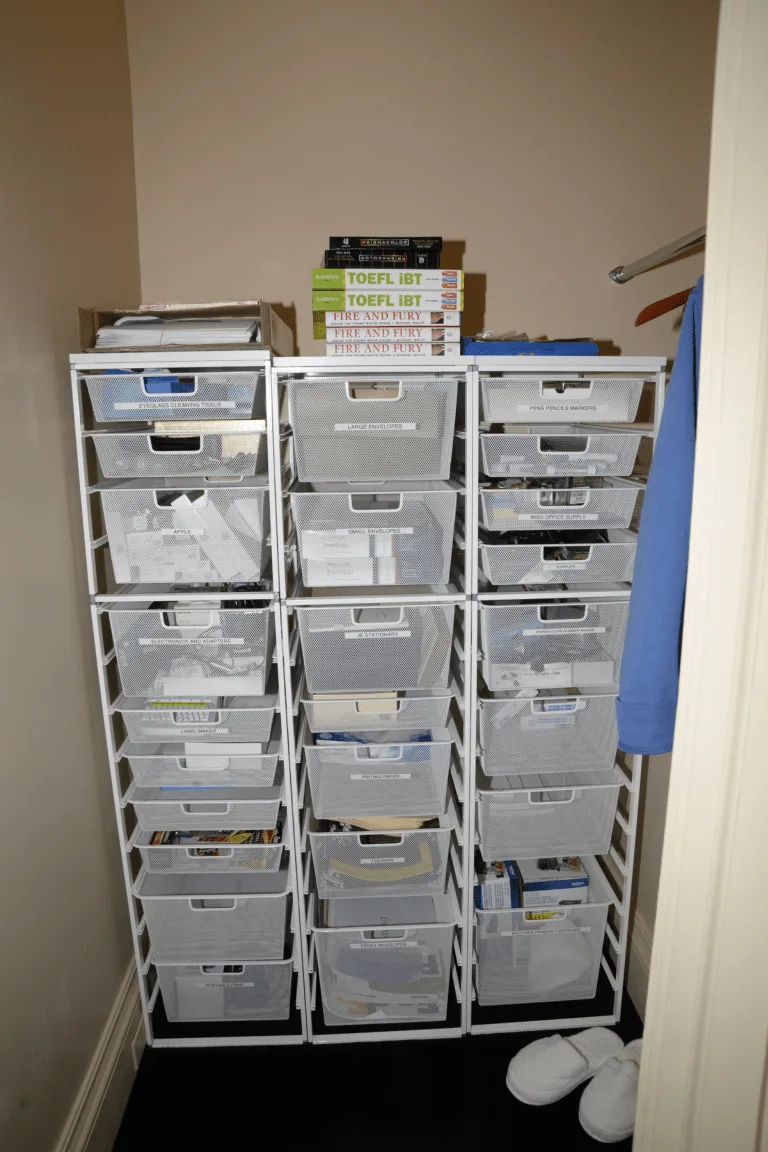
Stackable Drawers
Stackable drawers are great for the floor. They act like a dresser. You can store socks, underwear, and t-shirts in them.
I use the plastic ones from the big box store. They’re durable. They’re cheap.
They come in different colors. You can mix and match.
Label each drawer. “Socks.” “Underwear.” “T-shirts.” This makes getting dressed fast. You don’t need to open every drawer.
You go straight to the right one.
Trunks and Chests
A trunk or chest is a versatile piece. It’s a seat. It’s a storage unit.
It’s a table. It’s incredibly versatile.
You can store out-of-season clothes inside. Extra bedding. Blankets.
It keeps them dust-free. It also adds a design element to the room.
I put a catch-all basket on top of the trunk. Keys. Wallet.
Loose change. It keeps the surface clear. It also gives you a place to drop things when you walk in.
Keep the Floor Clear
This is the most important rule. Keep the floor clear of clutter. It makes the room feel bigger.
It also makes it easier to clean.
If you have things on the floor, they get dusty. They get in the way. They make the closet feel cramped.
Use the floor for large items only. Bins. Drawers.
A shoe rack. Everything else should be on the rod or in a hanging organizer.
Creative Hacks and Hardware Alternatives
This is where it gets fun. You don’t need shelves. You need clever hacks.
These are the tools that make a shelfless system work brilliantly.
Tension Rods
Tension rods are incredibly versatile. Use them horizontally in a cabinet. Use them vertically in a closet.
You can hang spray bottles or bags from them.
I use a tension rod to create a second row for shirts. It’s a simple hack. It doubles your hanging space.
It costs less than ten dollars.
You can also use them for scarves. Loop the scarf over the rod. It hangs neatly.
It doesn’t take up much room.
Command Hooks
Command hooks are the unsung hero. They don’t damage walls. They can hold a lot of weight.
Use them for belts, ties, bags, or jewelry.
I use them on the inside of the closet door. It’s a great place for robes and jackets. They’re also great for hanging bags.
Purses. Totes. Backpacks.
The key is to use the right hook for the weight. Light hooks for scarves. Heavy hooks for coats.
They come off easily when you move out.
Over-the-Door Hooks
Over-the-door hooks are a classic. They add instant hanging space. Use them for robes, jackets, or bags.
They’re great for towels and bathrobes. They’re also great for hats and scarves. They don’t take up any floor space.
They use the door.
I use a three-hook rack. It holds my robe, my towel, and my outfit for the next day. It’s simple.
It’s effective.
Pegboards
Pegboards are a great option. You can mount one on the wall. Then you can add hooks and bins.
You can customize it exactly.
They’re often used in workshops. But they work great in closets. You can hang jewelry, scarves, and belts.
You can add small bins for accessories.
The key is to mount it securely. Use anchors. Use screws.
It will hold a lot of weight.
Wire Grids
Wire grids are another option. They are similar to pegboards. They are often cheaper.
You can use them with clips and hooks.
They’re great for photos and notes. They’re also great for hanging light items. Scarves.
Jewelry. Hats.
You can mount them on the wall. You can also hang them from the rod. They create a flexible storage system.
Maintenance and the “One-Year Rule”
Organization is not a one-time thing. It’s a system. It needs maintenance.
If you don’t maintain it, it will fall apart.
The One-Year Rule
The “One-Year Rule” is simple. If you haven’t used it in a year, get rid of it. This keeps your closet from getting cluttered.
Go through your closet twice a year. Spring and fall. Pull out everything you haven’t worn.
Donate it. Sell it. Throw it away.
This frees up valuable space. It also makes it easier to find what you actually wear.
Season Rotation
Season rotation is key. Swap out winter clothes for summer clothes. Store the off-season items in bins.
This frees up the hanging rod. It also keeps your clothes in better condition. They’re not crammed together.
Use clear bins. Label them. “Winter coats.” “Summer shorts.” “Fall sweaters.”
The “One In, One Out” Rule
For every new item you bring in, take one out. This keeps your closet from growing. It forces you to be intentional.
If you buy a new shirt, donate an old one. If you buy a new pair of shoes, get rid of a pair you don’t wear.
This is a simple rule. It’s easy to follow. It keeps your closet manageable.
Weekly Ten-Minute Tidy
Take ten minutes a week to tidy up. Put things back in their place. It’s much easier than doing a massive cleanout every few months.
Quick tips:
- Fold blankets and towels.
- Straighten shoes.
- Remove hangers you don’t need.
- Wipe down the floor.
If you need a structured approach to maintaining your home, the National Association of Productivity and Organizing Professionals offers great resources for building sustainable systems.
Conclusion
Organizing a closet without shelves is not a limitation. It’s a challenge. And it’s a challenge you can win.
You just need to be creative. Use vertical space. Use the right containers.
Use clever hacks.
You don’t need a renovation. You don’t need a carpenter. You just need a plan.
And a few tension rods.
The benefits are huge. You save money. You save time.
You create a system that works for you. It’s flexible. It’s adaptable.
It’s easy to change.
Look at your closet. What can you do right now? Start with the hangers.
Then add a hanging organizer. You’ll be surprised at how much space you actually have.
The University of Missouri Extension has a great guide on household management and space planning if you want to dive deeper into making the most of your home. Their research shows that organized spaces directly reduce stress and improve daily efficiency.
You’ve got this. Go organize.


Similar Posts