What To Look For In An Air Purifier
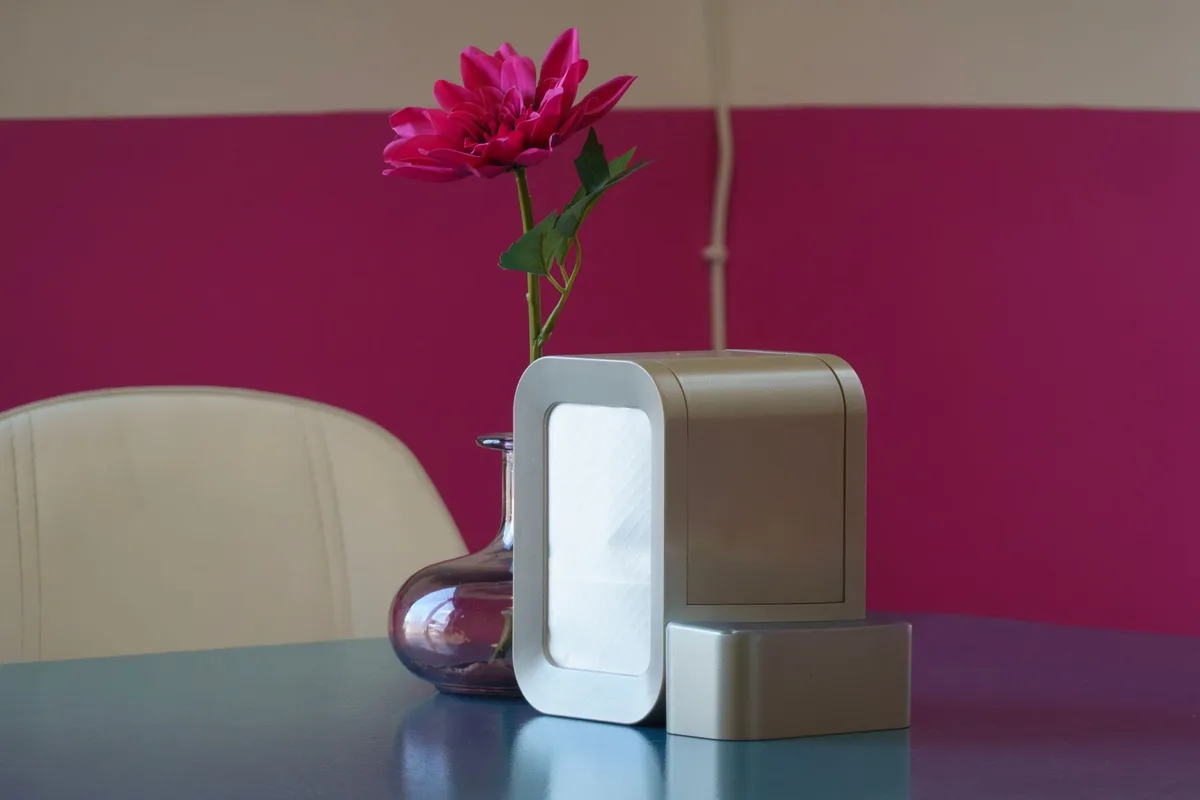
I’ve spent years testing air purifiers, and I’ll tell you straight up: the market is flooded with confusing claims. Some brands promise the moon but deliver a fan with a glorified sponge. Others quietly outperform everything else.
If you’re shopping for an air purifier right now, you’re probably drowning in jargon, CADR, HEPA, activated carbon, UV-C, ionizers, ozone. It’s a lot.
Let’s cut through the noise.
This guide covers exactly what matters when you’re choosing an air purifier. No fluff. No marketing tricks.
Just the real specs, the real trade-offs, and the real questions you need to ask before you click “buy.”
What Does an Air Purifier Actually Do?
An air purifier removes pollutants from the air inside your home. That sounds simple, but the “how” changes everything. Most units use a fan to pull air through one or more filters.
The filters trap particles, and the clean air recirculates into the room.
The kinds of pollutants you’re dealing with determine which filter technology you need. Common indoor pollutants include:
- Dust, pollen, pet dander (large particles)
- Mold spores and bacteria (microscopic)
- Smoke, smog, wildfire ash (fine particulate)
- VOCs from paints, cleaners, furniture (gaseous)
- Odors from cooking, pets, or chemicals
No single filter handles all of them equally well. That’s why I tell people to match the purifier to their specific problem. If you’re worried about wildfire smoke, you need something different than if you’re dealing with seasonal allergies.
The Core Technology: HEPA Filters
HEPA stands for High-Efficiency Particulate Air. A true HEPA filter captures at least 99.97% of particles that are 0.3 microns in diameter. That size is the “most penetrating particle size”, smaller and larger particles are actually caught more efficiently.
True HEPA is the gold standard. It catches dust mites, pollen, pet dander, mold spores, bacteria, and most viruses. If the box says “HEPA-like” or “HEPA-type,” run the other way.
Those are marketing gimmicks. Only “True HEPA” (or sometimes “HEPA H13” or “H14”) meets the standard.
I’ve tested units labeled “99% removal” that used a cheap pre-filter with no HEPA at all. They barely moved the needle on particle counts. Always look for the actual HEPA certification.
HEPA Filter Ratings: What Do They Mean?
The European standard classifies HEPA filters as H10 through H14. For home use, H13 and H14 are the ones you want.
- H13, Captures 99.95% of particles at 0.3 microns
- H14, Captures 99.995% of particles at 0.3 microns
In the US, the EPA and industry standards refer to the 99.97% figure for True HEPA. Either way, both are excellent. The difference matters more in cleanrooms or hospitals than in a living room.
One common question: Should I get a HEPA filter with a pre-filter? Yes. A pre-filter catches larger particles like hair and dust bunnies.
That extends the life of the main HEPA filter and saves you money on replacements.
CADR: The Number That Tells the Truth
CADR stands for Clean Air Delivery Rate. It’s measured in cubic feet per minute (CFM). The number tells you how much clean air the purifier delivers for three types of pollutants: smoke, dust, and pollen.
Smoke CADR is the most important because smoke particles are the smallest and hardest to filter. A higher CADR means faster cleaning.
The Association of Home Appliance Manufacturers (AHAM) certifies CADR ratings. Look for the AHAM seal on the box. It’s the closest thing to an honest benchmark in this industry.
Here’s the rule I use: the CADR for smoke should be at least two-thirds of the room’s area in square feet. For a 300-square-foot room, you want a smoke CADR of at least 200 CFM.
Example: If the box says CADR smoke = 250, dust = 240, pollen = 230, that unit comfortably handles a room up to about 375 square feet.
Don’t fall for “max coverage” claims. Some brands advertise a 500-square-foot coverage based on one air change per hour (ACH). But most people need at least four air changes per hour for noticeable air quality improvement.
Always divide the claimed coverage by four to get the real usable room size.
Room Size: Match the Purifier to Your Space
You can’t buy an air purifier without knowing your room’s square footage. Measure length times width. A 10×12 room is 120 square feet.
A 20×20 room is 400 square feet.
Manufacturers often list “room size” based on a 2 ACH standard. That’s the bare minimum. For allergies, asthma, or smoke, aim for 4, 5 ACH.
That means the purifier should be able to cycle the room’s air volume four times every hour.
Quick math:
- Multiply room length × width to get square feet.
- Multiply square feet by the ceiling height (usually 8 feet) to get cubic feet.
- Multiply cubic feet by 4 (for 4 ACH).
- Divide by 60 to get the required CFM.
Example: A 300 sq ft room with 8 ft ceilings = 2,400 cu ft. At 4 ACH, you need 9,600 cu ft per hour. Divide by 60 = 160 CFM.
That means the purifier should have a CADR of at least 160 for smoke. If you buy a unit rated for 500 sq ft at 2 ACH, it might only deliver 2 ACH in that big room, not enough for real cleaning.
My advice: When in doubt, size up. A slightly oversized unit running on low is quieter and cleans faster. An undersized unit running on high is noisy and struggles to keep up.
Activated Carbon Filters for Odors and Chemicals
HEPA filters handle particles. Activated carbon handles gases. It’s a porous material that adsorbs VOCs, odors, smoke, and chemical fumes.
Not all carbon filters are created equal. The key factors are:
- Amount of carbon, More carbon means more filtration capacity. Cheap filters have a thin sheet of carbon. Good ones have a thick bed.
- Pellet vs. mesh, Pelletized carbon lasts longer and works better than carbon-impregnated foam, which is essentially useless after a few weeks.
- Additives, Some filters add zeolite or potassium permanganate to target specific chemicals like formaldehyde.
If you need to remove odors from cooking, pets, or smoke, buy a model with a heavy carbon filter. If your main concern is dust and pollen, you can skip the heavy carbon layer and save money.
Warning: Some purifiers claim “permanent” or “washable” carbon filters. That’s a lie. Once carbon is saturated, it stops working.
You must replace it.
Noise Levels: Don’t Ignore the Decibels
A purifier that sounds like a vacuum cleaner will end up in the closet. Noise is the most common reason people stop using their air purifier.
Manufacturers list noise in decibels (dB). Here’s what the numbers mean in practice:
- 25, 30 dB, Barely audible. Good for a bedroom.
- 35, 45 dB, Quiet background hum. Fine for living areas.
- 50, 60 dB, Moderate noise. Noticeable but tolerable.
- 60+ dB, Loud. Comparable to a conversation or a dishwasher.
Always check the dB rating at both low and high speeds. Many purifiers are whisper-quiet on low but roar on high. If you plan to run it in a bedroom overnight, look for a unit with a “sleep mode” that stays under 35 dB.
Real talk: Tower-shaped purifiers with large fans tend to move more air with less noise. Compact models with small, high-speed fans are louder for the same CADR.
Energy Efficiency: Running Costs Add Up
Air purifiers run 24/7 for many people. That means electricity costs matter. Most modern units are Energy Star certified, which means they use about 40% less energy than non-certified models.
Check the wattage. A typical unit uses 30, 80 watts on low and 80, 150 watts on high. Compare that to a fridge (100, 200 watts) or a ceiling fan (30, 60 watts).
At 12 cents per kilowatt-hour, running a 50-watt purifier 24/7 costs about $4.50 per month.
Energy Star models often have efficient DC motors that use less power. They also generate less heat, which matters in small rooms.
Maintenance: When to Replace Your Air Purifier Filter
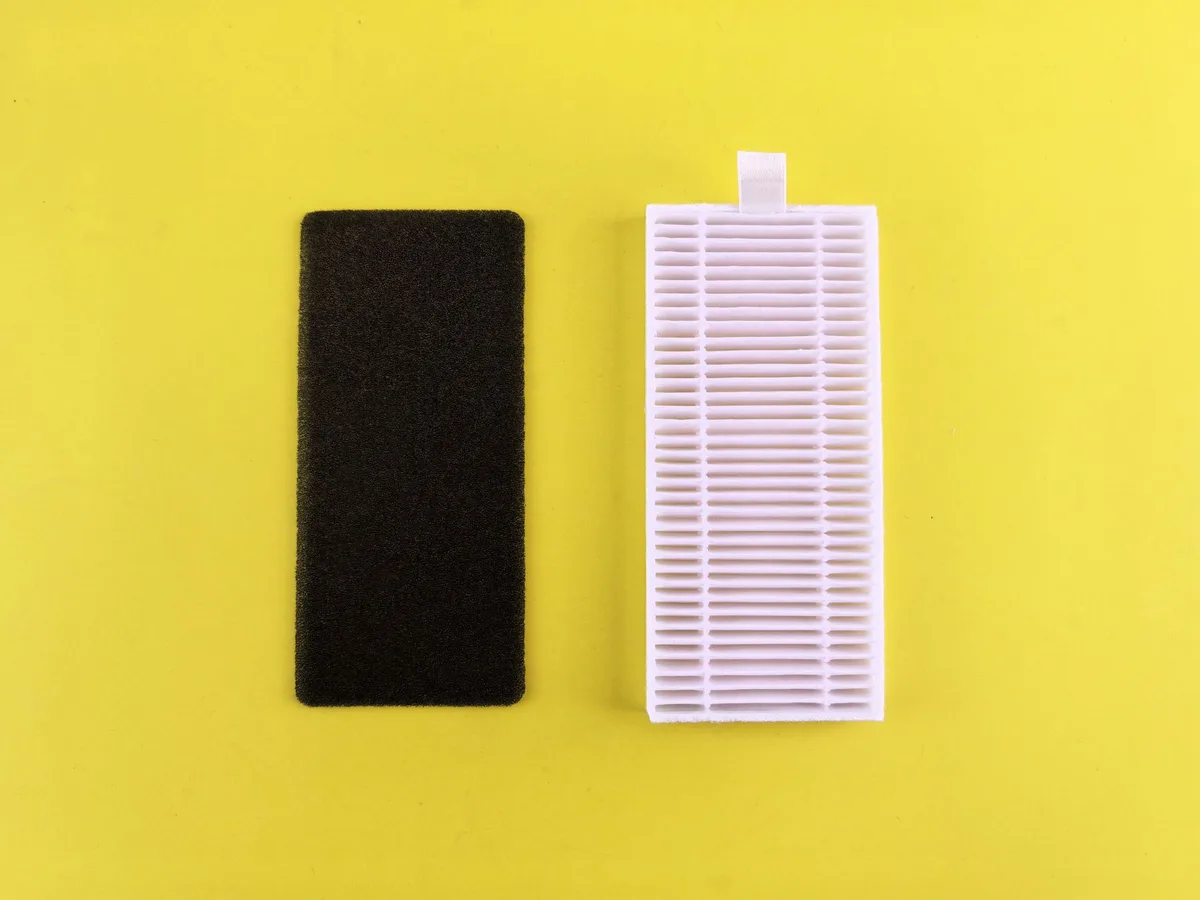
Filters don’t last forever. You must replace them regularly. Ignore this, and your purifier becomes a dust collector that recirculates dirty air.
Typical filter replacement schedules:
- Pre-filter, Every 3, 6 months (washable ones can be rinsed)
- HEPA filter, Every 6, 12 months depending on usage and air quality
- Activated carbon filter, Every 3, 6 months (more frequent if you smoke or cook heavily)
Some purifiers have a filter replacement indicator light. That’s a nice feature, but don’t trust it blindly. I’ve seen units that claim “filters last up to two years”, that’s only true in a clean room with zero pollution.
Cost of replacement filters is a hidden expense. A purifier that costs $200 might need $100 worth of filters every year. Over five years, the filter cost can exceed the initial purchase price.
Always check the price of replacement filters before you buy.
A few models use washable or permanent filters. They save you money on replacements but require diligent cleaning. If you forget to wash them, performance drops fast.
Extra Features Worth Paying For (and Those That Aren’t)
Manufacturers love to pile on features. Some are genuinely useful. Others are pure marketing.
Useful Features
- Auto mode, A built-in sensor adjusts fan speed based on air quality. Saves energy and keeps noise low.
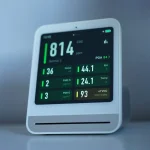
- Real-time air quality display, Shows PM2.5 levels or VOCs. Helpful if you want to see the difference the purifier makes.
- Timer, Lets you schedule on/off times. Nice for bedrooms or when you’re away.
- Remote control / app, Convenient but not essential. App connectivity can be buggy.
- Timer or sleep mode, Dims lights and reduces fan speed for nighttime.
- Castors or handle, Makes moving the unit between rooms easier.
Features That Are Usually Gimmicks
- Ionizers, They charge particles to make them stick to surfaces. Can produce ozone, which is a lung irritant. Most people don’t need them, and they add little value. Avoid if you have asthma.
- UV-C lights, Kill bacteria and viruses on contact, but only if the air stays near the light long enough. In most portable units, the exposure time is too short to be effective.
- Essential oil trays, They add fragrance but can coat the filter with oil, reducing its efficiency. Better to use a separate diffuser.
- “Permanent” filters, Rarely perform as well as replaced filters. They also require thorough cleaning that most people don’t do properly.
Smart Features and Connectivity
Wi-Fi connectivity is becoming common. You can control the purifier from your phone, check air quality remotely, and get filter replacement alerts.
Is it worth it? That depends. I find the ability to turn on the purifier from bed useful. But app experiences vary wildly.
Some manufacturers abandon their apps after a year. If the app is clunky or the company has a bad reputation, skip the smart version.
Voice control through Alexa or Google Assistant is a nice bonus but not a deal-breaker. Most people set the purifier to auto and forget about it.
Certification and Safety Standards
Don’t skip this section. Safety certifications matter.
- AHAM Verified, Confirms the CADR ratings are accurate and the unit meets performance standards.
- Energy Star, Ensures energy efficiency.
- CARB certified, California Air Resources Board certification limits ozone emissions. This is critical if the unit has an ionizer. CARB is one of the strictest standards in the world.
- UL or ETL listed, Indicates the unit passed safety testing for electrical and fire hazards.
If a purifier claims to generate ozone for “air cleaning,” treat it with extreme caution. Ozone is a lung irritant. The EPA and American Lung Association both advise against using ozone-generating air purifiers in occupied spaces.
Types of Air Purifiers: A Quick Comparison
| Type | Best For | Downsides |
|---|---|---|
| HEPA + carbon | All-around particle and odor removal | Filter replacement cost |
| Electrostatic | Captures particles without a fan | Produces ozone; requires cleaning |
| UV-C | Killing microbes | Ineffective alone for particles |
| Ozone | Odor removal in unoccupied rooms | Harmful to lungs; not recommended |
| PECO (Photo Electrochemical Oxidation) | VOCs and some pathogens | Expensive; limited mainstream testing |
For 99% of homes, a unit with True HEPA and a substantial carbon pre-filter is the right choice. It’s proven, safe, and effective.
Putting It All Together: How to Choose
Here’s my step-by-step checklist for buying an air purifier:
- Measure your room in square feet.
- Determine your primary pollutant (dust, smoke, VOCs, mold).
- Set a budget that includes replacement filter costs for at least two years.
- Check the CADR, look for smoke CADR at least two-thirds of room area.
- Confirm True HEPA (H13 or H14) with a pre-filter.
- Choose appropriate carbon filter if you need odor removal.
- Check noise levels at low and high speed.
- Verify certifications, AHAM, Energy Star, CARB, UL/ETL.
- Read filter replacement costs, avoid models where filters cost more than 25% of the unit price annually.
- Ignore ionizers and UV-C unless you have a specific medical need.
Final Thoughts
An air purifier is a tool, not a miracle machine. The right one can dramatically improve your indoor air quality. The wrong one wastes money and space.
Start with the problem you’re solving. Then match the specs to the room. Don’t get distracted by fancy lights, smartphone apps, or “silent” claims that don’t hold up.
Look at the numbers. Trust the certifications. And remember: the best air purifier is the one you actually use because it fits your space, your noise tolerance, and your maintenance habits.
If you take one thing away from this guide, let it be this: filter quality and CADR matter more than any other feature. Everything else is secondary.
Now go clear that air.


Similar Posts