How to Maximize Closet Space With Storage Containers
Let me guess, your closet is a disaster zone. You’ve got clothes spilling off shelves, shoes scattered everywhere, and that one mystery box you haven’t opened since you moved in three years ago. I’ve been there.
And I’ve fixed it.
The solution isn’t buying a bigger closet. It’s using what you already have smarter. Storage containers are the single most effective tool for transforming a cramped, chaotic closet into an organized, functional space.
But here’s the thing, you can’t just grab any bins and hope for the best. You need a system.
I’m going to walk you through how to maximize your closet space with storage containers. No fluff. No generic advice.
Just a practical, repeatable system that works.
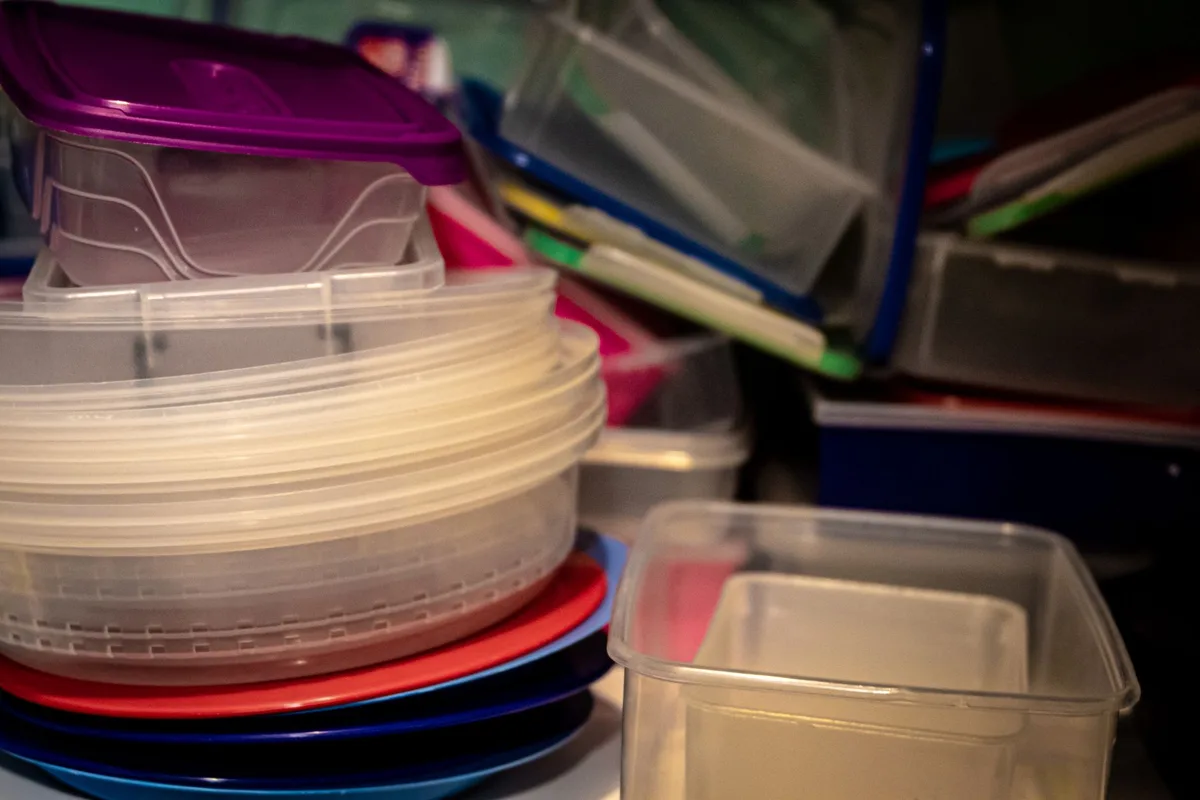
Image source: Pexels / Magda Ehlers (Pexels License)
Why Storage Containers Are the Secret Weapon for Small Closets
Most people tackle closet organization backward. They buy containers first, then try to cram stuff into them. That’s like buying a frame before you’ve taken the photo.
Here’s what storage containers actually do for you:
They create defined zones. When everything has a home, you stop treating your closet like a black hole. You know exactly where your winter scarves live. You know where the extra pillows go.
No more hunting.
They stack vertically. This is the big one. Most closets waste vertical space like crazy. You’ve got two feet of empty air above your folded sweaters.
Containers let you build upward.
They protect your stuff. Dust, moisture, moths, your closet is full of threats. Clear, sealed containers keep your belongings safe and visible.
They force you to edit. You can’t organize clutter. Before you buy a single container, you have to decide what actually deserves space in your closet. That alone cuts your volume by 30 to 50 percent.
Step One: Empty Everything and Sort Ruthlessly
I know. This sounds painful. But trust me, you cannot maximize closet space with storage containers if you don’t know what you’re working with.
Pull everything out. Every shirt, every shoe, every random gift bag you’ve been saving “just in case.”
Now sort into four piles:
- Keep, things you wear regularly and love
- Seasonal, things you’ll need in three months but not today
- Donate, things in good condition that don’t fit your life anymore
- Trash, things that are stained, torn, or broken
Be honest here. That dress you haven’t worn since 2019? It’s not coming back.
Let it go.
Once you’ve sorted, you’ll have a clear picture of what needs to fit. Now you can choose containers that actually match your stuff, not the other way around.
Choose the Right Containers for Your Space
Not all storage containers are created equal. The wrong ones will waste space and frustrate you. The right ones will make your closet feel twice as big.
Clear, Stackable Bins Are Non-Negotiable
I don’t care how pretty those woven baskets look. If you can’t see what’s inside, you’ll never use them. Clear bins let you identify contents at a glance.
Look for bins with:
- Flat, reinforced lids so you can stack them without wobbling
- Interlocking corners that keep stacks stable
- Handles for easy pulling from high shelves
Standard shoe-box-sized bins work great for accessories, toiletries, and small items. Medium bins (about 13 by 11 by 6 inches) are perfect for folded shirts, jeans, and sweaters. Large bins hold bulky items like blankets and off-season coats.
Uniformity Matters
Here’s a mistake I see all the time, people buy mismatched containers in different shapes, sizes, and colors. That creates visual chaos and wasted gaps.
Stick to one or two container sizes. They’ll stack neatly, fit together like Tetris pieces, and create a clean, uniform look. Your brain actually finds that calming, which makes you more likely to maintain the system.
Consider Drawer-Style Inserts for Deep Shelves
Deep shelves are notorious wasters of space. You stack things in the front, then the back becomes a forgotten graveyard.
Drawer-style container inserts solve this. They slide out like a filing cabinet, giving you full access to everything. No digging.
No re-stacking.
These work especially well for:
- T-shirts and casual tops
- Workout gear
- Pajamas and loungewear
- Baby clothes
Use Hanging Organizers to Double Your Rod Space
Your closet rod is prime real estate. But most people use it inefficiently, one layer of hanging clothes, then dead air below.
Hanging organizers change the game. They add shelves, pockets, and compartments that hang directly from the rod.
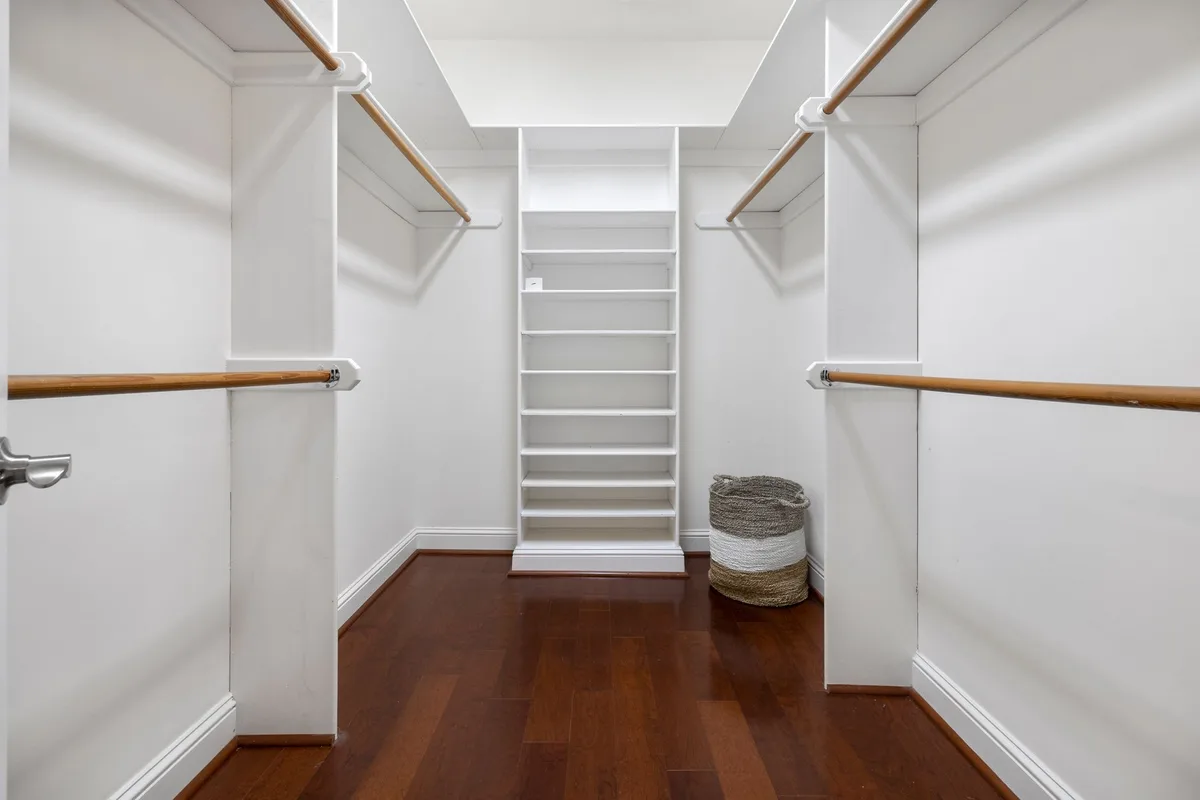
Image source: Pexels / Curtis Adams (Pexels License)
Fabric Shelving Units
These are the workhorses of closet organization. A typical unit gives you four to six shelves that hang from one rod. Use them for:
- Folded sweaters and sweatshirts
- Jeans and pants
- Bags and purses
- Shoes (yes, really, angle them toe-up)
Pro tip: Buy units with solid backs, not open wire. Solid backs prevent items from falling through or getting tangled.
Pocket Organizers for Accessories
The back of your closet door is wasted space. Pocket organizers turn that dead zone into storage for:
- Scarves and belts
- Ties and socks
- Jewelry and watches
- Hats and gloves
Hang one on the door or on an unused section of the rod. You’ll gain back an entire shelf’s worth of space.
Vacuum-Seal Bulky Items
Bulky items are the enemy of closet space. Comforters, winter coats, sleeping bags, they take up disproportionate volume for how often you actually use them.
Vacuum storage bags solve this. They compress soft items down to a fraction of their original size.
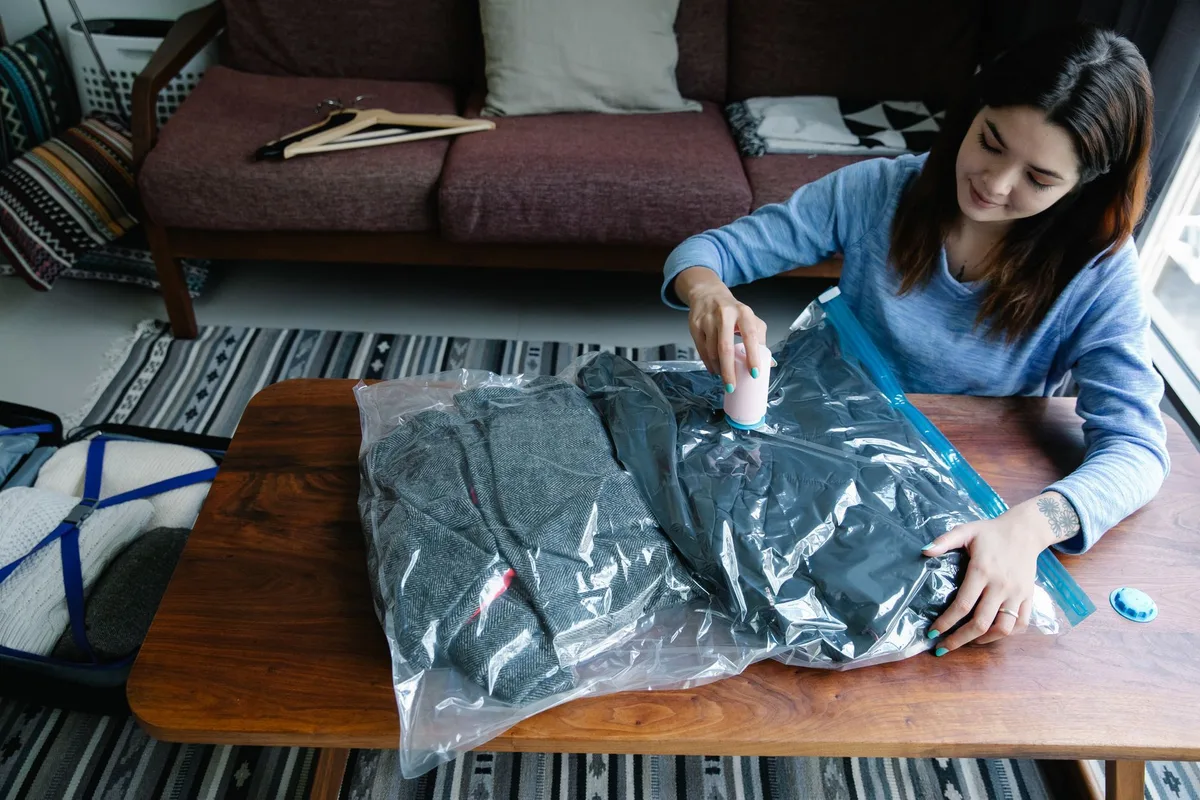
Image source: Pexels / Timur Weber (Pexels License)
Here’s what to vacuum-seal:
- Off-season bedding, comforters, duvets, extra blankets
- Winter clothing, heavy coats, sweaters, scarves, gloves
- Travel gear, sleeping bags, camping pillows, packable jackets
- Rarely used linens, guest towels, tablecloths, curtains
A single vacuum bag can reduce a thick winter comforter from 18 inches tall to about 4 inches. That’s three or four extra bins worth of reclaimed space.
Just be careful with delicate fabrics. Don’t vacuum-seal silk or wool for long periods, the compression can damage the fibers. Store those in breathable containers instead.
For more on preserving fabrics during storage, the experts at the University of Minnesota Extension have excellent resources on textile care and long-term storage best practices.
Stack Strategically on High Shelves
The top shelf in most closets is an afterthought. People toss things up there and forget about them. That’s a wasted opportunity.
High shelves should hold things you don’t need daily, but you do need to access sometimes. The trick is making that access easy.
Create a Ladder System
Stack containers from heaviest on bottom to lightest on top. That prevents crushing and keeps your stacks stable.
Label every bin on the front and top. Use a label maker or just a permanent marker. When you’re reaching up from below, you need to see what’s in each bin without pulling it down.
Use Bins With Handles
Standard bins without handles are a nightmare on high shelves. You end up tipping them, spilling contents, or just giving up.
Bins with molded handles or cutouts let you grip securely. You can pull them down one-handed without losing balance.
Group by Season
Put all winter gear in one set of bins. All summer gear in another. When the seasons change, swap the stacks.
This keeps your daily-use closet focused on what you actually need right now. No more digging through flip-flops to find your gloves.
Use the Floor Space Wisely
The floor of your closet is real estate. Don’t waste it on random piles.
Rolling Bins for Heavy Items
Heavy items like shoes, boots, and handbags work best in rolling bins. You can pull them out, access what you need, and slide them back.
Look for low-profile rolling bins that fit under hanging clothes. They should be shallow enough that clothes don’t drag on top.
Shoe Racks and Cubes
Shoes are notorious space hogs. A single pair of boots takes up as much room as five folded shirts.
Shoe racks with angled shelves let you see every pair. Cube-style organizers stack shoes in a compact footprint. Both beat the floor-pile method by a mile.
Maintain Your System
You can organize your closet perfectly today. But if you don’t maintain it, you’ll be back to chaos in three months.
Here’s how to keep it working:
- One in, one out, every time you buy something new, donate something old
- Seasonal swap, twice a year, rotate your bins and refresh your layout
- Weekly five-minute tidy, put things back where they belong before they pile up
That last one is the secret. Spend five minutes a day keeping your system clean. It beats spending five hours re-organizing every six months.
Common Mistakes That Waste Closet Space
Even with good intentions, people make mistakes. Here are the ones I see most often.
Buying Containers Before Measuring
This is the number one error. You buy bins you think will fit, then discover they’re two inches too wide for your shelf.
Measure your shelf depth, width, and height. Write those numbers down. Only buy containers that match.
Overstuffing Bins
A bin that’s packed to the brim is a bin you won’t use. You’ll avoid pulling it out because it’s too heavy or you can’t get the lid on.
Leave about 10 percent empty space in every bin. That gives you room to add items and close the lid easily.
Ignoring Vertical Gaps
If you have six inches of dead space above a stack of bins, you’re wasting storage. Look for taller bins or add a smaller bin on top.
Stacking isn’t just for the top shelf. You can stack two or three bins on the floor, on lower shelves, or even on top of shoe racks.
Forgetting About Lighting
Dark closets hide your organizational efforts. If you can’t see what’s in your bins, you’ll never use them.
Add a motion-activated LED light strip to your closet. They’re cheap, easy to install, and make a massive difference. You’ll actually see your neatly labeled bins instead of blindly grabbing.
Sample Closet Layout Using Storage Containers
Let me give you a concrete example. Suppose you have a reach-in closet that’s 5 feet wide and 2 feet deep. You’ve got one hanging rod and one shelf above it.
Here’s how you’d maximize that space:
Top shelf (10 inches deep, 5 feet wide):
- Four medium clear bins side by side
- Labeled: Winter Accessories, Summer Gear, Extra Linens, Sentimental Items
- Vacuum-sealed bags on top of bins for off-season coats
Hanging rod section:
- Left side: hanging clothes you wear weekly
- Right side: hanging clothes you wear occasionally
- Below short-hanging items (shirts, blazers): rolling shoe bin
Floor area:
- Two large clear bins for shoes (rotated by season)
- One bin for laundry (if space allows)
Back of door:
- Over-the-door pocket organizer for accessories
That layout uses every inch. Nothing is wasted. And you can access everything without moving three other items first.
Final Thoughts on Maximizing Closet Space With Storage Containers
You don’t need a walk-in closet to have an organized wardrobe. You just need a smart system.
Storage containers are the foundation of that system. They create order out of chaos. They protect your belongings.
And they make your space feel bigger than it actually is.
The process is simple:
- Empty and sort
- Measure your space
- Choose clear, stackable, uniform containers
- Use hanging organizers and vacuum bags
- Stack strategically on high shelves
- Maintain with a weekly five-minute tidy
Do those six things, and your closet will go from overwhelming to effortless. You’ll actually look forward to getting dressed in the morning.
And that’s worth more than any fancy closet renovation.
Now go measure your shelves. You’ve got a system to build.


Similar Posts