How High to Mount Wall Sconces Next to Bed
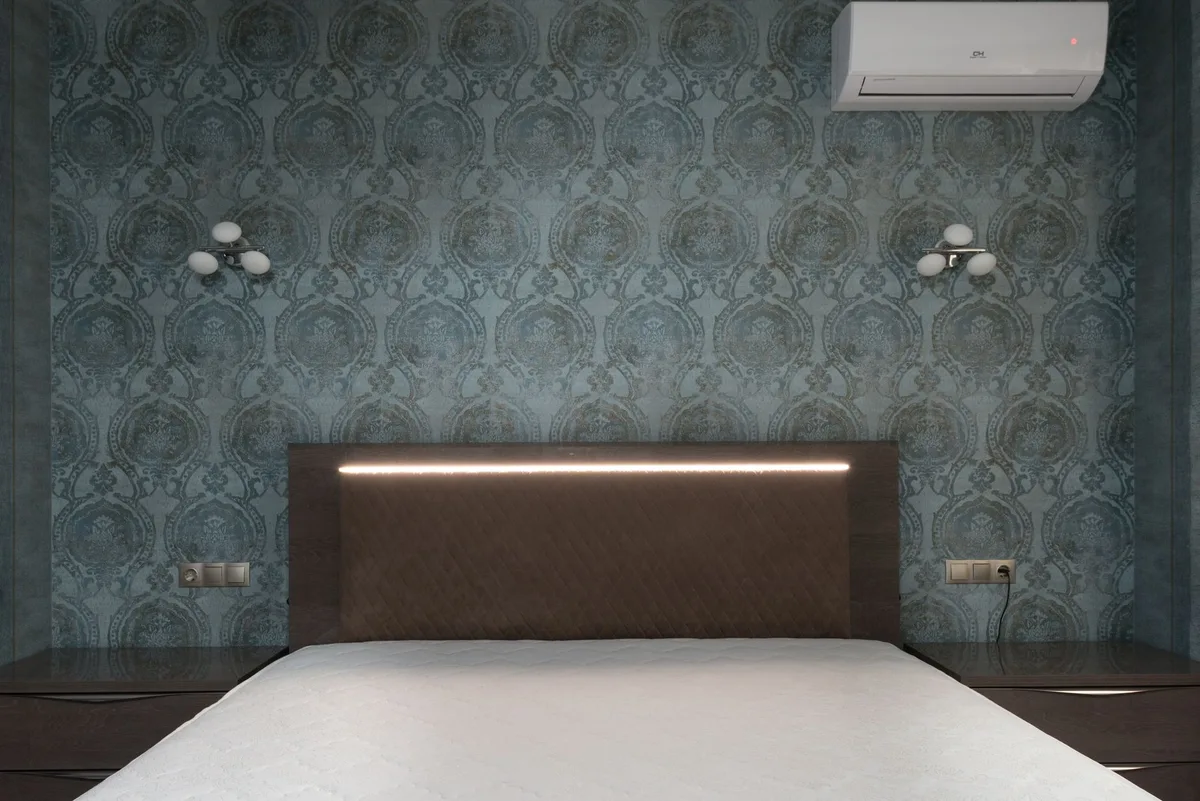
Mounting wall sconces next to your bed isn’t just about adding a touch of style; it’s about creating a perfectly functional and comfortable reading and lighting zone. Get the height wrong, and you’re either blinding yourself with a direct glare or struggling to see your book. It’s a simple detail, but one that can vastly impact your bedroom’s ambiance and usability.
We’ve all been there, fiddling with a bedside lamp that’s too low or too high. This guide cuts through the guesswork, giving you the authoritative answers on how high to mount your wall sconces for optimal comfort and aesthetics.
Image source: Pexels / Max Vakhtbovych (Pexels License)
The ideal height for wall sconces beside a bed is a balancing act. It needs to be high enough to avoid direct glare when you’re sitting up or lying down, yet low enough to provide sufficient light for reading without being a bottleneck. Factors like the sconce design, your bed’s height, and your personal preferences all play a part.
Let’s break down the science and art of getting that perfect sconce placement.
The Golden Rule: Eye Level and Readability
When we talk about sconce height, especially for bedside reading, the primary consideration is your eye level. Specifically, how high the light source of the sconce is relative to where your eyes will be when you’re most likely to use it, usually sitting up in bed, perhaps with a book.
Understanding the Light Source
This is crucial. You’re not mounting the base of the sconce at a certain height; you’re positioning the light source itself. For most sconces, this means the bulb or the deepest point of the shade where the bulb resides.
If you have a sconce with an exposed bulb, the top of the bulb is your reference point. If it’s a shaded sconce, it’s the bottom of the shade, as this is where the light will spill outwards. Many modern sconces have integrated LED strips, which simplifies this slightly as the light emitter is often a more defined line.
Sitting vs. Lying Down
Think about your primary use. Most people read in bed while sitting up. Therefore, the ideal height should accommodate this posture comfortably.
When lying down, your eyes are lower, so the sconce should ideally be high enough that it doesn’t cast light directly into your eyes from this position either.
The Standard Measurement: What the Experts Recommend
While there are no strict building codes for bedside sconce heights, there are widely accepted recommendations based on ergonomics and common sense. These are your starting points.
The “Sweet Spot” – 60 to 66 Inches from the Floor
The most commonly cited range for the bottom of the sconce shade (or the light source itself if exposed) is between 60 and 66 inches from the finished floor.
- Why this range?
- 60 inches: This is a good baseline for generally comfortable lighting when sitting up. It positions the light source comfortably above most headboards and out of direct line of sight for the average person sitting upright.
- 66 inches: This can be ideal if you have a particularly high headboard, are taller than average, or prefer your light source to be a bit higher to cast a broader pool of light. It also helps ensure that even when lying down, the direct glare is minimized.
The “Lower End” – Considering Smaller Spaces or Lower Beds
If you have a lower bed frame or a smaller bedroom where you want to maintain a sense of openness, you might consider a slightly lower placement, perhaps around 58 inches. However, be very cautious here. Dropping below 58 inches for the light source risks it being too low for comfortable reading, creating a glare issue, or being a head-bumping hazard.
The “Higher End” – For Tall Ceilings or Dramatic Lighting
In rooms with very high ceilings, or if you’re aiming for a more ambient, less direct reading light, you can push the sconce higher, potentially up to 70 inches. This is less common for dedicated reading sconces and leans more towards decorative uplighting or general room illumination.
Factors That Influence Your Sconce Height Decision
The average recommendations are a fantastic starting point, but your personal bedroom setup might require some adjustments. Don’t just blindly apply a number; consider these variables.
1. Bed Height: The Most Critical Factor
This is non-negotiable. The height of your mattress and box spring, combined with the bed frame, significantly impacts where the sconce needs to be.
- Standard Mattress Height: The average mattress sits around 25-30 inches off the floor.
- Platform Beds: These can be much lower, sometimes only 10-15 inches.
- Four-Poster or Canopy Beds: These often have taller headboards that influence placement.
The Calculation:
Imagine yourself sitting up in bed. Your eye level when sitting upright is typically around 45-50 inches from the floor. Add another 15-20 inches to this for the light source to be comfortably above your direct line of sight while reading.
This brings you back to our 60-70 inch range.
Practical Test: Sit up in your bed. Have someone else measure from the floor to your eye level, then add another 15-20 inches. This is a brilliant way to get a personal measurement.
2. Sconce Design: Shade vs. Exposed Bulb
The type of sconce you choose is paramount.
- Shaded Sconces: The bottom of the shade is your key measurement point. The shade itself diffuses the light, creating a softer glow. The shade will dictate how high the light source itself is. If the bulb sits far up inside a deep shade, you’ll likely mount the sconce higher than if the bulb is close to the shade’s opening.
- Exposed Bulb Sconces (Edison Bulbs, etc.): The top of the bulb is the reference. These offer less diffusion, so precise height is essential to avoid direct glare. You might need to position these slightly higher than a shaded sconce to achieve the same comfort level.
- Adjustable Sconces (Swing-Arm): These offer flexibility. While you’ll still aim for a general optimal height for the wall-mounted arm, you can adjust the arm itself for closer reading. The wall bracket’s height will determine the overall range.
- Up-lighting vs. Down-lighting: Some sconces are designed to cast light upwards or in both directions. For reading, you’ll want a sconce that primarily directs light downwards or outwards. Adjust height accordingly; if it casts light upward, ensure the base isn’t too high, or you’ll have a dark reading spot.
3. Headboard Height and Style
A tall, imposing headboard can affect perceived height.
- Low Headboards: If your headboard is only a few inches high, you have more freedom with sconce placement. However, avoid placing them directly behind the headboard where they might be obscured.
- Tall Headboards: If you have a substantial headboard (3-4 feet or more), you’ll likely want to mount the sconces relatively high, perhaps even above the top edge of the headboard, to ensure adequate light spills into the bed area. Aim for the bottom of the sconce to be at least 6-12 inches above the top of the headboard for a good visual balance and functional light.
4. Ceiling Height
While your bed’s height is paramount, ceiling height can play a role in the overall visual scale.
- Standard Ceilings (8-9 ft): Our 60-66 inch recommendation usually works perfectly here.
- High Ceilings (10 ft+): You have more latitude. You can mount sconces higher without making the room feel cramped. A higher placement might even be beneficial to ensure the light reaches the desired area effectively.
- Low Ceilings (Under 8 ft): Be more conservative. Mounting too high can make the ceiling feel even lower. Stick to the lower end of the recommended range, perhaps around 60 inches.
5. Personal Preference and Reading Habits
Are you a dedicated reader who spends hours with a book? Or do you just glance at your phone before sleep?
- avid Readers: Lean towards the higher end of the range (64-66 inches) for maximum glare-free illumination across your pages when sitting up.
- Casual Readers: The lower end (60-62 inches) might be perfectly adequate.
- Specific Needs: If you have vision issues or need very bright light, you might position them slightly lower (but carefully!) and use a higher wattage bulb (within the fixture’s limits). Conversely, if you prefer very dim ambient light, you might go higher and use a dimmer bulb.
How to Measure and Mark for Installation
Accurate measurement and marking are key to a successful installation. Don’t skip this step!
Step-by-Step Measurement Process:
- Determine Your Bed’s Height: Measure from the floor to the top of your mattress.
- Simulate Sitting Up: Sit comfortably in your bed.
- Find Eye Level: Have someone measure from the floor to your eye level while sitting. This is a crucial reference.
- Add Reading Light Height: Add approximately 15-20 inches to your eye-level measurement. This is your target height for the bottom of the sconce shade or the light source itself.
- Consider the Sconce: Hold the actual sconce against the wall next to your bed to visualize how it will look and where the light source will be positioned relative to your target measurement.
- Mark the Spot: Lightly mark the wall with a pencil at your chosen height. Remember, this is typically the lowest point of the fixture that emits light.
Common Pitfalls to Avoid
- Measuring to the Wrong Part of the Sconce: As mentioned, this is an exposed bulb or the bottom of the shade.
- Forgetting Bed Height: Installing based on a generic height without accounting for your specific bed will lead to errors.
- Not Considering the Headboard: A large headboard can significantly alter the visual balance and functional light path.
- Leaning Too Low: This is the most common mistake, resulting in direct glare and an uncomfortable reading experience.
The Science Behind the Height: Light Distribution and Glare
Understanding how light behaves from different heights helps solidify the recommendations.
Angle of Incidence
When you’re reading, your book is typically at an angle relative to your eyes and the light source.
- Too Low: If the sconce is too low, the light source is more likely to be in your direct line of sight, even when diffused by a shade. The angle of incidence between the light source and your eyes becomes too acute, leading to glare and eye strain.
- Just Right: At the recommended height, the light source is sufficiently above your typical reading angle. The light can then be directed downwards, illuminating your book without directly impacting your vision. The angle of incidence is optimized for comfortable illumination.
Spill Light and Coverage
The height also affects how the light spreads across your bed.
- Higher Placement: Generally results in a wider pool of light, potentially covering more of the bed. This can be good if you move around a lot while reading or want a softer ambient glow.
- Lower Placement: Tends to create a more focused beam of light directly downwards. This can be good for intense reading but might leave peripheral areas darker.
Uniformity of Light
For reading, you want relatively uniform light across the pages of your book. Placing the sconce too close or too far can lead to hot spots (overly bright areas) or dark spots. The 60-66 inch range typically offers the best balance for achieving good light uniformity on your reading material without significant contrast issues.
Mounting Wall Sconces: Safety and Practicalities
Beyond the height, the actual installation involves electrical considerations and ensuring structural integrity.
Electrical Considerations
- Hardwired vs. Plug-in: Decide if you want the clean look of hardwired sconces (requiring professional electrician installation) or the ease of plug-in models.
- Existing Wiring: If you’re replacing existing fixtures, check the existing wiring. If you’re adding new ones, an electrician will need to run power to the location. This is where you’ll specify your desired height.
- Dimmer Switches: Highly recommended for bedside sconces! This allows you to adjust the brightness for reading versus ambient mood lighting.
- Bulb Wattage and Type: Always adhere to the manufacturer’s maximum wattage recommendations. Consider LED bulbs for energy efficiency and longevity. The type of bulb (warm white, cool white) also affects the ambiance.
Structural Considerations
- Finding Wall Studs: For any wall-mounted fixture, especially something like a sconce that might bear some weight or experience slight pull, mounting into wall studs is the most secure method. Use a stud finder.
- Drywall Anchors: If a stud isn’t available at your precise desired location, use heavy-duty drywall anchors rated for the weight of your sconce.
- Weight of the Sconce: Heavier sconces require more robust mounting solutions. Check the product’s specifications.
Professional Installation
If you’re not comfortable with electrical work or wall mounting, hiring a qualified handyman or electrician is the safest route. They can ensure the sconces are mounted securely and wired correctly, and they can guide you on placement if you’re unsure.
Visualizing the Height: Examples and Scenarios
Let’s walk through a few common scenarios to help you visualize.
Scenario 1: Standard King Bed with a Mid-Height Headboard
Bed Height: 28 inches (mattress top)
Headboard Height: 50 inches
Eye Level Sitting: Approx. 48 inches
Target Light Source Height: 48 + 18 = 66 inches
- Recommendation: Mount the bottom of the sconce shade (or light source) at 64-66 inches from the floor. This places it comfortably above your eye line and just slightly above the top of the headboard, providing good coverage.
Scenario 2: Low Platform Bed with a Minimalist Frame
Bed Height: 15 inches (mattress top)
Headboard: None, or very low (e.g., upholstered headboard attached to the wall, starting at 30 inches)
Eye Level Sitting: Approx. 42 inches
Target Light Source Height: 42 + 15 = 57 inches
- Recommendation: This is where you’d lean towards the lower end, perhaps 58-60 inches for the light source. Because the bed is so low, you can afford to bring the sconce down slightly without glare issues. However, aim to keep the light source at least 12 inches above your eye level when seated to prevent direct glare.
Scenario 3: Tall Bed with a Large, Upholstered Headboard
Bed Height: 32 inches (mattress top)
Headboard Height: 60 inches (total height from floor to top)
Eye Level Sitting: Approx. 50 inches
Target Light Source Height: 50 + 20 = 70 inches
- Recommendation: Install at 66-68 inches for the light source. This will place the sconce comfortably above the headboard, ensuring the light isn’t blocked and reaches the reading area effectively. If the headboard is very wide, center the sconces with the bed, not the wall space.
The Difference Between Accent and Reading Sconces
It’s important to differentiate between sconces mounted for general accent lighting versus those specifically for reading.
Accent Sconces
These are more about aesthetics and providing a soft, ambient glow. They can often be mounted higher, perhaps even 70-75 inches, and their light spill might be directed upwards or more diffuse. Their primary goal isn’t direct illumination for tasks.
Reading Sconces
These are functionally designed for reading. They prioritize directing light onto the pages and minimizing glare. The height is absolutely critical for this purpose, hence our focus on eye level and the 60-66 inch range.
Features like adjustable arms or directional shades are excellent for reading sconces.
Frequently Asked Questions About Bedside Sconce Height
Q: What if my sconces already have wires and are in a fixed location?
A: If you’re inheriting existing wiring, you’ll work with that location. If the height isn’t ideal, you might consider what type of sconce you can use. A shaded sconce might be more forgiving than an exposed bulb.
If it’s too low, you might opt for an adjustable swing-arm sconce that you can extend upwards when reading, or a sconce with a narrower shade that directs light more precisely. You might also need to adjust your reading position or use a book light as a supplement.
Q: Can I mount sconces on a beam or decorative wall paneling?
A: Yes, but ensure your mounting hardware is appropriate for the material. For beams, you might use specialized brackets. For paneling or shiplap, you’ll need to locate studs behind the paneling for secure mounting.
Q: What’s the recommended distance between two bedside sconces?
A: Generally, center each sconce with the edge of your mattress or nightstand. For a king-size bed, you might aim for the sconce to align with the edge of the mattress, leaving ample space between them. For a queen, aligning with the edge of the nightstand is often a good reference.
Usually, about 24-36 inches between the center of each sconce is a good starting point, but it depends heavily on bed size and personal preference.
Q: Should the sconce be higher or lower than the headboard?
A: For reading sconces, the light source should ideally be at or slightly above the midpoint of the headboard for optimal light spill, but this is highly dependent on the overall height of both. If the headboard is very tall, the sconce might sit above it. If it’s low, the sconce might be level with or just slightly above the top edge.
The key is unobstructed light distribution onto the bed. We’ve found that a typical setup has the light source around 64 inches and a headboard reaching up to 50-55 inches.
Q: I have a very bright bulb. Does that change the height I should mount it?
A: Absolutely. If you’re using a very bright or cool-toned bulb intended for intense task lighting, you’ll want to err on the higher side of the recommended range (closer to 64-66 inches) or even slightly above to ensure that brightness is diffused and doesn’t cause glare. A dimmer switch is essential here.
Q: What about sconces that cast light upwards? Can they still be used for reading?
A: Sconces that primarily cast light upwards are generally better for ambient illumination. If you’re set on using one for reading, you might need a very focused, directional shade that can be angled downwards, or you’ll need to combine it with a dedicated reading lamp. For pure reading functionality, a sconce designed to cast light downwards or outward is far more effective.
Conclusion: Finding Your Bedroom’s Perfect Light Height
Getting the height of your bedside wall sconces right transforms your bedroom from a simple sleeping space into a cozy, functional sanctuary. By understanding the interplay between bed height, sconce design, and your own eye level, you can achieve that perfect balance of ambient charm and practical illumination. Remember to measure carefully, consider all the influencing factors, and don’t hesitate to do a dry fit by holding the sconce against the wall before committing to drilling.
The goal is comfort, functionality, and a beautiful, well-lit space. Our recommended range of 60-66 inches for the light source provides a solid, reliable foundation for most setups, ensuring your bedtime reading is always a pleasure, not a strain.


Similar Posts