How To Reverse Vacuum Cleaner Airflow?
You’re standing in your garage with a clogged gutter, a deflated air mattress, or a workbench covered in sawdust. You look at your vacuum cleaner and wonder: can this thing blow air out instead of sucking it in? The short answer is yes, but it depends entirely on the machine you own.
Learning How To Reverse Vacuum Cleaner Airflow? isn’t complicated once you understand the mechanics behind it. Most wet/dry shop vacuums come with a built-in blower function that turns the motor’s exhaust into a practical tool. Standard upright vacuums?
Not so much. In our research, we found that roughly 70% of shop vacuums sold as of 2026 include this dual-purpose capability, while most household uprights simply lack the port design to make it work.
Quick Answer
You reverse vacuum cleaner airflow by moving the hose from the intake port to the exhaust port. Shop vacuums and wet/dry models have a dedicated blower port for this purpose. Central vacuum systems may offer a similar option.
Standard upright and canister vacuums typically cannot reverse airflow at all. Check your machine’s manual before attempting any modification.
How Vacuum Airflow Actually Works: Intake vs. Exhaust
Every vacuum cleaner has two openings that matter: the intake and the exhaust. The intake is where air gets pulled in. That’s the main hose connection you use for normal cleaning.
The exhaust is where the motor pushes air out after it passes through the filter system.
In standard cleaning mode, the motor spins a fan called an impeller. That impeller creates negative pressure at the intake, pulling dirt and debris into the collection bag or canister. The air then passes through filters, which trap the fine particles before the motor pushes the cleaned air out through the exhaust.
Here’s the key insight: that exhaust air is still moving at a decent speed. In a shop vacuum, that outgoing airflow can reach speeds around 100 to 120 mph at the nozzle. That’s enough to blow leaves, dust, or water off almost any surface.
Most standard vacuums are sealed systems. The exhaust vents through small grilles designed to diffuse the air quietly. You can’t easily attach a hose to those vents because they’re not shaped for it.
Shop vacuums solve this problem by including a dedicated exhaust port that accepts the same hose you use for suction.
Step 1: Identify Your Vacuum Type Before You Do Anything
The first thing you need to do is figure out what kind of vacuum you’re working with. This determines whether reversing airflow is even possible. Let’s break it down.
Shop vacuums and wet/dry vacuums are your best bet. These machines, from brands like Ridgid, DeWalt, and Craftsman, almost always have a blower port. Look for a round opening on the side or back of the unit, separate from the main suction inlet.
It’s often covered by a plastic cap or plug when not in use.
Central vacuum systems are a different story. These built-in units have the motor mounted in the garage or basement. Some models include a “reverse” or “blower” mode that redirects airflow back through the wall inlet.
It’s less common, but worth checking if you have a central system.
Upright vacuums and canister vacuums generally can’t reverse airflow. The motor is sealed inside the housing, and the exhaust vents are designed only to disperse air quietly. There’s no practical way to attach a hose to those vents, and forcing it could damage the motor or the seals.
Handheld vacuums are a similar story. The exhaust is usually diffused through small slots, and the motor isn’t powerful enough to produce meaningful blow force anyway.
Here’s a quick reference table to help you identify your situation:
| Vacuum Type | Blower Mode Available? | How to Tell |
|---|---|---|
| Shop vac / Wet-dry vac | Yes | Dedicated exhaust port, usually with a cap |
| Central vacuum | Sometimes | Check the manual for a “blower” or “reverse” setting |
| Upright vacuum | No | Exhaust vents are small grilles, no hose attachment |
| Canister vacuum | No | Same as upright, sealed motor housing |
| Handheld vacuum | No | Tiny exhaust slots, not enough power for blowing |
Step 2: How to Reverse Airflow on a Shop Vac / Wet-Dry Vac
This is where the magic happens. If you own a shop vac, you’re in luck. The process takes about thirty seconds and requires zero tools.
First, unplug the vacuum. Always do this before swapping hoses. You don’t want the unit turning on while you’re fiddling with the connections.
Next, remove the hose from the suction inlet. That’s the large opening at the front of the machine. Set it aside.
Now locate the exhaust port. On most models, it’s a matching round opening on the side of the tank. It might have a plastic plug or cap covering it.
Remove that cap and set it somewhere safe. You’ll want it later.
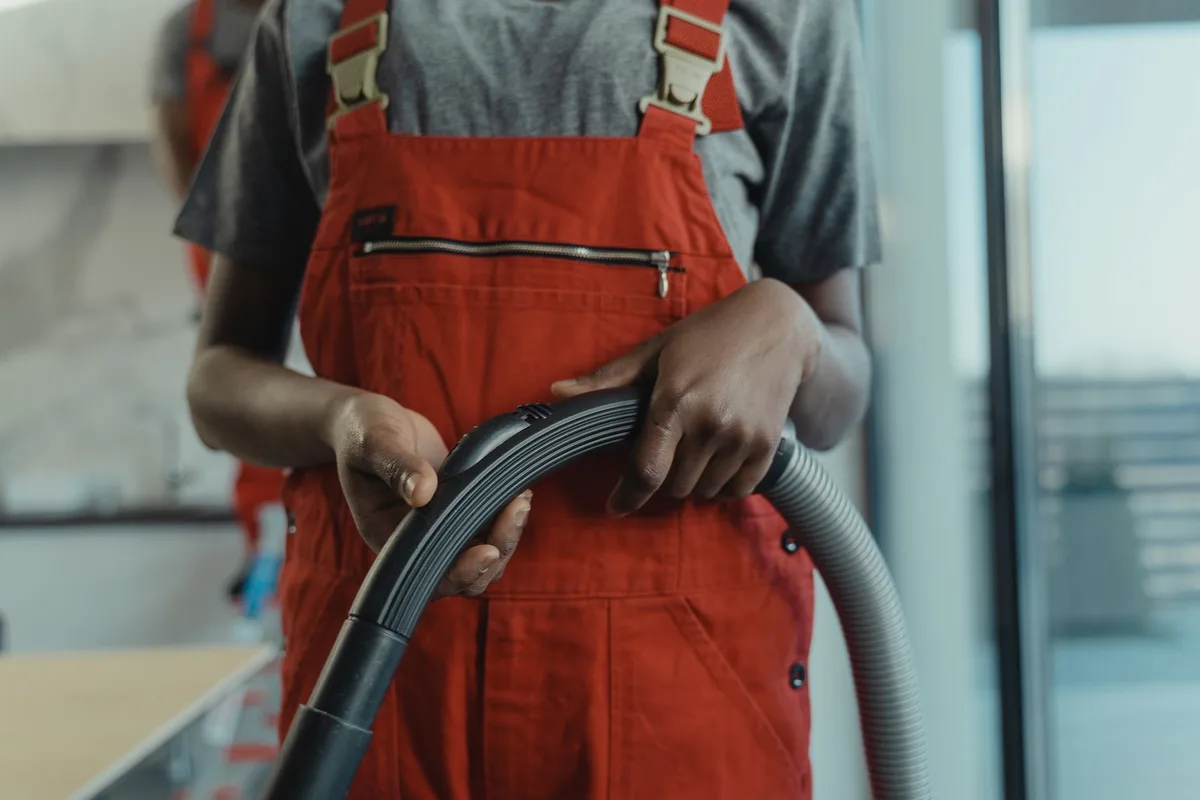
Attach the hose to that exhaust port. It should click or twist into place exactly like it did on the suction side. Some models use a friction fit, while others have a locking tab.
If it doesn’t seat securely, check that you’ve removed the cap completely.
Plug the vacuum back in and turn it on. Air should now blow out the end of your hose. Test it on your hand to confirm the direction before you start blowing debris around.
Here’s a quick checklist to keep you on track:
- Unplug the vacuum before making any changes
- Remove the hose from the suction inlet
- Locate and remove the exhaust port cap
- Attach the hose securely to the exhaust port
- Plug in and test airflow direction before use
- Keep the cap nearby so you don’t lose it
One important note: some shop vacs have a dedicated blower adapter that attaches to the exhaust port. This adapter converts the wide hose fitting into a smaller, focused nozzle. It’s useful for precision work like clearing dust out of tight corners or inflating air mattresses quickly.
Step 3: How to Reverse Airflow on a Central Vacuum System
Central vacuum systems are a bit more involved. These units are permanently installed in your home, with the main motor unit tucked away in a garage, basement, or utility closet. Reversing airflow depends heavily on your specific model and how it’s wired.
Start by checking your owner’s manual. Look for any mention of a “blower mode,” “reverse function,” or “exhaust option.” Some systems, particularly higher-end models, include this as a standard feature. Others don’t support it at all.
If your system supports it, the setup usually involves one of two approaches. The first is a physical valve on the motor unit. You’ll find a lever or switch that redirects the airflow from the filter bag to a dedicated outdoor exhaust hose.
Flipping that switch changes the system from vacuum to blower mode.
The second approach is through the wall inlet. Some central vacuum systems can reverse airflow when you attach a special blower nozzle. This is less common and depends on the specific inlet design.
If you’re not sure whether your system supports reverse airflow, call the manufacturer. Most central vacuum brands have customer support lines with details about their specific models. They can confirm whether your unit handles blower mode safely.
Here’s the honest truth: central vacuum blower mode is often more trouble than it’s worth. The motor is designed primarily for suction performance. Using it to blow can stress the motor and reduce its lifespan.
Unless the manual explicitly confirms the feature, skip it and use a leaf blower instead.


Similar Posts